










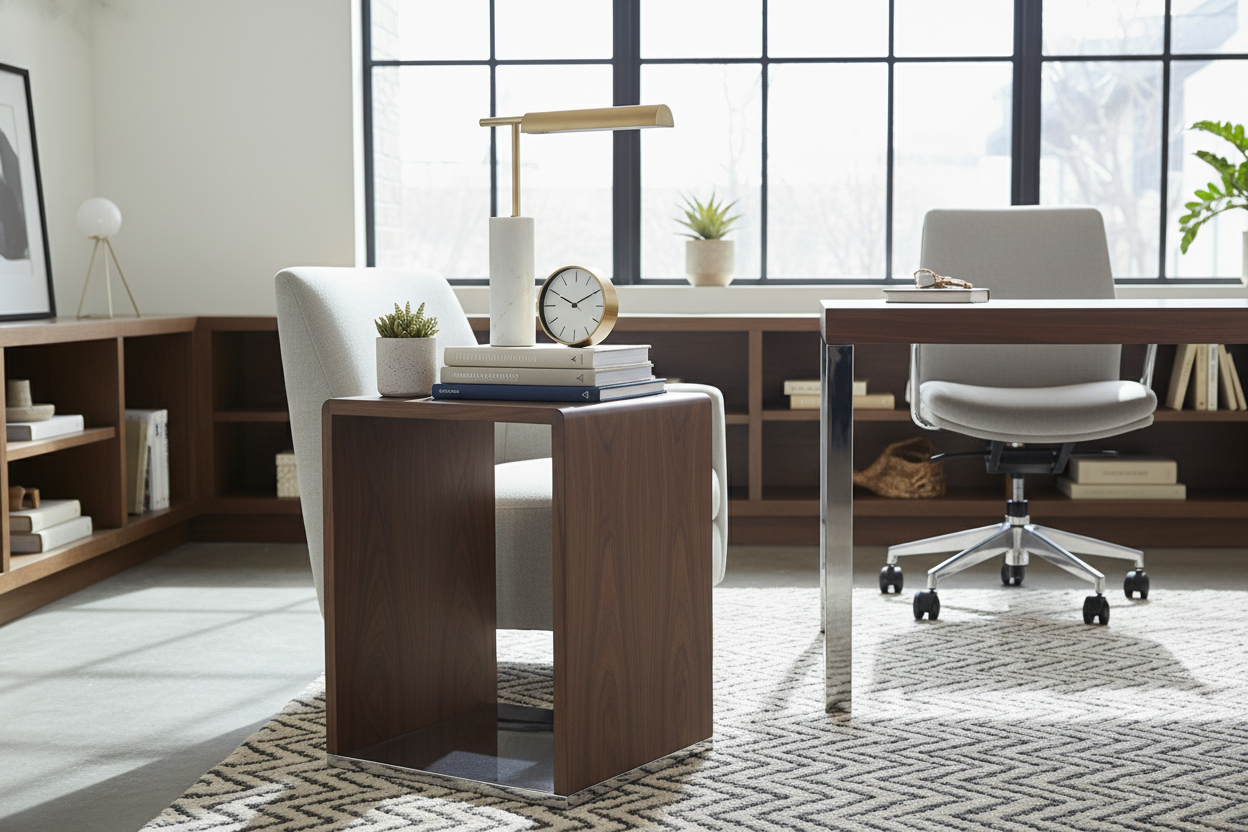
We often treat the workspace as purely utilitarian, ignoring the "soft" zones that actually facilitate creative thinking. Whether you are outfitting a corner for reading contracts or flanking a client sofa, the office end table serves as the anchor for these secondary spaces. It is not merely a landing pad for a coffee mug; it is an opportunity to introduce texture, balance visual weight, and soften the rigid lines typical of desk furniture. Selecting the right piece requires navigating the fine line between residential comfort and commercial durability.
Key Features to Look For
Before committing to a purchase, review this checklist to ensure the piece meets professional demands:
- Height Alignment: The table surface should be level with or up to two inches lower than the arm of the adjacent chair to ensure ergonomic reach.
- Surface Durability: Look for sealed woods or tempered glass that can withstand heat from electronics or hot beverages without coaster reliance.
- Base Silhouette: Choose open metal bases to maintain an airy feel in smaller rooms, or solid drum bases to ground a large, cavernous office.
- Cable Management: While rare in accent tables, a design with a hollow core or discreet back channel helps hide charging cords.
Balancing Material and Texture
In a professional environment, materials convey a message. When selecting an accent table for office use, you are balancing the cold, hard surfaces of technology (monitors, laptops) with the need for warmth. If your desk is a sleek laminate or glass, avoid matching the end table to it. Instead, opt for a walnut or oak veneer to introduce organic grain patterns.
Conversely, if your office is heavy on traditional wood cabinetry, a metal or stone office accent table acts as a palate cleanser, preventing the room from feeling like a stuffy library. Marble tops are timeless, but be wary of unsealed stone if you are a coffee drinker; a single ring can ruin the aesthetic permanently.
Scale and Spatial Planning
The most common error I see in floor plans is a lack of negative space. A small office end table does not need to be substantial to be effective. In tight quarters, look for "C-tables" that can slide under the sofa frame, minimizing the footprint while maximizing utility.
Pay attention to visual weight. A blocky, solid wood cube demands attention and space. If your office is under 150 square feet, stick to designs with legs rather than a solid plinth base. This allows light to pass through and under the furniture, tricking the eye into perceiving the room as larger.
Lessons from My Own Projects
I learned the hard way that sound acoustics matter just as much as visuals in an office. A few years ago, I designed a minimalist executive suite and specified a stunning, architectural steel and glass end table next to the client's reading chair.
It looked incredible in photos. However, two weeks later, the client called me. Every time he set his ceramic espresso cup down during a call, it made a loud, sharp clank that echoed and actually disrupted his train of thought. It sounded cheap and harsh. We swapped it for a leather-wrapped drum table. The silence when placing an object down felt luxurious and kept the room's ambient noise dampened. Now, I always do the "tap test" on surfaces intended for quiet zones.
Conclusion
The perfect side table transforms a sterile workroom into a sophisticated studio. By prioritizing proportion and honest materials, you create a space that invites focus rather than fatigue. Invest in a piece that feels good to the touch and stands up to the daily grind.
Frequently Asked Questions
What is the ideal height for an office end table?
Standard height ranges between 20 to 24 inches. However, the golden rule is to measure the arm height of the chair it sits next to. The table should never be taller than the armrest, as this creates an awkward angle for your shoulder when reaching for items.
Can I mix different wood tones in my office?
Absolutely. In fact, matching all wood tones perfectly can make a room look flat and "catalog-bought." Try to keep the undertones (warm vs. cool) consistent, but feel free to mix a dark walnut desk with a lighter oak accent table for depth.
How do I style a small office end table without cluttering it?
Follow the rule of three. A lamp (for height), a small stack of books (for horizontal grounding), and one organic element (like a succulent or stone) are all you need. Leave at least 50% of the surface clear for your phone or drink.

Leave a comment
This site is protected by hCaptcha and the hCaptcha Privacy Policy and Terms of Service apply.