










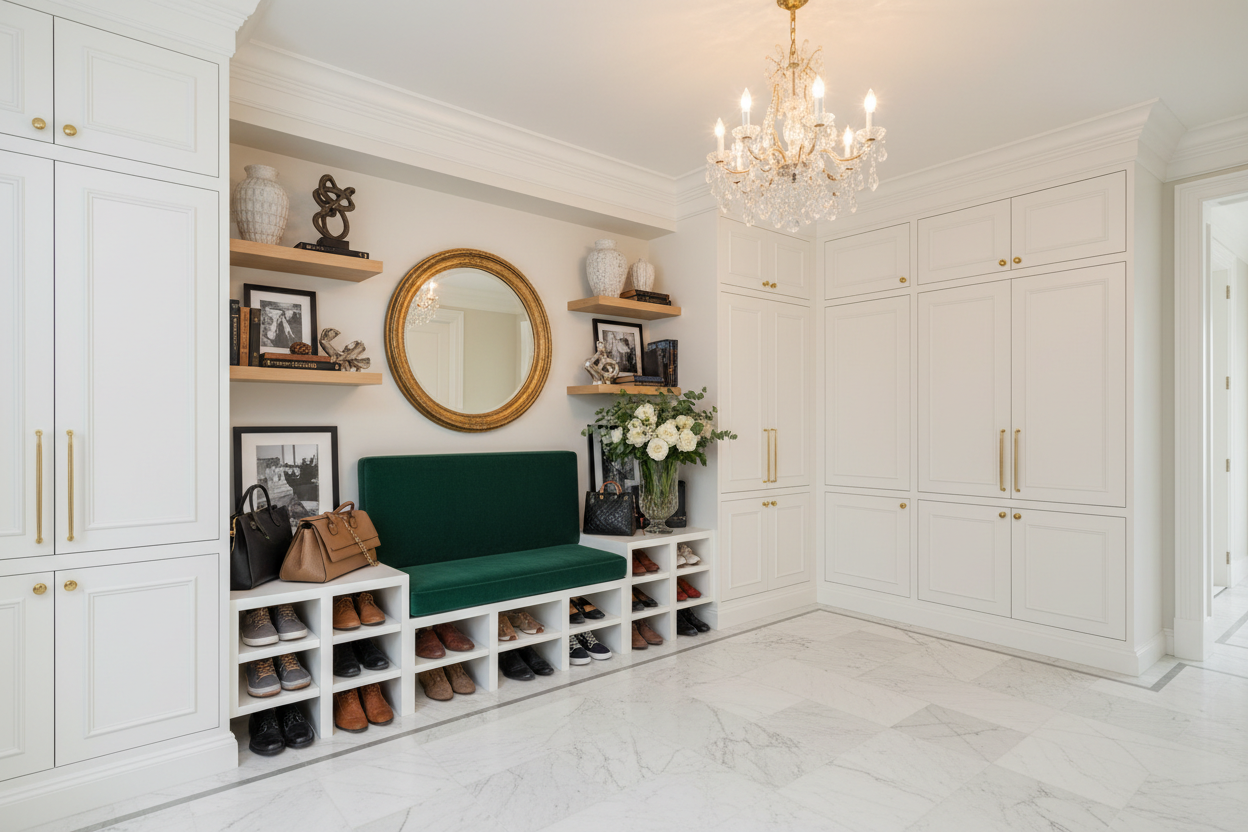
There is nothing quite as jarring as opening your front door to a chaotic pile of shoes, mail, and discarded coats. It disrupts the visual flow of the home and immediately raises stress levels. The foyer is your home's handshake; it sets the tone for everything that follows. While freestanding furniture has its place, built-in foyer storage is the gold standard for creating a seamless, architectural solution that maximizes every square inch of vertical space.
Key Features to Look For
- Depth Requirements: Ensure a minimum depth of 24 inches for hanging coats, or 12-15 inches for open shelving and shoe cubbies.
- Material Durability: Opt for hardwoods or high-density MDF for paint-grade finishes to withstand heavy daily traffic.
- Integrated Lighting: Plan for hardwired LED strip lighting or puck lights to elevate the aesthetic and improve visibility.
- Closed vs. Open Ratio: Aim for 70% closed cabinetry to hide clutter and 30% open display to maintain visual lightness.
Mastering the Layout and Flow
When designing millwork for an entry, the first consideration is the circulation path. A common error is designing units that encroach on the walkway, making the space feel claustrophobic. Your design should feel like part of the architecture, not an obstruction.
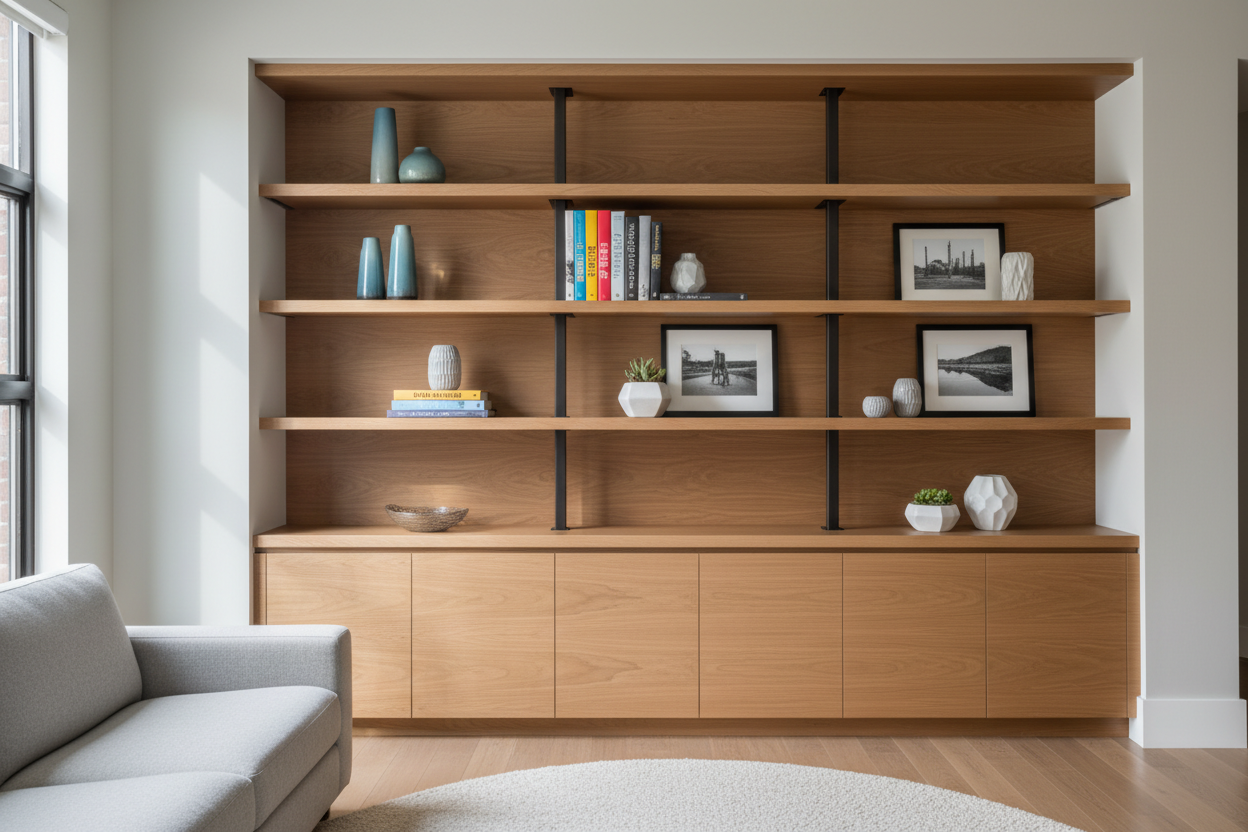
For narrower halls, consider entryway built-in shelves that are recessed into the wall cavities between studs. This allows you to reclaim floor space while providing a designated spot for keys and decorative objects. If you have the luxury of width, floor-to-ceiling joinery creates a focal point that draws the eye upward, making the ceiling feel higher.
Materiality and Finishes
The choice of material dictates both the longevity and the vibe of the piece. For a modern, seamless look, paint-grade maple or poplar is excellent, allowing the unit to blend with the wall color. This monochromatic approach reduces visual weight.
However, if you want to introduce warmth, stain-grade white oak or walnut brings texture and sophistication. Be mindful of the finish; a high-traffic zone requires a conversion varnish or a catalyzed lacquer rather than a standard polyurethane, as these offer superior resistance to scratches and moisture from wet umbrellas or muddy boots.
Balancing Aesthetics with Utility
The most successful designs employ a mix of storage types. Foyer built in cabinets at the base are essential for concealing unsightly items like backpacks and heavy winter boots. Above this, you might incorporate a bench seat with an upholstered cushion for comfort.
The "Drop Zone" Ergonomics
Pay close attention to the height of your hooks and surfaces. A bench should sit at approximately 18 inches off the finished floor. Hooks should be staggered—lower ones for children and bags, higher ones for long coats. This ergonomic planning prevents the "pile-up" effect where items are simply thrown onto the bench because the storage is too difficult to access.
Lessons from My Own Projects
I learned the hard way about "shoe ventilation" during a renovation for a family of five in Chicago. We designed gorgeous, floor-to-ceiling oak lockers with solid doors. It looked stunning on installation day.
Three months later, the client called to tell me that the smell inside the cabinets was overpowering. Damp sneakers and wet wool coats were being shut inside air-tight joinery. It was a rookie oversight on my part regarding airflow. We had to retrofit the doors with decorative metal mesh grilles to allow the cabinetry to breathe. Now, I always insist on louvered doors or routed ventilation slots for any lower cabinetry designated for footwear. It’s a small, unpolished detail that you won't see on Pinterest, but it makes the difference between a usable cabinet and a musty box.
Conclusion
Investing in custom millwork transforms an entry from a mere passageway into a functional destination. By prioritizing durable materials and thoughtful ergonomics, you create a space that welcomes you home with order and elegance.
Frequently Asked Questions
How deep should built-in foyer storage be?
If you plan to hang coats on a standard rod, you need a clear interior depth of at least 22–24 inches. If your space is shallower (e.g., 15–18 inches), use pull-out valet rods where coats hang facing forward rather than sideways.
Is MDF or solid wood better for painted built-ins?
For painted finishes, high-quality MDF is often superior to solid wood for large panels and doors because it is stable and does not expand or contract with humidity changes, preventing paint cracks at the joints. However, structural frames and trim should be solid wood for durability.
Can I add built-ins to a small foyer?
Absolutely. In small spaces, focus on verticality. Use tall, shallow entryway built-in shelves combined with hooks rather than deep cabinets. Mirrors integrated into the joinery can also help bounce light and make the tight space feel expansive.


Leave a comment
This site is protected by hCaptcha and the hCaptcha Privacy Policy and Terms of Service apply.