










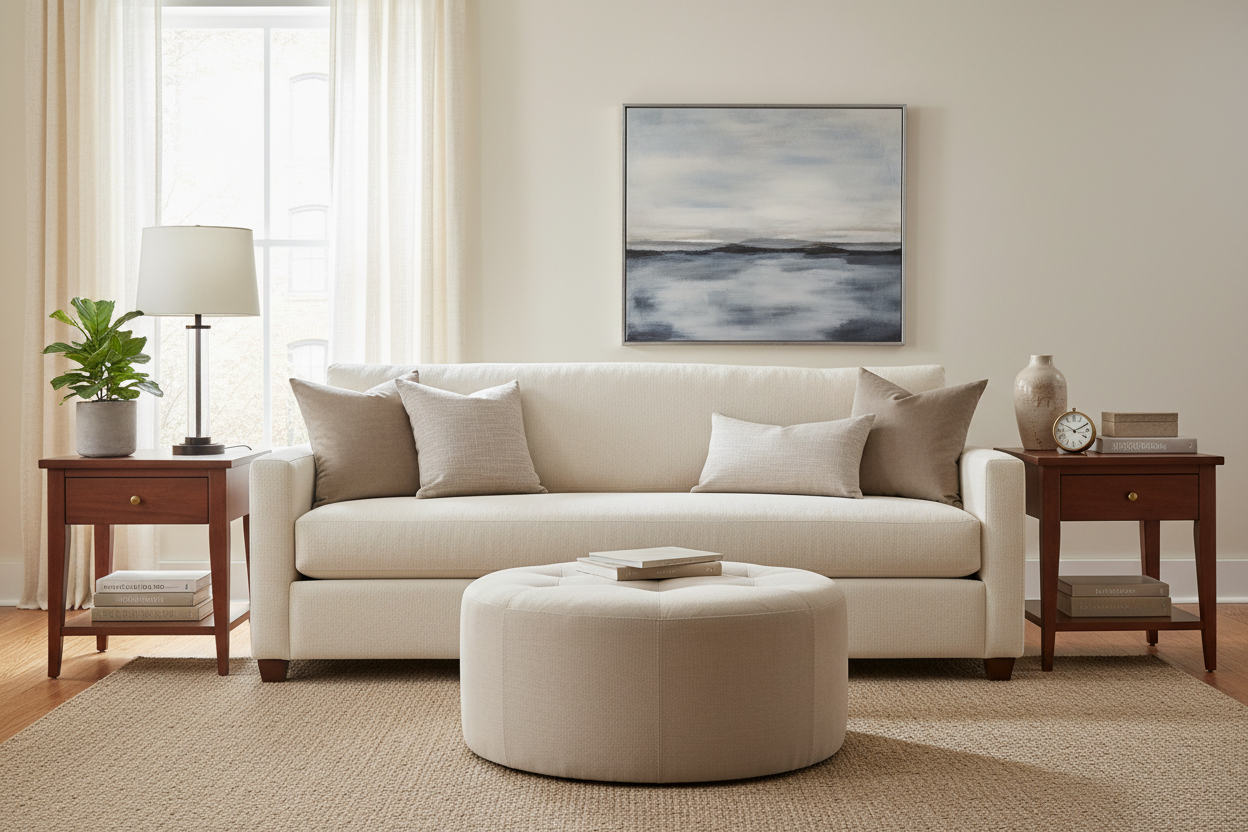
Transitional furniture blends the warmth and familiarity of traditional design with the clean lines and simplicity of contemporary style. Among these versatile pieces, transitional end tables stand out as a functional and aesthetic addition to any living space. They balance elegance and comfort, making them the perfect choice for homeowners who value timeless appeal without sacrificing modern sensibilities.
What Defines a Transitional End Table
A transitional end table typically features a harmonious mix of materials, such as wood combined with metal or glass. The silhouettes are neither overly ornate nor starkly minimal—providing a versatile look that fits seamlessly into different interior themes. This style makes transitional side tables ideal for spaces where you want furniture to complement, rather than compete with, other design elements.
Practical Benefits in the Living Room
When placed beside a sofa or armchair, transitional end tables for living room setups provide convenient surfaces for drinks, books, or decorative accents. Many options also include storage features like drawers or shelves, which are particularly useful in smaller spaces. Their design allows them to integrate well with a wide range of seating arrangements, ensuring both functionality and visual balance.
Versatility of Transitional Accent Tables
Transitional accent tables share many design traits with end tables but are often used as focal pieces. They can take the form of small pedestal tables, nesting sets, or decorative consoles. Whether in an entryway, reading nook, or next to a chaise lounge, these pieces offer the same balanced design language that defines the transitional style.
Material Considerations
Quality materials are a hallmark of well-made transitional style end tables. Solid wood, particularly oak, walnut, and maple, offers durability and a warm aesthetic. Metal elements in brushed nickel or matte black finishes add a modern touch, while tempered glass surfaces enhance brightness and openness in a room. Evidence from interior design studies shows that mixed-material furniture often appeals to a broader audience due to its adaptability across styles.
Matching Transitional Tables with Your Decor
If your living room contains a mix of traditional and modern furniture, transitional end tables can act as a bridge between these elements. For example, pairing a classic upholstered sofa with a sleek, wood-and-metal end table provides visual cohesion. Light-colored tables can brighten darker spaces, while darker finishes can add grounding in airy rooms.
Personal Experience with Transitional Design
In my own home, I introduced a pair of transitional side tables next to a contemporary sectional. Their walnut tops and understated metal frames anchored the seating area, while the small drawers discreetly stored remote controls and coasters. Over time, I noticed that guests naturally gravitated toward these tables, placing drinks or admiring decorative accents—proof that a well-chosen piece serves both form and function.
Tips for Selecting the Right Table
When choosing transitional end tables for living room settings, assess the available space and consider the table's height relative to your seating. Ideally, the surface should be level with or slightly below armrest height to make it comfortable for reaching. If you need additional storage, opt for designs with built-in shelving. For those who like to change decor seasonally, neutral finishes provide a flexible base that works with different color palettes.
Care and Maintenance
To keep transitional accent tables looking their best, regular dusting and occasional polishing of wood surfaces are advisable. Metal components can be cleaned with a damp cloth followed by thorough drying to prevent water spots. Avoid harsh cleaners on glass surfaces—using a mild solution ensures clarity without damage. These care steps are supported by furniture manufacturer guidelines as effective for prolonging lifespan.
Final Thoughts
Transitional style end tables bring together the best features of traditional and contemporary furniture. Their adaptable designs, choice of materials, and practical benefits make them an intelligent investment for home design. Whether as understated companions to your seating or standout accent pieces, they continue to prove their value in diverse living room layouts.

Leave a comment
This site is protected by hCaptcha and the hCaptcha Privacy Policy and Terms of Service apply.