










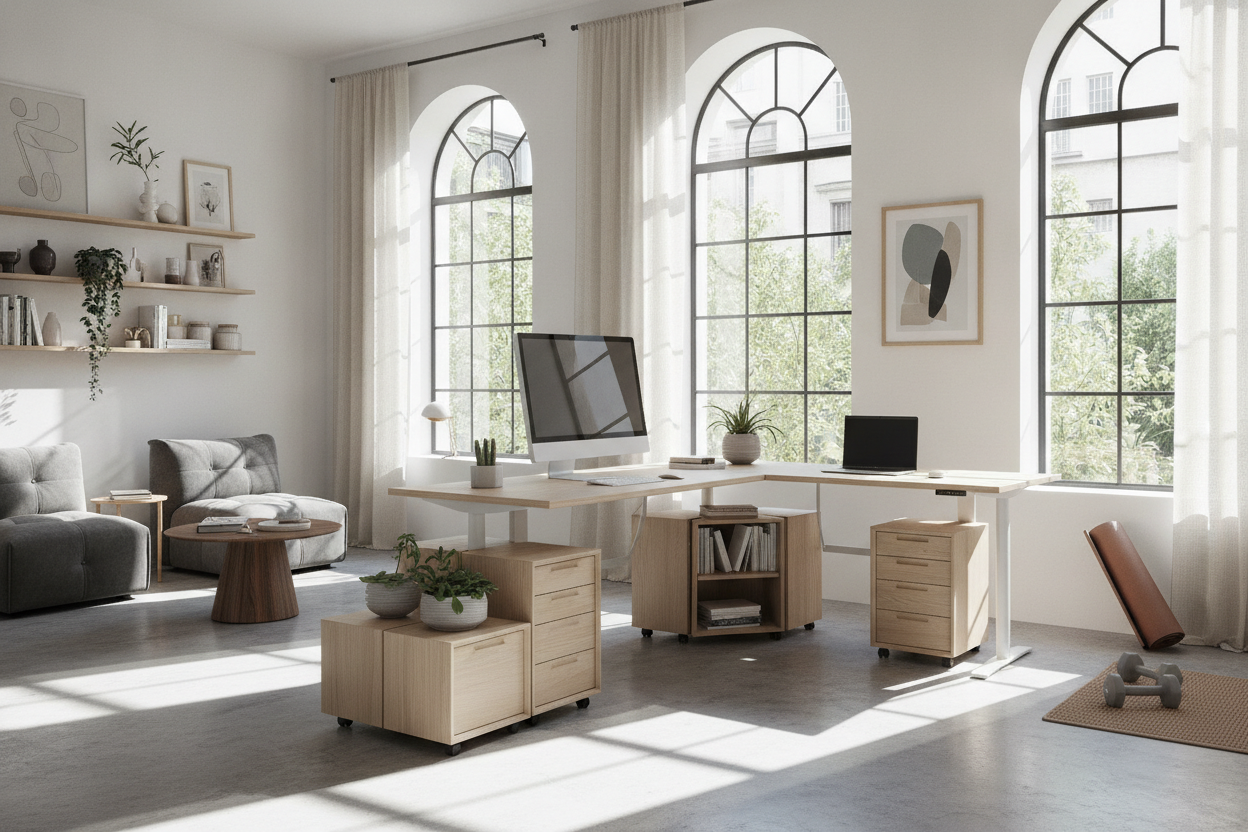
My 'office' used to be a graveyard for a massive L-shaped mahogany desk that I bought when I lived in a much larger place. It looked great in the showroom, but in my current 10x10 spare room, it felt like a giant wooden anchor. When my mother came to visit, she basically had to sleep in a glorified cubicle. I finally realized that a configurable desk was the only way I would ever get my floor space back without sacrificing my 9-to-5 sanity.
- Static furniture is a space-killer in multi-purpose rooms.
- Modular systems allow you to break the desk into pieces when guests arrive.
- Look for high-grade steel connectors over plastic clips for stability.
- Starting with a core 'anchor' piece makes expanding much easier.
The Problem With the 'One Size Fits All' Workstation
We have all seen those computer desk in dining room ideas that look amazing on Pinterest but feel like a cluttered mess in real life. Most desks are built for corporate offices where square footage is an afterthought. In a guest room or a shared living area, a 60-inch solid oak beast is a liability. You cannot tuck it away, and you certainly cannot move it without calling three friends to help and potentially scratching your floors.
Rigid furniture forces you to live around the desk rather than letting the desk work for your life. When I tried to shove my old workstation into the corner, it blocked the closet door and made the room feel like a storage unit. It was a constant battle between having enough surface area to work and actually being able to walk through the room. Rigid furniture always loses that fight because it cannot compromise.
What Actually Makes a Configurable Desk Worth the Hype?
A true best modular desk system isn't just a table with legs. It is a kit of parts designed for agility. I am talking about pieces that can be bolted together for a long workbench or split apart to act as a desk and a makeshift nightstand. The magic is in the versatility of a modular computer desk system that uses interchangeable components.
What separates the good stuff from the junk is the hardware. I have tested the cheap versions with plastic snap-ins, and they wobble the second you put a monitor arm on them. You want kiln-dried wood or high-density laminate tops paired with powder-coated steel frames. This setup allows you to rearrange on a whim without the screw holes stripping or the frame warping. It is about having a workspace that evolves as your floor plan changes.
How I Arranged My Modular Desk Sets for Maximum Space
I started my journey with a simple writing computer desk as my anchor. It is the 'home base' where my laptop and primary monitor live. From there, I added two flanking modular desk sets. During a standard work week, they form a massive U-shape that makes me feel like I am running mission control. But the beauty is in the pivot.
When my sister stayed over for a week, I detached the side modules. One went into the living room to hold a lamp and some books, and the other was tucked into the corner of the office to clear a path for the air mattress. Because the components are designed to be standalone, they didn't look like 'half a desk' sitting in my living room. They looked like intentional furniture. Most people think they need one giant surface, but three smaller, cohesive pieces offer ten times the utility in a small home.
From 9-to-5 to Weekend Hobbies: Adapting on the Fly
On Saturdays, I clear the monitors and my setup becomes a modular computer table for my watercolor supplies. Because the pieces move, I can angle one section to catch the best light from the window without moving the entire office. It is a relief to not be locked into one orientation. I have spent years staring at the same wall because my desk was too heavy to move; now, I change my view based on the season.
My biggest mistake was originally buying a version that was too lightweight. If the frame is too thin, the whole thing vibrates when you type. I learned that you need a bit of heft—look for frames that weigh at least 40-50 pounds—to ensure the modular joints stay silent. It is the difference between a professional workspace and a card table. My home office finally feels like a room again, not just a place where I park my laptop.
How stable are modular desks compared to solid ones?
If you buy quality steel-framed systems, they are just as stable as a traditional desk. The key is checking the weight capacity of the connectors. Avoid anything that uses plastic tension clips; look for bolted steel brackets.
Can I add more pieces to my setup later?
That is the best part. Most modular systems allow you to buy extra legs, tops, or shelving units as your budget and space allow. Just make sure the manufacturer plans to keep that specific line in stock for a few years.
Are they difficult to assemble?
Actually, they are often easier than standard desks because the individual components are smaller and more manageable. You aren't trying to flip a 100-pound tabletop by yourself; you are putting together three smaller, logical sections.


Leave a comment
This site is protected by hCaptcha and the hCaptcha Privacy Policy and Terms of Service apply.