










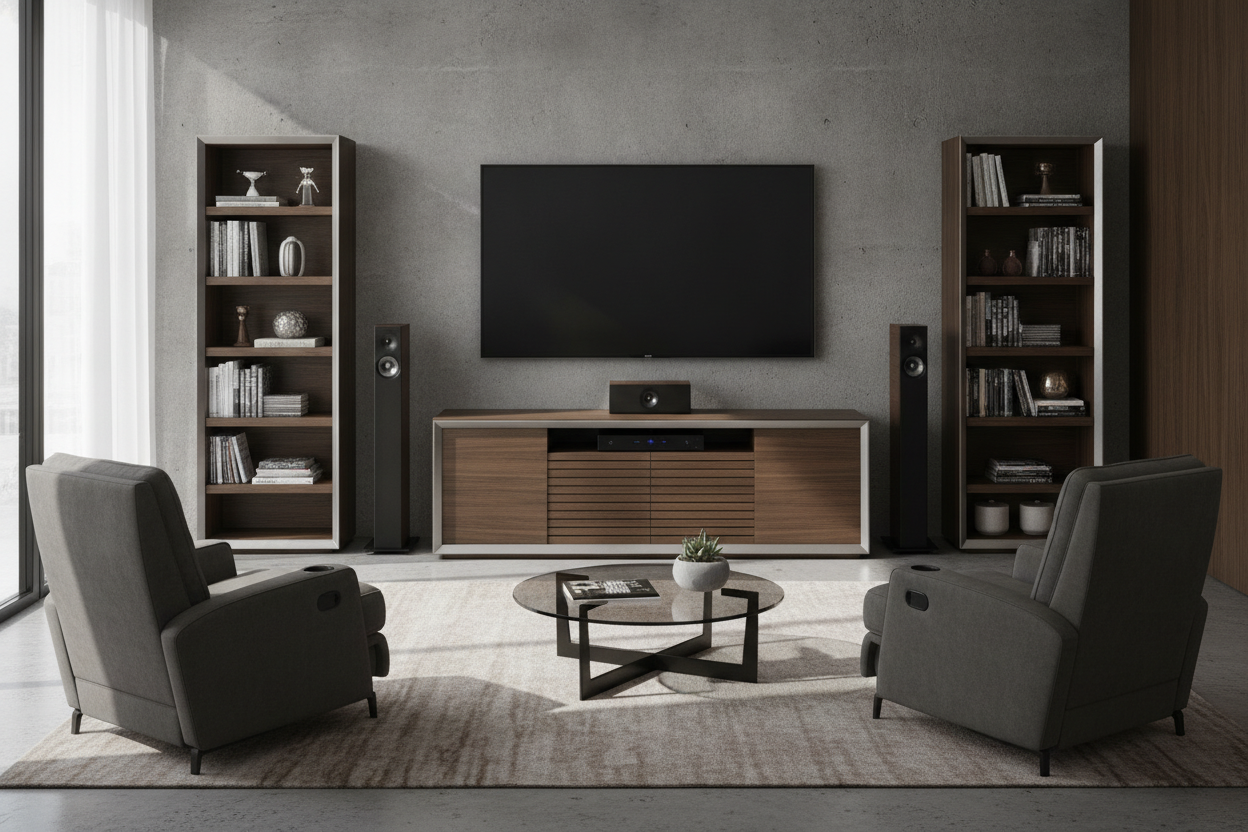
I spent three weeks researching the perfect mid-century console for my living room, only for it to arrive and reveal a devastating truth: my AV receiver is a chunky beast that refuses to be tamed. I tried to shove it in, but the door wouldn't close, and the back panel was so flimsy it bowed under the weight of three HDMI cables. It was a mess.
Finding a home theatre tv stand that actually functions like a piece of tech equipment while looking like a high-end piece of furniture is surprisingly hard. Most 'media centers' you find online are designed for a Nintendo Switch and a prayer, not a 40-pound amplifier that puts out enough heat to warm a small apartment. You need something that respects the gear without making your house look like a Best Buy backroom.
- Depth is King: Look for at least 20 inches of internal clearance so your cables don't snap.
- Airflow or Death: If your cabinet doesn't breathe, your expensive receiver will cook itself.
- Weight Capacity: Real amps weigh more than a bag of concrete; skip the particle board.
- Cable Management: Integrated channels save your sanity and keep the floor clear.
Why Standard Consoles Fail the 'Movie Room' Test
The heartbreak usually starts when you realize your receiver is too deep for standard furniture. Most retail consoles are 15 to 16 inches deep. A decent home theater media center needs to be closer to 22 inches deep once you factor in the plugs sticking out the back. If you force it, you end up with a home theater furniture cabinet that sits three inches away from the wall, looking like a total amateur job.
Then there's the back panel. Cheaper units use that thin, stapled-on cardboard. When you try to thread a thick power cable through those tiny pre-drilled holes, the whole thing tears. A real home theater media center uses removable back panels or wide-open spans that let the heat escape and the wires flow freely.
The 3 Non-Negotiables for a Real Home Theatre TV Stand
First, check the weight rating. A high-end home theater furniture tv stand should support at least 150 pounds on the top surface and 50+ pounds on the internal shelves. If you see 'hollow core' or 'MDF' without a steel frame, keep walking. My old stand sagged in the middle after just six months, making the doors wonky and impossible to align.
Second, you need 20 inches of usable depth. This is non-negotiable. Between the knobs on the front and the banana plugs on the back, a 17-inch receiver becomes a 19-inch problem very quickly. Third, look for adjustable shelving with steel pins. Plastic pins will shear off the moment you set a heavy power amp down.
Please Stop Suffocating Your Tech
Heat is the silent killer of home cinema designs entertainment center setups. Shoving a hot PS5 and a 9-channel receiver into a closed home theater cabinet box is basically putting them in an oven. I’ve seen logic boards melt and fans scream like jet engines because of poor airflow.
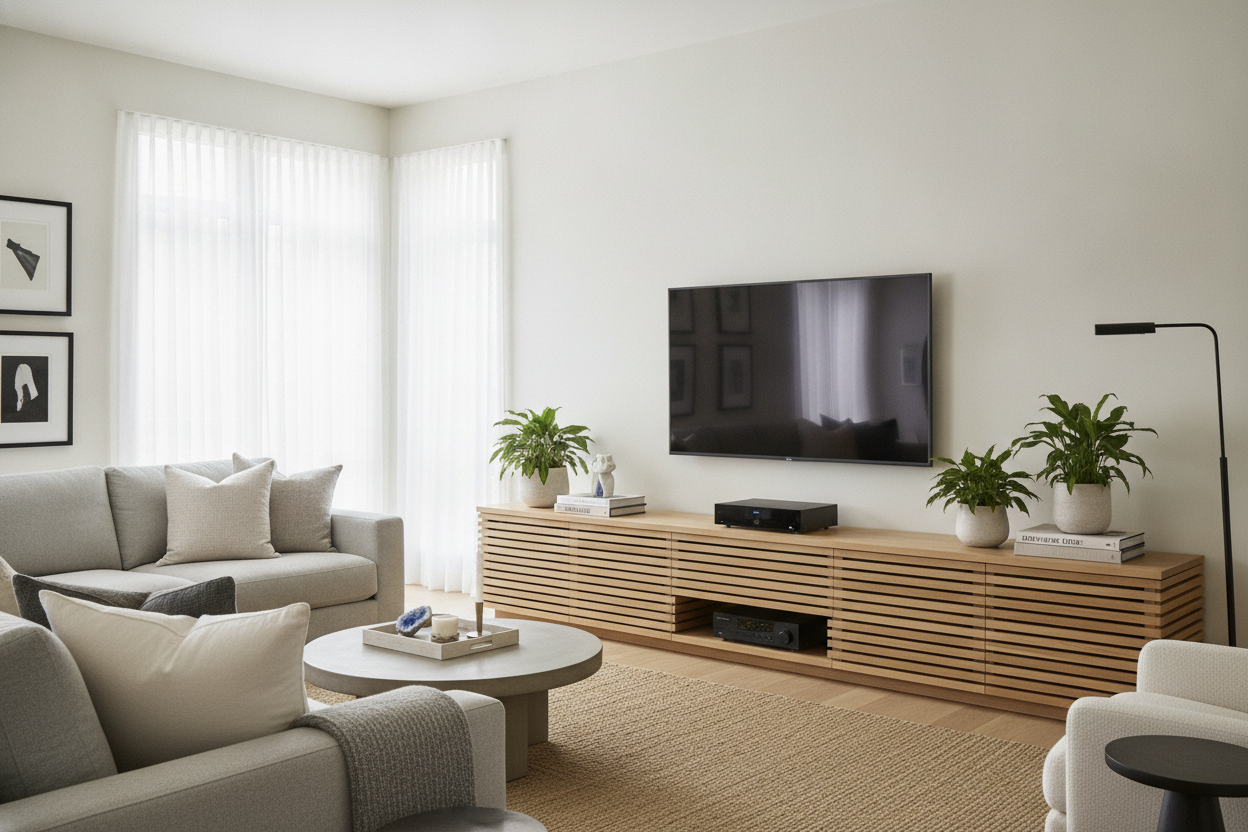
This is why I’m a huge advocate for slatted wood doors or perforated metal fronts. They allow for passive ventilation while hiding the 'black box' aesthetic. If you must go with solid doors, make sure there’s a massive cutout in the back or consider installing an active USB fan to pull the hot air out.
Sneaking Massive Gear Into a Normal Living Room
You don't need a dedicated basement to have a great setup. I’ve found that a modern home theater cabinet can actually look sophisticated if you pick the right finish. Darker woods like walnut or black oak help the screen blend in, while a low-profile home theatre console keeps the TV at a comfortable eye level so you aren't straining your neck.
I’ve argued before that a heavy-duty home storage cabinet is actually the living room essential we all overlook. By using a theater room media cabinet that looks like a sideboard, you can hide the clutter of remotes, controllers, and 4K discs while maintaining a room that feels like a home, not a laboratory.
What About IR Remotes and Glass Doors?
If you still use infrared (IR) remotes, solid wood doors are your enemy. You’ll find yourself standing up and pointing the remote at the ceiling just to change the volume. You could buy an IR repeater kit, but that’s just more wires to manage. A simpler fix is choosing a glass door large capacity cabinet that allows signals to pass through while keeping dust off your gear.
Personally, I prefer mesh or slatted fronts over glass. Glass gets dusty, shows every fingerprint, and doesn't help with the heat. Mesh gives you the best of both worlds: remote signals pass through, the gear breathes, and the 'tech' look is softened by the texture of the material.
FAQ
How deep should a home theater cabinet be?
At least 20 inches. If you have a high-end receiver, 22 inches is safer. Always measure from the front of the knobs to the back of the longest cable plug.
Do I really need fans in my TV stand?
Only if it’s fully enclosed. If you have slatted doors or an open back, passive airflow is usually enough. If you feel hot air hitting your face when you open the cabinet, add a fan.
Will my remote work through wood doors?
No. Standard IR remotes need line-of-sight. You'll need an RF remote (like a Shield or Apple TV remote), a Bluetooth controller, or an IR repeater system.


Leave a comment
This site is protected by hCaptcha and the hCaptcha Privacy Policy and Terms of Service apply.