











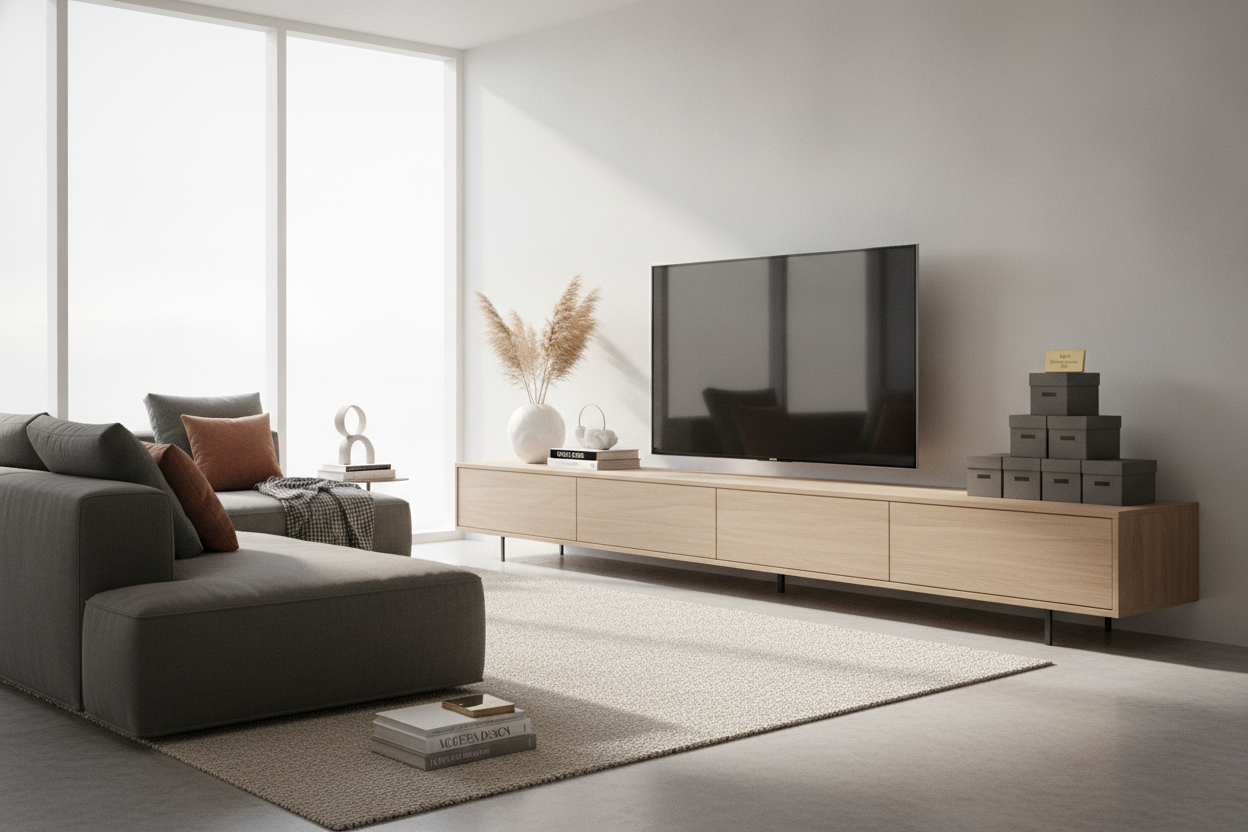
I spent three years staring at a bulky, espresso-colored media console that looked like it belonged in a 2005 bachelor pad. In my 11-by-14 living room, that thing was a space hog. It didn't just hold the TV; it anchored the entire room in a state of 'cluttered' even when it was clean. After seeing yet another minimalist apartment tour on my feed, I finally pulled the trigger on a floating tv stand Target carries under their Project 62 line.
- Pros: Instant floor space, modern aesthetic, surprisingly good hardware.
- Cons: Heavy MDF, nightmare cable management, and absolute installation anxiety.
- Bottom Line: If you have a stud finder and a second pair of hands, it is the cheapest way to make a small room feel high-end.
Why I Finally Ditched My Floor Console
The claustrophobia was real. Every time I vacuumed, I had to move this massive 80-pound block of particle board just to reach the dust bunnies congregating underneath. It made my rug look smaller and my ceilings feel lower. I wanted that airy, 'everything is light' vibe, but I was terrified that a floating unit would just rip out of the drywall and take my OLED with it.
There is a psychological trick to seeing more floor. When your eyes can trace the baseboards all the way to the corner, the room feels like it has more square footage. I was tired of the visual heavy lifting my old furniture was doing. I needed something that looked like it was defying gravity, even if the reality of installing it was far more grounded in sweat and frustration.
The Unboxing: What You Actually Get for the Price
Target furniture is usually a coin flip. Sometimes you get a gem, and sometimes you get something that feels like it’s made of compressed cardboard and hope. Straight out of the box, the weight of the panels was the first thing I noticed. This isn't lightweight pine; it is dense, heavy MDF. While it feels substantial, it also means you’re going to need serious wall support.
The finish was surprisingly decent. I’ve seen my share of 'wood-look' veneers that look like they were printed on a 90s inkjet printer. While this wasn't quite the same as the walnut floating TV stand that doesn't look cheap I saw at a boutique last month, for a fraction of the price, the grain texture is convincing enough. The hardware was organized in labeled bags, which is the bare minimum I expect, but still appreciated. Just don't expect solid wood at this price point—it’s a laminate world, we’re just living in it.
The Installation Reality Check (No Sugarcoating)
Here is the part where I almost cried. Mounting a 60-inch console isn't like hanging a picture frame. This unit uses a French cleat system—a long wooden bracket you screw into the wall, which the console then 'hooks' onto. If that cleat isn't perfectly level, your entire living room will look like it’s sliding into the ocean.
You must find the studs. Do not, under any circumstances, rely on the plastic drywall anchors included in the box. I used a magnetic stud finder and marked three different points of contact. Even then, the 'moment of truth'—when you let go of the console and let the wall take the weight—is terrifying. I held my breath for a full minute, waiting for the sound of cracking plaster. It stayed. But I’ll be honest: if you don’t own a drill and a level, pay a professional or a very handy friend to do this for you.
Cable Management: The Hidden Nightmare
The marketing photos always show these stands with zero wires. It’s a lie. In reality, you have power cords, HDMI cables, and maybe a soundbar wire all dangling like ugly black vines. Since the stand is 'floating,' there is nowhere for these cords to hide. If you just let them hang, you've defeated the entire purpose of the minimalist look.
I ended up buying a plastic cord raceway and painting it the exact shade of my walls. It’s not perfect, but it’s better than the alternative. For those who aren't ready to drill massive holes in their drywall for a hidden cable kit, you might consider a TV hanging stand wall setup which gives a similar look without the permanence. But if you’re committed to the float, be prepared to spend an extra two hours just tucking wires into the internal cubbies.
Is It Actually Sturdy Enough for Daily Life?
It’s been three months, and the unit hasn't budged. I don't use it as a bench (obviously), but it holds my soundbar, a heavy ceramic vase, and a stack of coffee table books without any sagging. The drawers are on basic glides—they aren't soft-close, and they feel a bit 'clicky,' but they work. There’s a slight wobble if I pull a drawer too aggressively, but the wall mount itself feels rock solid.
Was it worth the weekend of measuring, drilling, and swearing? Absolutely. My living room feels twice as big, and I no longer have to move a mountain to clean the floor. It’s a high-impact upgrade for a low-budget price, provided you have the patience for the setup. Just buy your own heavy-duty screws before you start.
FAQ
Can I install this on a brick wall?
Yes, but you’ll need a masonry bit and Tapcon screws. The hardware in the box is strictly for wood studs or drywall, so don't even try it without a trip to the hardware store first.
Will it hold a 75-inch TV?
Most floating stands are meant to sit *under* a wall-mounted TV, not actually hold the weight of the TV itself. Check the weight capacity, but generally, you should mount the TV to the wall separately for safety.
How do I hide the wires if I'm a renter?
Use a paintable cord cover. It sticks to the wall with adhesive and can be popped off when you move. It’s the easiest way to keep that 'clean' look without losing your security deposit.


Leave a comment
This site is protected by hCaptcha and the hCaptcha Privacy Policy and Terms of Service apply.