










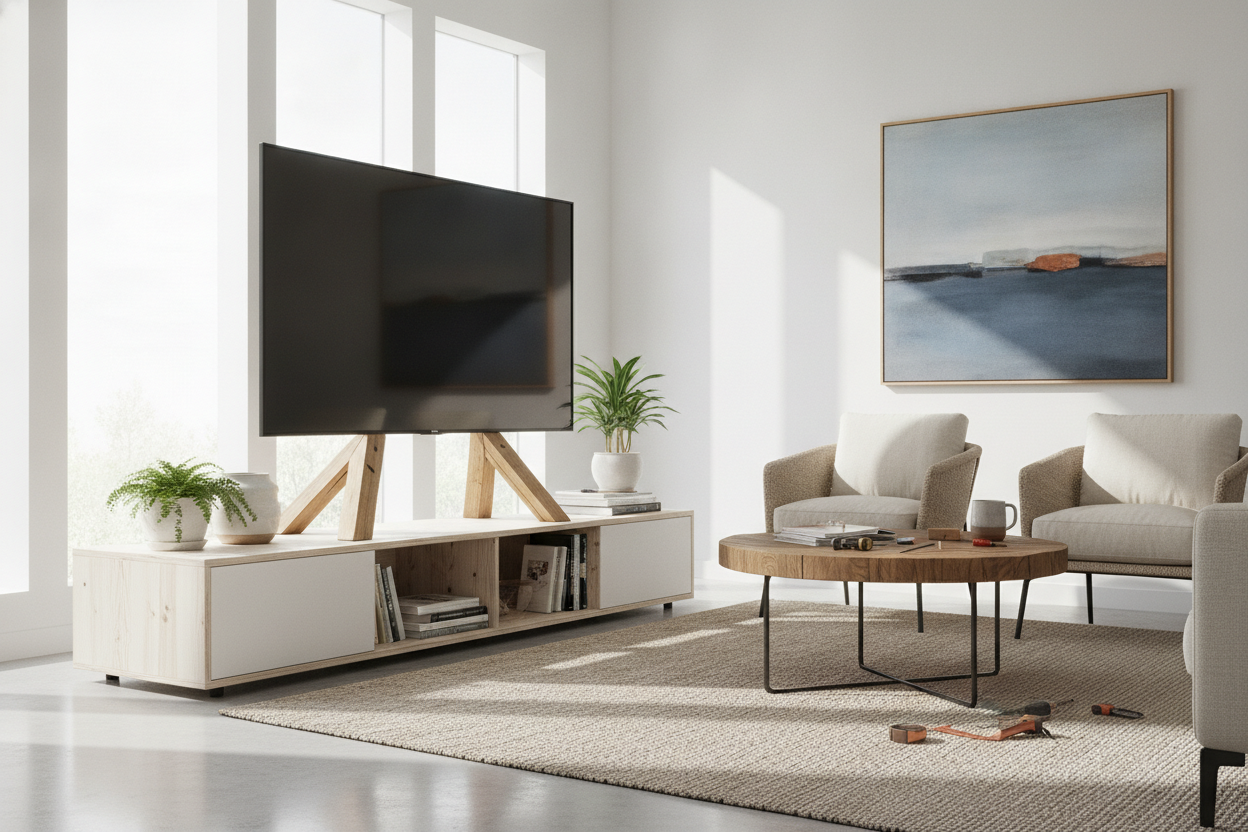
I just moved into a third-floor walk-up, and while my knees survived the stairs, my 55-inch TCL did not emerge unscathed. Not a cracked screen—worse. The small bag of proprietary screws and plastic feet vanished somewhere on the I-95. I was left with a massive black rectangle and no way to stand it up on my credenza. Instead of begging the manufacturer for $40 plastic replacements, I decided to build my own diy tv legs.
Quick Takeaways
- VESA mounting holes are more reliable than factory leg slots.
- Hardwood (oak or walnut) is mandatory; skip the cheap pine.
- An angled leg design prevents the screen from tipping forward.
- The total project cost is roughly $25-30.
The Great Moving Day Disaster
I tried the makeshift tv stand route first by propping the screen against a stack of heavy art books. It looked okay for ten minutes until I realized a slight breeze or a heavy footstep would send $500 of tech face-first onto the floor. Those factory feet are usually hollow, brittle plastic anyway. They are the bare minimum requirement for a product to stand up. Losing them was actually a blessing because it forced me to stop settling for 'good enough' and start building something that actually looked like it belonged in a curated home.
Anatomy of a Sturdy DIY TV Base (Please Don't Crack Your Screen)
Most people instinctively look at the bottom of the TV for the leg slots. Forget those. They are proprietary and usually require a specific plastic molding to fit. Look at the back of your set instead. Those four threaded holes are the VESA mount points. I had previously tackled a DIY floating TV stand, so I knew these holes were reinforced to support the weight of the entire chassis. Using them to create a diy flat screen tv stand is much safer than trying to wedge something into the narrow slots on the bottom edge.
The Hardware Store Shopping List
You only need a few things to make homemade tv legs that look high-end. Pick up two 12-inch hardwood dowels (1.5-inch thickness is best), four VESA-compatible bolts (check your manual, but they are usually M6 or M8), and two heavy-duty steel mending plates. You will also need some threaded wood inserts so you can screw the bolts directly into the wooden legs.
How I Built My Custom DIY TV Legs in an Afternoon
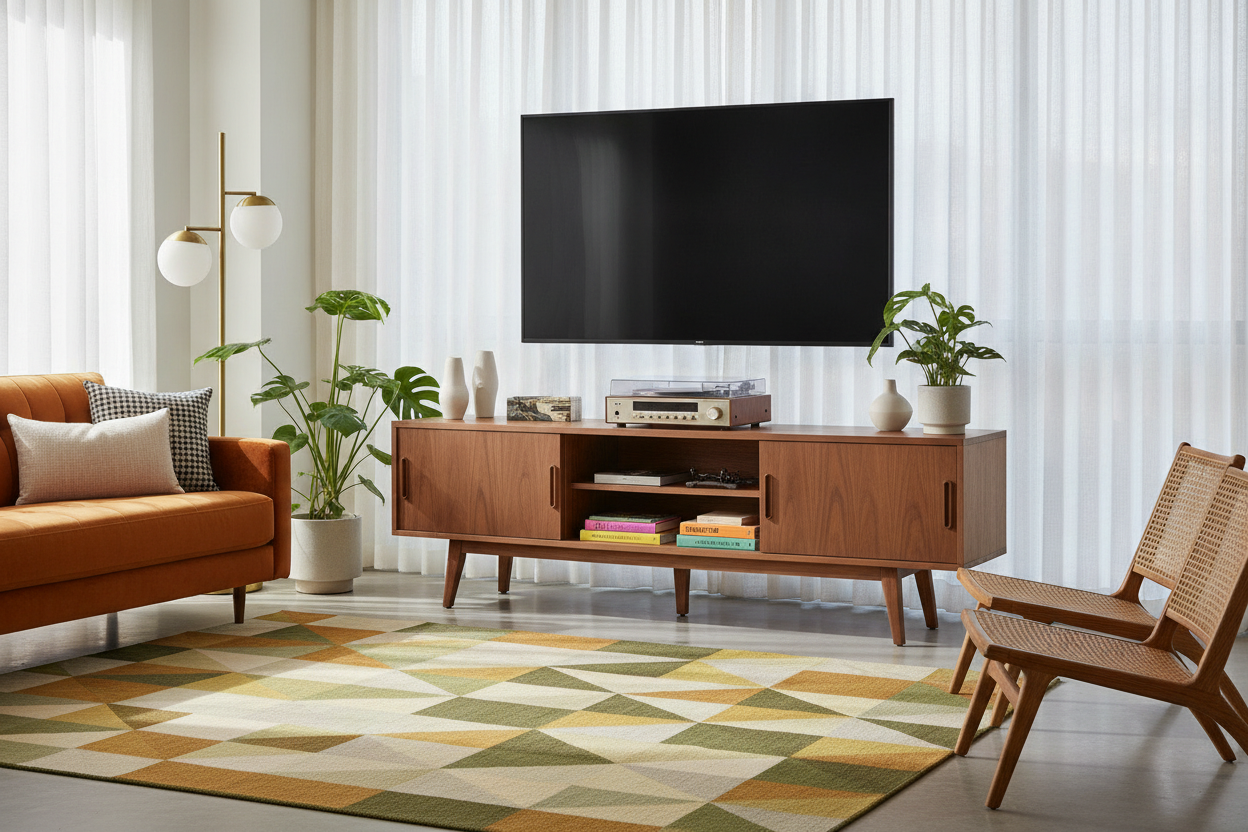
I started by cutting the dowels at a 15-degree angle. This gives the legs that iconic mid-century splay which is essential for a diy tv base—a wider footprint means better stability. I spent about an hour sanding them down to a smooth finish before applying a walnut stain. I wanted the legs to match the console I used when I built a DIY MCM TV stand last year. Pro tip: drill your pilot holes slowly. If you split the hardwood by forcing a threaded insert, you have to start over from scratch. Once the inserts are in, you just bolt the mending plates to the VESA holes and screw the legs into the plates.
When to Skip the Hacks and Just Buy Furniture
I love a weekend project, but I am also a realist. If you have a massive 85-inch screen or a household full of toddlers and large dogs, custom wooden dowels might not be the move. In those scenarios, a heavy-duty adjustable TV stand for living room is a much safer bet. It is better to spend a bit more on standard TV stands with a weighted steel base than to risk your electronics because you wanted to feel handy. DIY is about style, but safety is about physics.
The Final Reveal (And Why I'm Never Going Back to Plastic)
Once I bolted my new diy tv feet into the back of the screen, the difference was night and day. The TV no longer looks like a piece of plastic tech; it looks like a piece of furniture. It sits perfectly on top of my modern TV stand with cabinets, and the wood-on-wood aesthetic is infinitely classier than the factory legs. It’s sturdy, it’s custom, and it cost me less than a large pizza.
FAQ
Will this work for any TV?
Almost every flat screen made in the last decade has VESA holes on the back for wall mounting. As long as those holes exist, you can bolt custom legs into them. Just make sure your bolts are the correct metric size for your specific model.
Is it actually stable?
Yes, provided you use hardwood and maintain an angled stance. Hardwood dowels like oak or maple can support hundreds of pounds of vertical pressure. The angle prevents the TV from tipping forward or backward if the table is bumped.
Can I use pine dowels instead?
I wouldn't. Pine is a softwood and the threads of your inserts can pull out or strip over time under the weight of a heavy screen. Stick to hardwoods for anything structural.

Leave a comment
This site is protected by hCaptcha and the hCaptcha Privacy Policy and Terms of Service apply.