










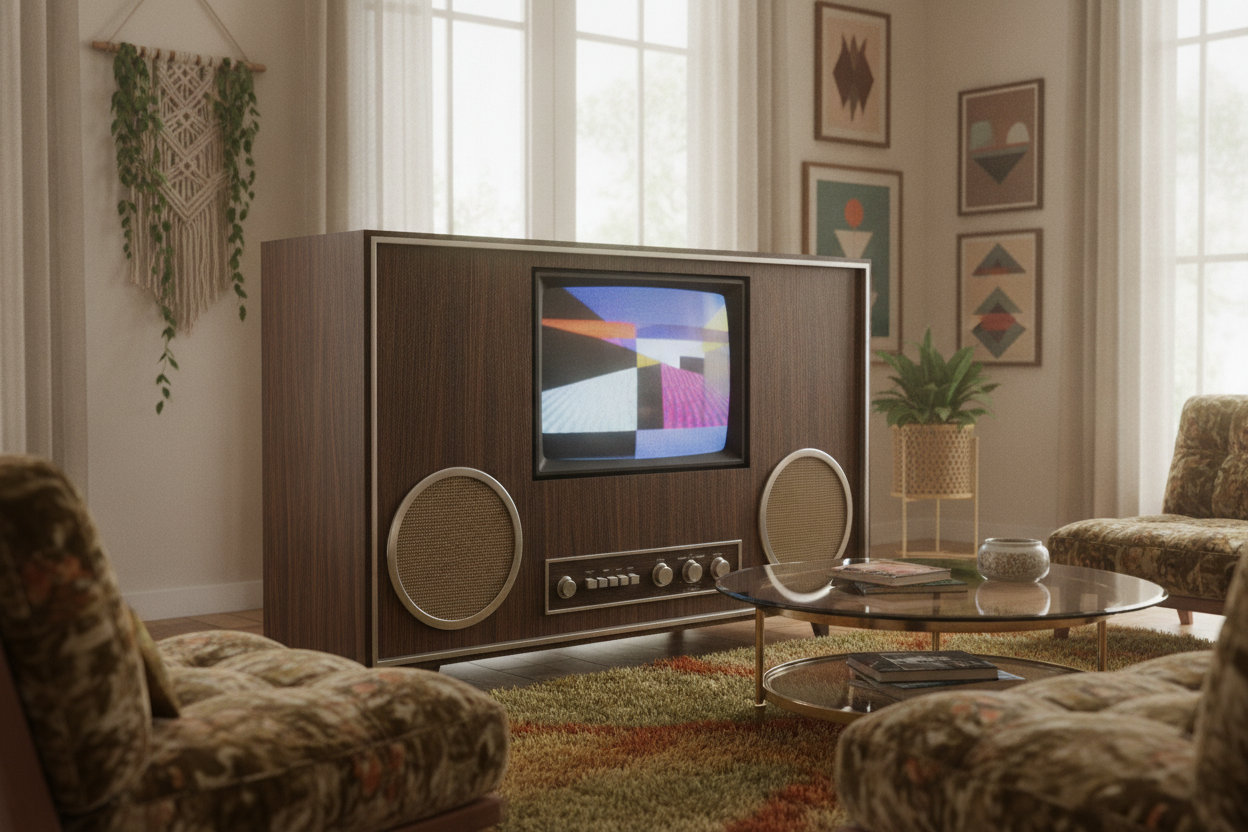
I spent three hours last Saturday staring at my living room wall, and I finally realized why it felt so depressing. My 65-inch flat screen was floating there like a giant, black obsidian void, held up by a thin metal bracket that looked like it belonged in a dentist's waiting room. I missed the weight, the wood, and the sheer presence of the old-school console television my grandparents had in their wood-paneled den.
Those massive units weren't just electronics; they were anchors. They were pieces of furniture that happened to have a screen inside. If you are tired of the 'tech-shrine' look where wires are the only design element, it is time to embrace the heavy, low-slung aesthetic of a 1970 tv console without actually hunting down a 200-pound box with a dead cathode-ray tube.
Quick Takeaways
- Prioritize horizontal weight over vertical height to ground the room.
- Look for walnut or teak veneers with visible grain to mimic the 70s console tv vibe.
- Slatted doors or integrated speaker grilles are the secret to that furniture-first look.
- Hide your cables—nothing kills a vintage vibe faster than a plastic cord nest.
The Sterile Media Wall is Dead (Long Live the 70s)
For the last decade, we have been obsessed with making TVs disappear. We mount them flush to the wall, hide them behind motorized art, or buy stands so minimalist they look like they might snap under the weight of a remote. It is cold, it is sterile, and frankly, it makes the living room feel like a showroom rather than a home.
The return to a 70s style tv stand is really a return to comfort. We want furniture that feels substantial. A 1970s tv stand wasn't just a platform; it was a statement that this room is for lounging. By choosing a piece with actual mass, you stop the TV from being the focal point and start treating it as part of a curated room.
What Made the Console Television Feel Like Actual Furniture?
The magic of the console television 1970s era was the 'all-in-one' philosophy. The speakers were built behind fabric or wooden slats, and the screen was framed like a piece of art. It used rich walnut veneers and sat low to the ground, usually on short, tapered legs or a solid plinth base. This silhouette kept your line of sight low, which actually makes a room feel taller and airier.
I realized I needed to move away from the spindly, cheap-looking units that dominate big-box stores. I swapped my minimalist setup for a much heavier display cabinet TV stand because I wanted that floor-hugging presence. A 70s tv console didn't just hold the TV; it owned the wall it sat against.
How to Get a 70s Style TV Cabinet (Without the Broken CRT)
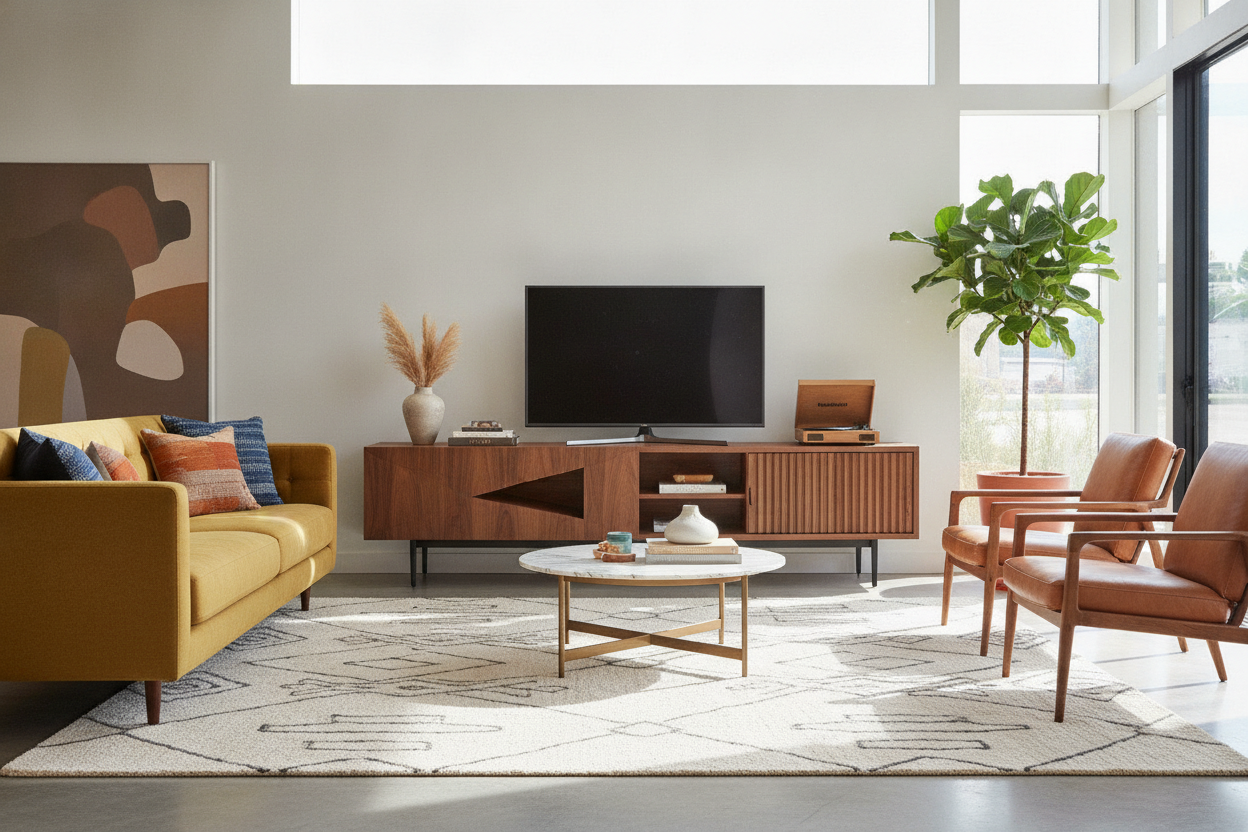
You don't need to scour estate sales for a literal console tv 70s relic that smells like old cigarettes. You can fake it with the right modern pieces. When shopping for a 70s tv cabinet, look for 'mid-century' or 'brutalist' descriptors, but focus on the 'low and slow' profile. You want something at least 60 to 70 inches wide, even if your TV is smaller, to capture that 70s media console scale.
Check out this collection of TV stands to find pieces with those specific 70s hallmarks: tambour doors, rich honey or espresso stains, and integrated storage. Avoid high-gloss finishes or glass shelves. You want matte wood that looks like it has a history. A 70s style entertainment center should look like it was built to last thirty years, not three.
Styling Your 70s Media Console for the 21st Century
The challenge is making a modern, razor-thin OLED look right sitting on a 70s style tv stand. The trick is balance. You need to flank the TV with objects that have similar visual weight. Think large ceramic lamps or a stack of oversized coffee table books. I’m a big fan of using a symmetric L-shaped media console if you want a slightly more architectural, modern take on the grounded 70's style tv cabinet look.
Don't forget the greenery. A trailing pothos or a snake plant in a terracotta pot is the ultimate 70s entertainment center accessory. It softens the hard edges of the electronics and plays off the wood grain. And please, for the love of design, use cord clips. A console tv 1970's style was a self-contained unit; seeing a black power cord dangling down the wall ruins the illusion instantly.
My Personal Lesson in 'Vintage' Weight
I once bought a genuine 1970s console tv at a garage sale for $20. It was gorgeous—solid oak with those iconic woven speaker covers. I spent four hours gutting the electronics to turn it into a 'modern' stand. It was a disaster. The old particle board inside crumbled the moment I tried to install a shelf for my Xbox, and the whole thing weighed more than my refrigerator. I eventually gave up and bought a high-quality reproduction. Modern hardware is just lighter and more functional, and you can get the same 70s style entertainment center look without the back surgery.
Frequently Asked Questions
Can I put a 65-inch TV on a vintage console?
Usually, no. Most original 70s console TVs had a top surface that wasn't designed to hold a wide-base modern stand. You are better off buying a modern 70s style tv stand that mimics the look but provides the width and weight capacity for today's screens.
What is the best wood for a 70s look?
Walnut is the gold standard for that 70s tv console vibe. It has a deep, warm tone and a prominent grain. Teak or a dark-stained oak also works well if you want that rugged, 70s entertainment center feel.
How high should a 70s media console be?
Keep it low. Most 70s style tv cabinets sit between 18 and 24 inches off the ground. This keeps the TV at a comfortable eye level when you're sunk into a sofa, which is exactly how they designed rooms back then.

Leave a comment
This site is protected by hCaptcha and the hCaptcha Privacy Policy and Terms of Service apply.