










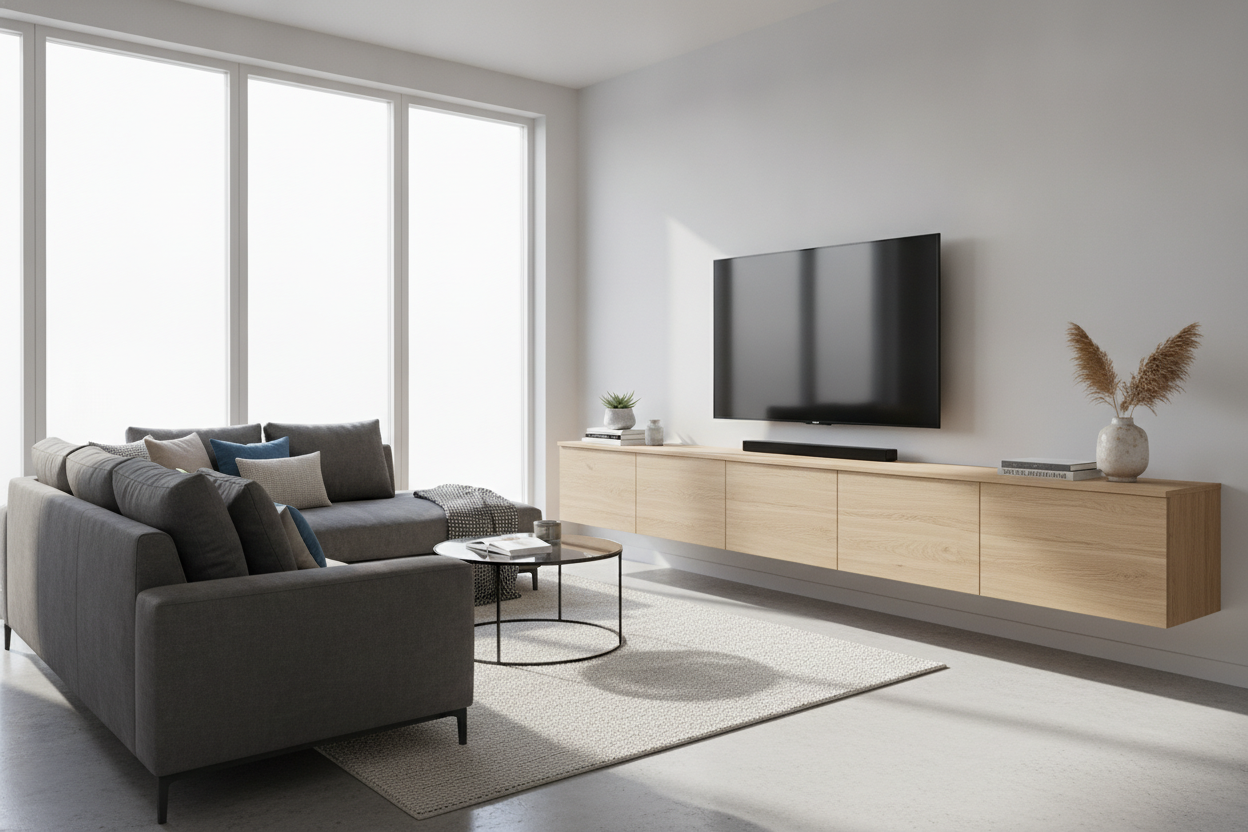
I spent three years staring at the spindly, tapered legs of my mid-century media cabinet, watching my robot vacuum get hopelessly wedged underneath it every Tuesday. The floor looked cluttered, the room felt small, and I was tired of the visual noise. I finally decided to commit to a tv console floating several inches off the ground to give my living room some breathing room.
Quick Takeaways
- Studs are your only friends; ignore them at your own peril.
- Cable management is 70% of the work if you want that 'clean' look.
- Floating units make a small room feel significantly larger by showing more floor.
- Invest in a high-quality stud finder before you start drilling.
Why I Dared to Ditch the Furniture Legs
My living room isn't exactly a ballroom. Every square inch of floor space is precious, and bulky furniture with heavy bases makes the walls feel like they're closing in. I wanted that airy, architectural look you see in high-end lofts, which is why I eventually replaced my bulky console with a floating wooden tv shelf.
Choosing from various floating tv consoles wasn't just about style; it was about reclaiming the floor. When you can see the floorboards extending all the way to the baseboard, the human brain perceives the room as being much bigger than it actually is. Plus, floating tv units look intentional and custom, even if you bought them from a big-box retailer.
The Drywall Anxiety (And How Much Weight These Actually Hold)
The biggest hurdle for most people—myself included—is the fear that the whole unit will come crashing down at 3 AM. I had visions of my floating cabinets for tv ripping huge chunks of drywall out and crushing my soundbar. But here is the reality: a tv floating wall setup is incredibly sturdy if you aren't relying on the drywall itself to do the heavy lifting.
Most floating media units are rated for 50 to 100 pounds, which is more than enough for a modern LED screen and a few accessories. The key is weight distribution. By using a long floating tv shelf, you're spreading the load across multiple points of contact on your wall, making it much more stable than a narrow cabinet.
Studs vs. Anchors: Please Don't Mess This Up
Let's be blunt: if you try to hang floating wall units using those little plastic butterfly anchors that come in the box, you're going to have a bad time. Those are meant for picture frames, not floating wall unit for tv setups holding expensive electronics. You must find the wooden studs. I used 3-inch lag bolts to bite directly into the 2x4s behind my wall. If your studs don't line up perfectly with the mounting holes, you might need to drill new holes in the back of the cabinet or use a mounting cleat. Do not compromise here.
Hiding the Cords Without a Baseboard to Save You
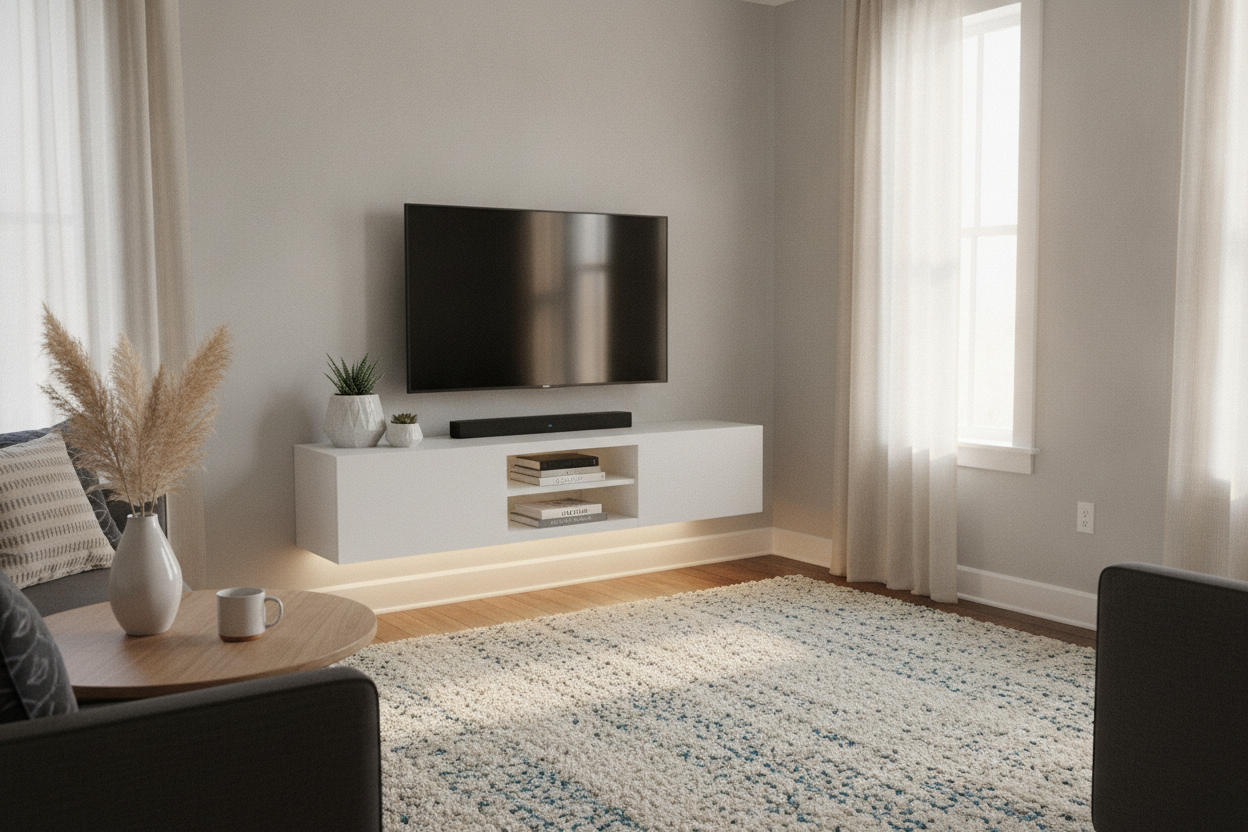
The 'floating' magic disappears the second a black HDMI cable dangles down to the outlet. Cable management is a different beast when your furniture hovers. If you choose a floating tv stand with shelves, you have nowhere to hide the mess, so you'll likely need to run wires behind the drywall or use a paintable cable raceway.
I opted for a floating tv stand with doors because it allowed me to tuck a power strip and all my messy excess cabling inside the unit itself. Floating tv cabinets with a solid back panel are a godsend for hiding the 'spaghetti' of gaming consoles and streaming boxes. Just make sure you have a hole saw bit to create some ventilation so your gear doesn't overheat.
Was the Weekend Installation Stress Worth It?
The visual payoff was immediate. The room feels twice as wide, and there's a certain satisfaction in seeing a clean line of flooring beneath the television. But the real win? Cleaning. My old furniture was a total dust trap try this floating tv shelf instead, and now I can just run a Swiffer under the entire unit in five seconds. No more moving heavy furniture or finding pet hair tumbleweeds stuck behind the legs.
Yes, I spent four hours measuring, leveling, and sweating over a power drill, but the result is a living room that looks professionally designed rather than just 'furnished.' If you have a level, a stud finder, and a bit of patience, it's the best weekend project you can tackle.
Frequently Asked Questions
Can I install a floating tv stand on an apartment wall?
It depends on your lease. You'll be drilling several large holes into the studs. If you're allowed to hang a heavy mirror or a wall-mounted TV, you can usually hang a floating console, but you'll have some patching to do when you move out.
What if my studs aren't centered where I want the TV?
This is common. Most people use a 'French Cleat' system or a piece of 3/4-inch plywood screwed into the studs first, then mount the console to that plywood. It adds a bit of depth but ensures the unit stays on the wall.
How high should I mount my floating console?
Aim for 8 to 12 inches off the floor. Any higher and it starts to look like a kitchen cabinet; any lower and you lose the 'floating' effect. Sit on your sofa and make sure the TV is at eye level before you commit to the height.

Leave a comment
This site is protected by hCaptcha and the hCaptcha Privacy Policy and Terms of Service apply.