










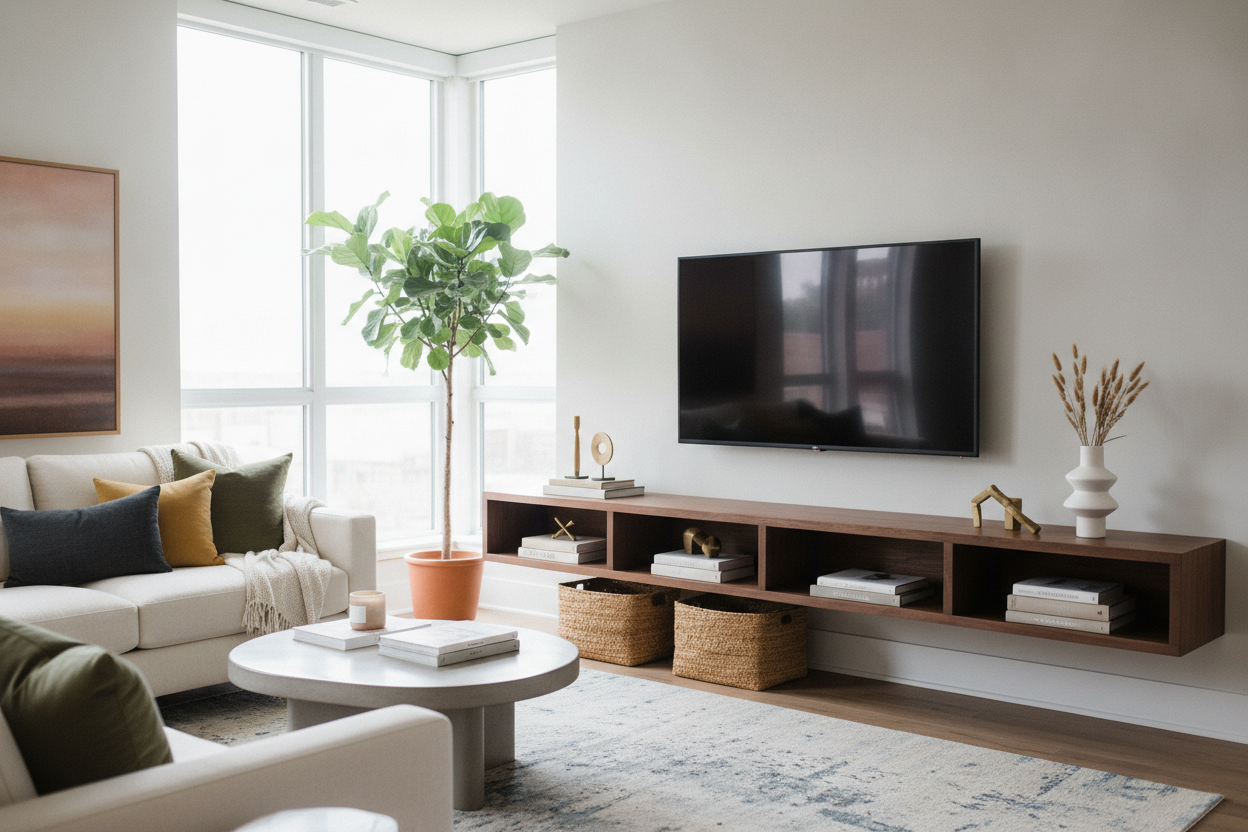
I stood in the Chelsea showroom for forty minutes, staring at a piece of furniture that cost more than my first car's transmission. The tv console table west elm display was curated to perfection. It had the right art books, a ceramic vase that cost $80, and that specific mid-century vibe that makes you feel like an adult with a 401k. But when I checked the tag—$1,299 plus a $200 'white glove' delivery fee—I felt a physical pang in my wallet. I walked out, went to a dive bar around the corner, and started scrolling for alternatives.
Quick Takeaways
- Luxury brand names often hide the fact that you are paying for veneer over MDF.
- Showroom lighting masks build quality issues like flimsy back panels.
- Cable management and airflow are frequently sacrificed for a 'slim' profile.
- You can find the same acorn finishes and tapered legs for less than half the price.
The Showroom Seduction (And the Price Tag Reality Check)
There is a reason the west elm mid century modern tv stand is in every third apartment on Instagram. It is undeniably handsome. The tapered legs give it a floating quality, and the acorn finish has that perfect 1960s warmth. In the store, under those $500 pendant lights, it feels like an 'investment piece.' You tell yourself it will last twenty years.
But then you start doing the math. By the time you add tax and the mandatory shipping fee, you are pushing $1,600. For a media cabinet? I have a 65-inch TV that cost less than the box it sits on. I realized I was being seduced by the lifestyle, not the joinery. I wanted the room in the catalog, but I didn't want the debt that came with it.
Veneer vs. Solid Wood: Are You Getting What You Pay For?
Here is the dirty secret of high-end furniture: 'Solid wood' is often a marketing stretch. Most west elm modern console options are made of engineered wood (MDF or particle board) covered in a thin wood veneer. There is nothing inherently wrong with veneer—it prevents warping—but you can find the exact same construction at a fraction of the price. If I am spending four figures, I want kiln-dried hardwood frames and dovetail joints, not cam-locks and stickers that hide screw heads.
I actually traded my mid-century console expectations for a more realistic look at build specs. I started looking for pieces that used solid rubberwood or eucalyptus for the legs and frame, even if the main body was high-grade MDF. The durability is virtually the same, but you aren't paying for the Manhattan storefront rent.
The Cable Management Problem Nobody Talks About
Many west elm entertainment units are surprisingly shallow. They look great with a couple of coffee table books, but try stuffing a PS5, a Sonos Amp, and a mesh router in there. I have seen high-end consoles with a single, tiny 2-inch hole for 'management.' Your gear will overheat, and you will end up leaving the doors open just to keep the fans from screaming. A real media unit needs ventilation and enough depth (at least 16 inches) to actually house modern electronics without bending your HDMI cables at a 90-degree angle.
Finding the Exact Same Vibe for Half the Price
If you love the aesthetic, you don't have to compromise. You just have to know what to look for. The 'West Elm look' is defined by three things: tapered 'spindle' legs, mitered corners, and slatted or 'tambour' doors. When you browse affordable TV stands, look for these specific design cues. You can find pieces that use the same acorn-stained eucalyptus wood but cost $400 instead of $1,400.
I specifically hunted for a TV stand with slatted doors. Why? Because slats are the ultimate 'cheat code' for media storage. They allow infrared signals from your remote to pass through and provide natural airflow for your electronics, all while hiding the rat's nest of wires behind the scenes. It gives you that high-end architectural look without the custom-cabinetry price tag.
What I Actually Bought (And How It's Holding Up)
After three weeks of obsessive research, I landed on an adjustable modern TV console cabinet. It gave me the flexibility to expand the unit if I ever move to a bigger place, which is a level of modularity you rarely get with the big-box luxury brands. It arrived in two heavy boxes, and yeah, assembly took me two hours and two glasses of wine.
I did make one classic mistake: I used a power drill on the cabinet hinges and immediately stripped one of the screws. Pro tip: put the drill away. These pieces require a delicate touch. But once it was up? It looked identical to the showroom pieces. It’s been eight months, and the finish hasn't chipped, the doors haven't sagged, and my guests always ask if I bought it from that 'expensive store' in the mall. I just smile and tell them it was a 'vintage find.'
FAQ
Is West Elm furniture real wood?
Some pieces are solid wood, but many of their popular consoles use a mix of solid wood legs and kiln-dried engineered wood with wood veneers. Always check the 'Details' tab on the product page for the specific material breakdown.
How wide should my TV console be?
Your console should be at least 6 to 10 inches wider than your TV. A 65-inch TV is about 57 inches wide; if you put it on a 60-inch console, it looks cramped and top-heavy. Go for at least a 70-inch unit for the right visual balance.
Are furniture dupes worth it?
Yes, if you check the weight capacity and material list. Avoid anything made entirely of 'paper foil' veneer, which peels easily. Look for 'wood veneer' or 'melamine' for better durability at a lower price point.

Leave a comment
This site is protected by hCaptcha and the hCaptcha Privacy Policy and Terms of Service apply.