










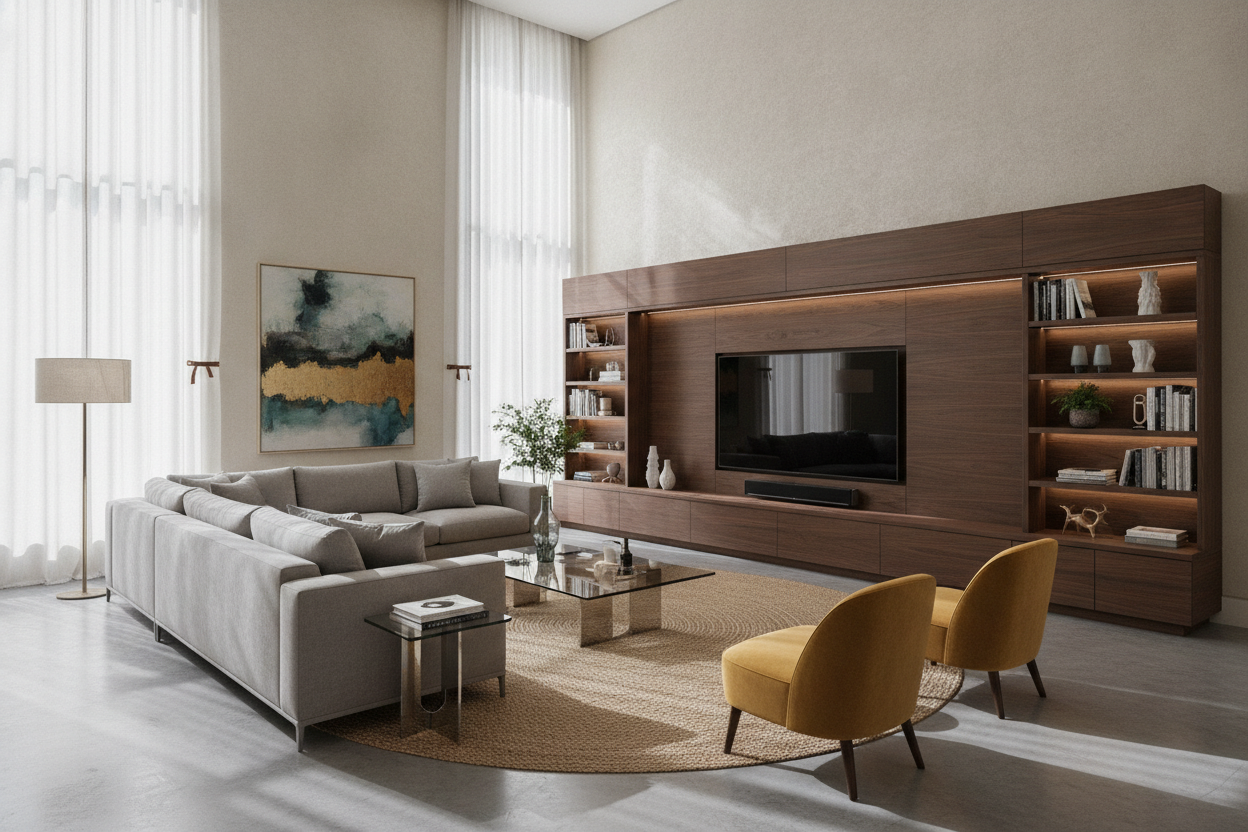
I thought I was prepared. I had the metal tape measure. I had the blue painter's tape outlined on the floor. But when you actually see a 120 inch long tv stand in the flesh—or rather, in the kiln-dried oak—your brain does a little somersault. It is not just a piece of furniture; it is a structural addition to your home that demands its own zip code.
Quick Takeaways
- Measure your doorways and hallway corners three times; a 10-foot box does not turn corners easily.
- Freight delivery is not the same as parcel; expect a literal wooden pallet on your driveway.
- Scale is everything—a 120 inch tv stand makes a 65-inch TV look like a tablet.
- Consider modular units if you ever plan on moving again without hiring a crane.
The Day the Freight Truck Arrived (And Panic Set In)
Most TV stands arrive in a flat-pack box that one person can drag across the carpet with enough grit. A 120 inch entertainment center is a different animal. When the freight truck pulled up, the driver looked at me with genuine pity. This thing arrived on a double-wide pallet and weighed nearly 300 pounds. It was too long for the liftgate to handle comfortably.
Unlike standard parcel delivery, freight drivers usually only offer 'curbside' service. I spent forty minutes in the rain trying to figure out how to get a 10-foot box through a standard front door. If you are ordering a 120 inch tv console, do yourself a favor and pay for the white-glove inside delivery. Your lower back will thank you, and you won't have to explain to your neighbors why there is a massive wooden crate blocking the sidewalk.
Measuring Your Space (Beyond Just Wall Width)
A 120 inch wide tv stand takes up ten feet of horizontal space. That sounds fine if you have a 15-foot wall, but the math changes when you live in the room. You have to account for depth. Most of these units are 18 to 22 inches deep. In a narrow living room, you have just created a 'bowling alley' effect where you are shimmying past the media console just to get to the kitchen.
You need at least 36 inches of clear walkway in front of the unit to keep the room from feeling claustrophobic. Also, check your outlets. A 120 media console will likely cover three different wall outlets. If you don't have built-in wire management or recessed outlets, that 10-foot 'sleek' look is going to be ruined by a spiderweb of black power cords peeking out from the sides.
The Alternative: Pushing Two Smaller Units Together
After wrestling with my behemoth, I started looking at how my designer friends handle these massive spans. Many of them skip the single-piece 120 tv console entirely. Instead, they buy two identical units—like a TV stand 47 inch wide—and butt them up against each other.
Yes, you get a tiny vertical seam in the middle, but the benefits are massive. You can actually fit them in an elevator. You can move them yourself. And if you ever move to a smaller place, you have two usable pieces of furniture instead of one 10-foot liability. If you choose units with a flush side and no overhang on the top, the seam practically disappears once you put a lamp or a tray over it.
Styling a 10-Foot Runway Without It Looking Cluttered
The biggest mistake people make with a 120 inch tv stand is centering a 55-inch TV and leaving five feet of dead space on either side. It looks like a retail shelf waiting for a restock. You have to treat the surface like a gallery. I like to use the 'rule of thirds' here.
Place the TV slightly off-center or balance it with height. On one end, I used a tall, architectural table lamp. On the other, I stacked three oversized coffee table books with a heavy ceramic bowl on top. This creates 'zones' on the 120 entertainment center so it feels intentional. Don't be afraid of negative space, but make sure the items you do choose have enough 'visual weight' to not get swallowed by the scale of the wood.
Final Verdict: Who Actually Needs a Stand This Big?
If you have an 85-inch or 98-inch screen, you absolutely need a tv stand 120 inches long. Anything smaller and the TV will hang off the edges, which is a cardinal sin of interior design. It anchors the room and provides a massive amount of storage for those of us who still refuse to get rid of our physical media or vintage consoles.
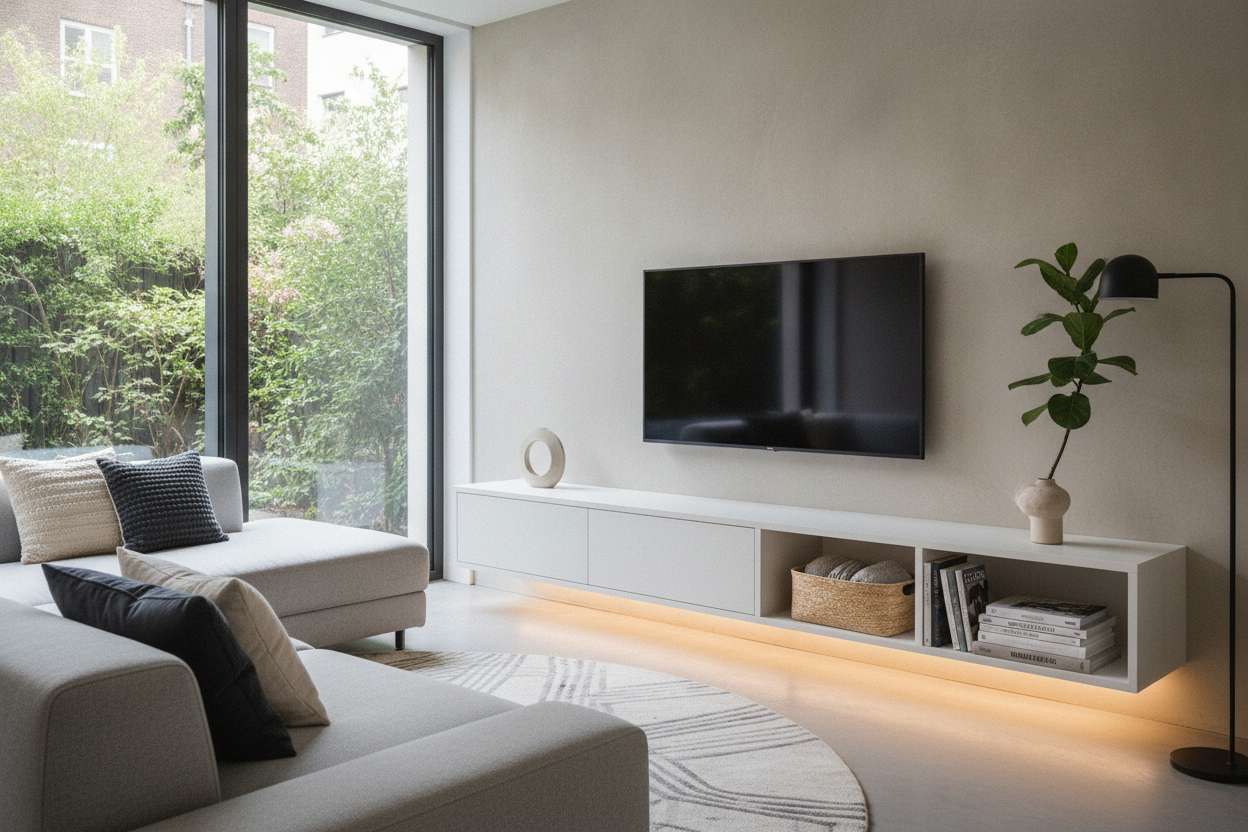
However, if you are in a rental or have tight corners, the physical footprint is a lot to manage. For those who want the length without the bulk, a floating TV stand wall mounted media console is the pro move. It gives you that 10-foot horizontal line but keeps the floor visible, which makes the room feel twice as large. Just make sure you're hitting at least five studs, or that 120 inch media console will be on the floor by morning.
FAQ
Will a 120 inch TV stand fit in a standard SUV?
Absolutely not. Even with the seats down, most SUVs max out at 7 or 8 feet of internal length. You will need a box truck or a very long flatbed trailer to transport a 120 tv stand in one piece.
How many people are needed to assemble a 120 inch entertainment center?
Two people are the bare minimum for the 'flip'—the moment you have to turn the unit upright. Because of the 10-foot span, the center can sag or snap under its own weight if you try to lift it alone from one end.
What is the best TV size for a 120 inch console?
An 85-inch TV is the 'sweet spot.' It leaves about 20 inches of breathing room on either side, which looks balanced and expensive. A 65-inch TV can work, but you will need to be very aggressive with your styling to fill the gaps.

Leave a comment
This site is protected by hCaptcha and the hCaptcha Privacy Policy and Terms of Service apply.