


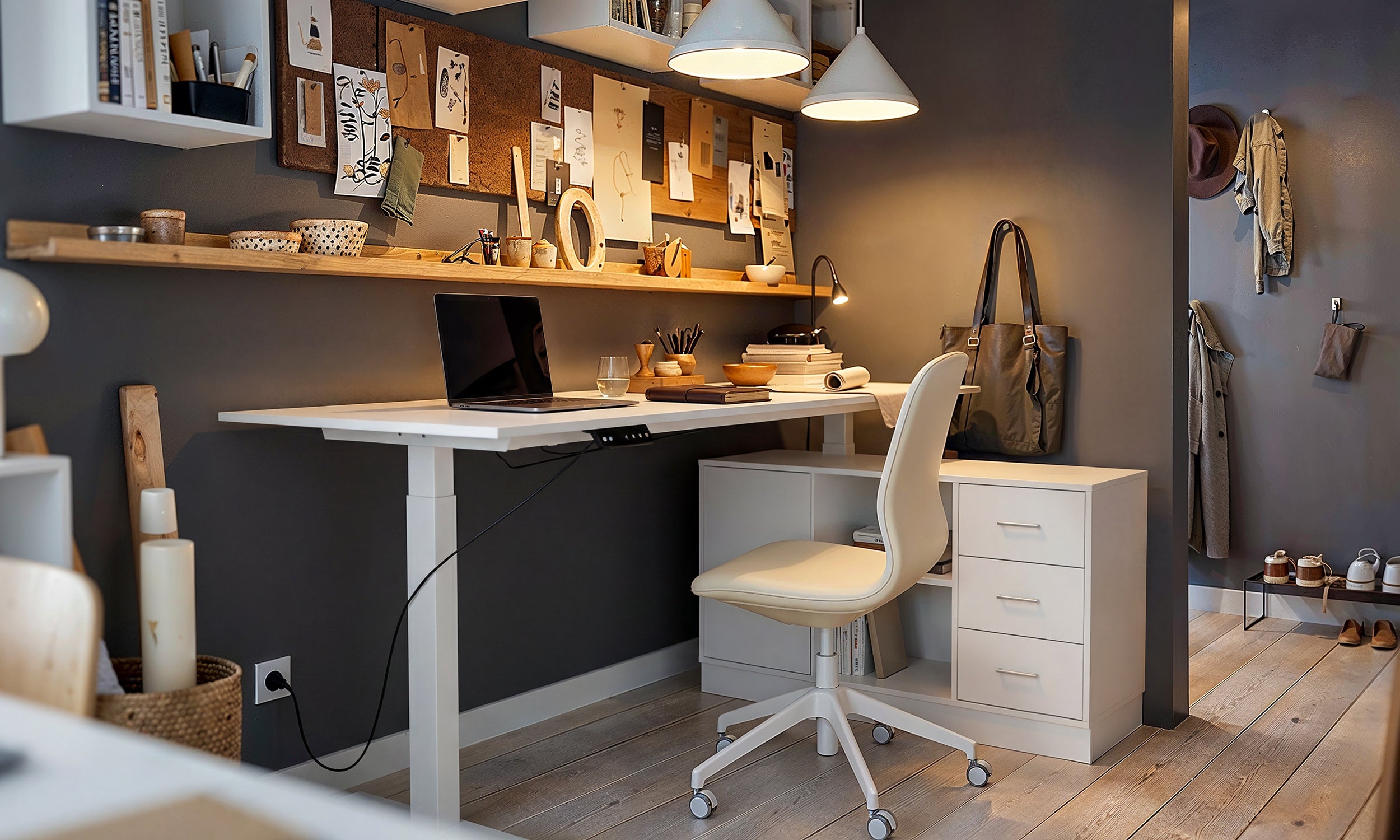
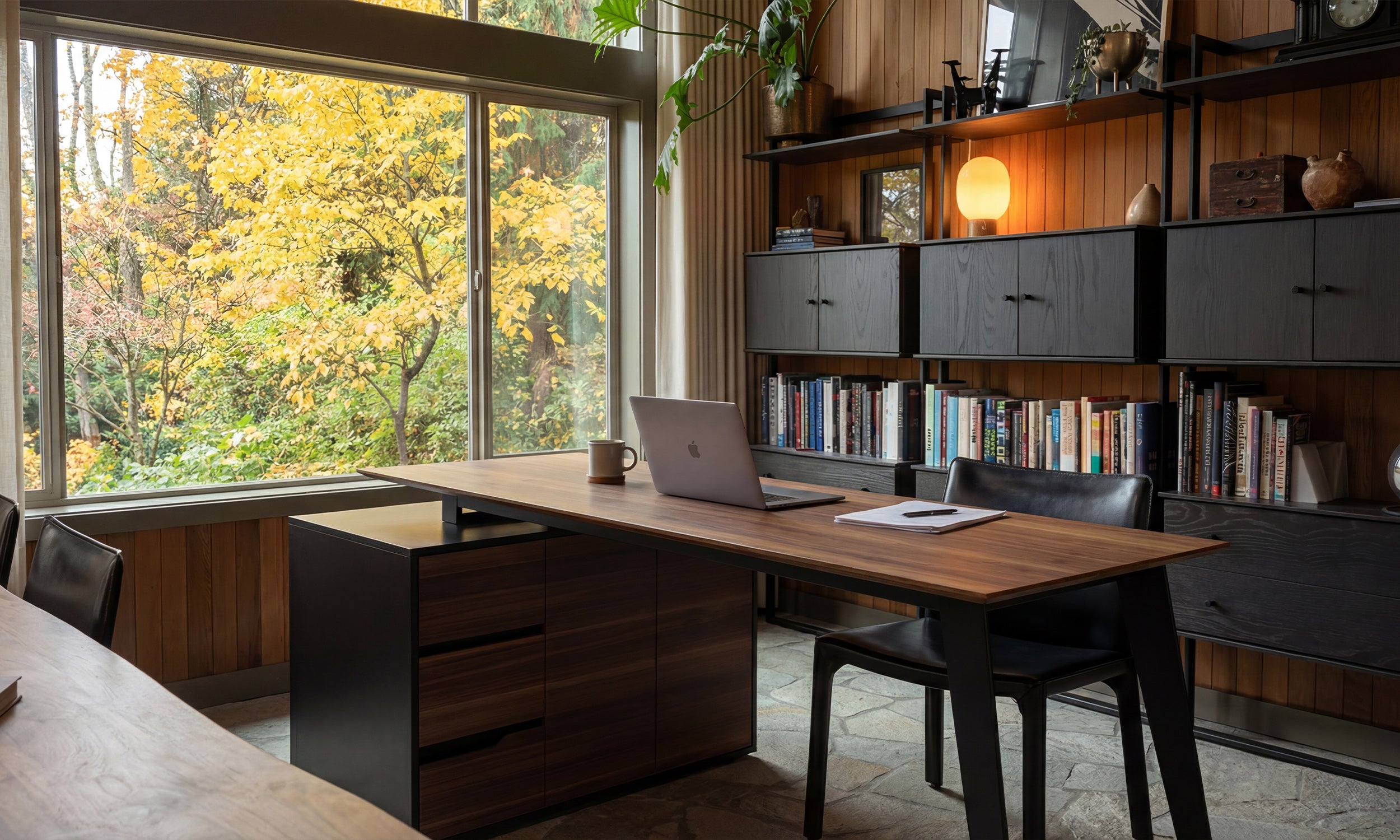



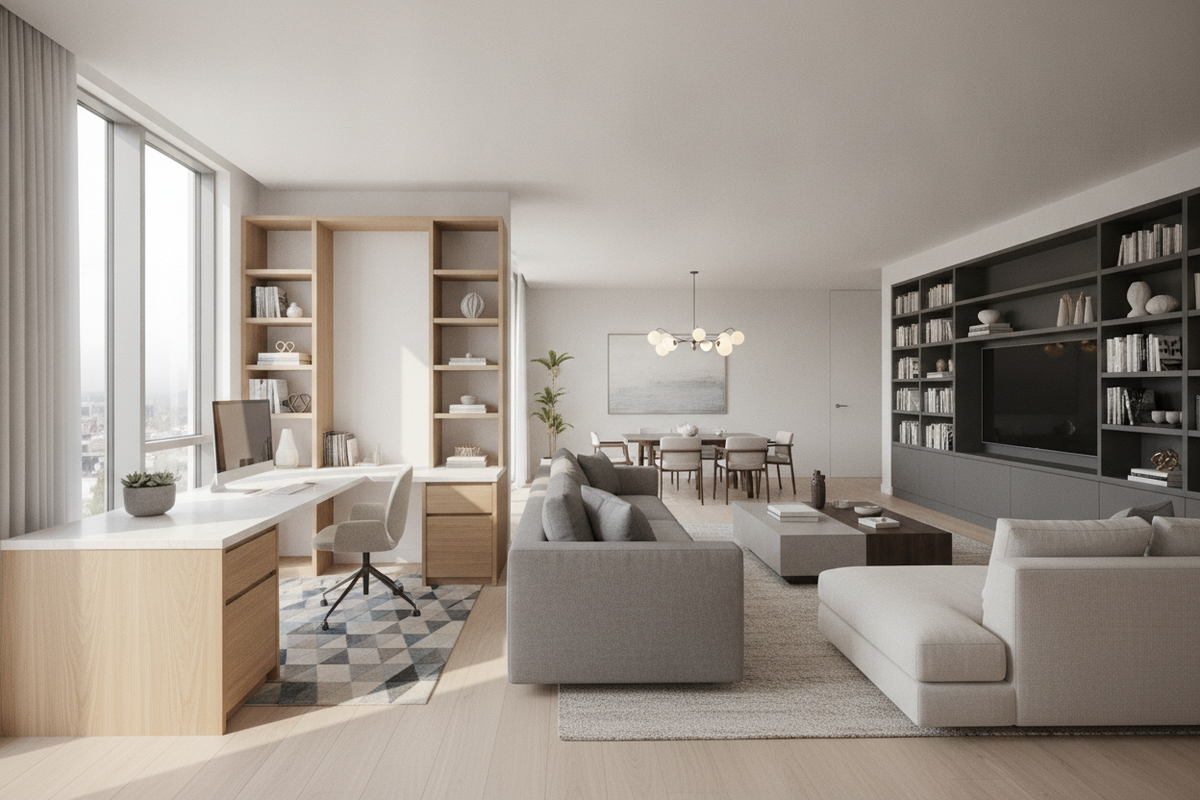
Introducing a dedicated workstation into a primary relaxation space requires a thoughtful approach to spatial planning. An l-shaped desk in living room floor plans can provide the extensive surface area required for productivity without dominating communal square footage. When positioned with deliberate intent, an L-shaped unit transitions from an intrusive office fixture into a purposeful architectural boundary or an unobtrusive perimeter feature.
Spatial Placement Frameworks: Positioning an L-Shaped Desk in Shared Living Areas
Shared living spaces must balance multiple activities: entertainment, conversation, leisure, and focused professional tasks. Achieving this balance depends largely on how furniture defines functional boundaries across the room.
The Perimeter Corner Anchor: Maximizing Open Floor Area
Tucking an L-shaped workstation into a natural corner remains one of the most effective ways to preserve central floor space. By aligning both wings directly against perpendicular walls, you keep the main sightlines through the living room completely clear. This perimeter strategy works exceptionally well in open-concept spaces where traffic flows diagonally across the room.
Selecting a clean-lined piece, such as a minimalist white L-shaped corner desk, helps the furniture blend quietly into light-toned walls. This visual blending prevents the workstation from feeling bulky or utilitarian during evening hours when the room shifts entirely toward relaxation.
The Sofa-Backed Room Divider: Delineating Work and Lounge Zones
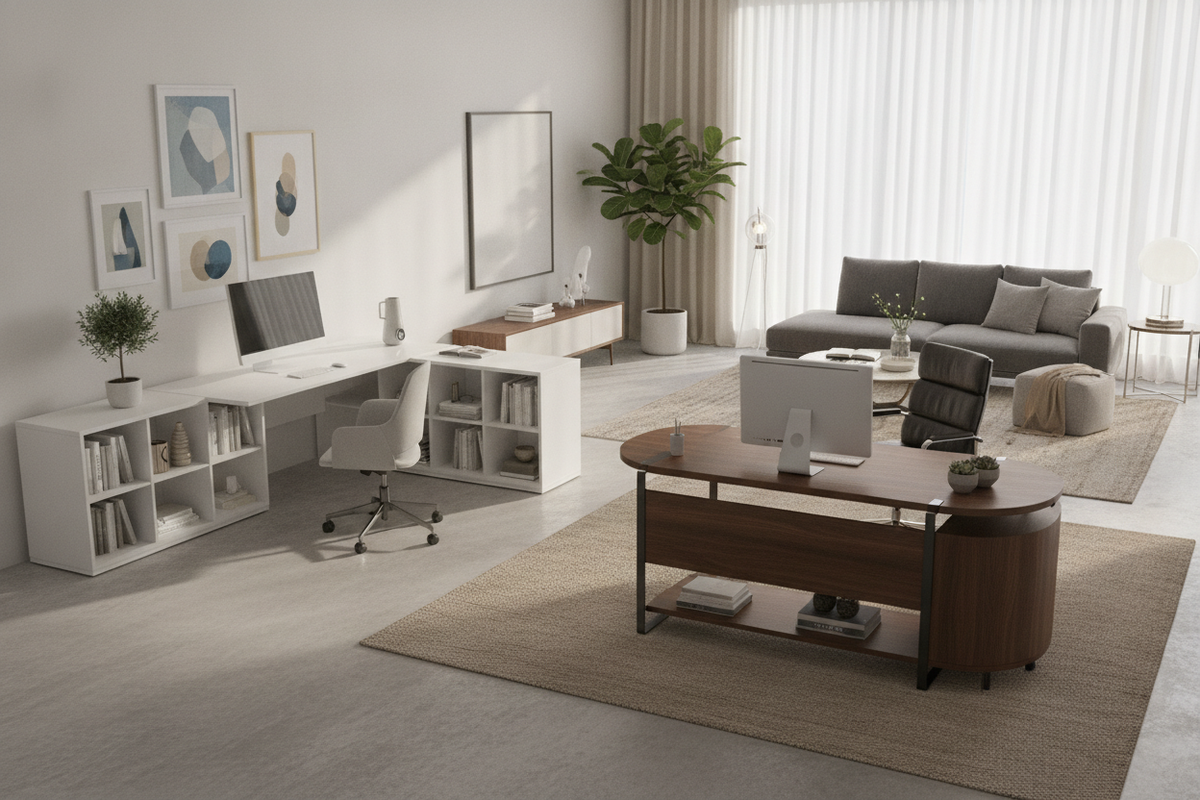
In mid-sized to larger living rooms, an L-shaped desk can function as a subtle architectural partition. Positioning the primary desk wing against the back of a seating arrangement creates an intuitive division between work and leisure areas.
When paired alongside a deep-seated modular sectional sofa, the desk return acts as a natural room divider. This setup allows the seated professional to face into the room or toward a window rather than staring directly at a blank wall, while keeping monitors and paperwork sheltered from immediate view upon entering the main entryway.
Clearance Envelopes and High-Traffic Runway Management
Regardless of placement, maintaining unhindered traffic flow is vital in shared spaces. Always account for functional clearance envelopes:
- Chair Pushback Zone: Ensure generous clearance behind the primary seating spot so task chairs can glide out without striking sofas or media consoles.
- Walkway Runways: Preserve uninterrupted pathways between main interior doors, balcony access points, and seating areas.
- Door and Drawer Swings: Check that desk returns do not impede nearby closet doors, low credenzas, or patio entries.
Dimensional Geometry: Sizing Desk Wings to Fit Living Room Proportions
The footprint of an L-shaped desk involves two interacting surfaces: the primary working table and the secondary return. Selecting the right dimensional relationship between these wings ensures the unit complements your existing living furniture rather than overpowering it.
Symmetrical vs. Asymmetrical Desk Returns
Symmetrical corner desks feature equal-length surfaces on both sides. These work best in dedicated architectural alcoves or balanced square corners where both wall segments offer identical clearance. However, in most multi-functional living areas, asymmetrical configurations prove far more versatile.
An asymmetrical desk pairs an extended main desk surface with a narrower, shorter side return. This setup allows you to position primary monitors along the main wall while keeping personal peripherals, printers, or reference binders discreetly tucked along the secondary surface. For smaller living rooms, exploring specialized small space desk configurations can help pinpoint how asymmetrical proportions preserve vital breathing room.
Reversible Returns for Long-Term Room Adaptability
Living room arrangements often evolve over time. Choosing a desk model with a reversible return—one that can be assembled in either a left-hand or right-hand configuration—ensures long-term flexibility. A reversible frame allows you to adapt the workstation whenever you rearrange seating, relocate media cabinets, or move to a new residence.
Aesthetic Harmony: Blending Office Workstations with Living Room Decor
A home office desk in a shared living room should complement the surrounding decor rather than look like standard commercial office surplus. Achieving cohesive visual integration requires careful attention to materials, color palettes, and storage architecture.
Matching Finishes and Textures with Surrounding Furniture
To create a cohesive atmosphere, select desk surfaces that echo the materials found in your living room credenzas, coffee tables, and shelving. If your living area features warm walnut finishes or matte black accents, incorporate those same design cues into the desk frame and desktop.
For comprehensive guidance on accessorizing your setup without cluttering the room, consult practical advice on styling a desk for living spaces. Introducing decorative ceramics, warm task lamps, and framed prints helps visually anchor the workstation within a residential setting.
Closed Cabinetry and Under-Desk Storage Architecture
Managing visual items thoughtfully helps maintain a relaxed living room atmosphere. While open-frame minimalist desks offer an airy aesthetic, desks featuring integrated lower storage provide practical options for stowing away daily work necessities:
- Integrated Pedestals: Closed drawers keep charging cords, external drives, stationery, and confidential documents out of sight.
- Enclosed Return Cabinets: Larger side returns featuring closed doors can conceal mini PC towers, file folders, and secondary monitors when not in use.
- Concealed CPU Shelving: Stowing computer hardware behind slatted or solid cabinet fronts preserves clean sightlines throughout the living room.
Living Area Cable Containment and Tech Management
Because an L-shaped desk in a living room is often visible from multiple angles—including from sofas and dining chairs—unmanaged cords can quickly become an eyesore and a tripping hazard.
Concealing Wires Across Open Floor Runs
When positioning an L-shaped desk away from perimeter walls, such as behind a couch or in the middle of a room, route cables thoughtfully across the floor. Under-desk cable management trays, modesty panels, and low-profile over-floor raceways ensure that power cords travel safely and neatly to the nearest wall outlet.
Low-Profile Task Lighting and Peripheral Organization
Bulky desk accessories can easily crowd shared communal spaces. To maintain an open, serene aesthetic across both desk returns, prioritize streamlined accessories:
- Monitor Mounting Arms: Clamping monitors to the rear edge of the desk frees up substantial desktop surface area underneath.
- Integrated Power Grommets: Desktop pass-throughs prevent charging cables from spilling over outer desk edges.
- Under-Mounted Task Lights: Low-profile lighting bars or slim architect lamps provide focused work illumination without casting glare across television screens or seating zones.
Strategic Decision Matrix: Choosing the Right L-Shaped Desk for Your Living Room
Before selecting an L-shaped workstation for your living area, evaluate your room against these key planning factors:
- Perimeter vs. Floating: Corner placements maximize central floor space; sofa-backed floating placements define distinct functional zones.
- Return Orientation: Determine whether a left-hand, right-hand, or reversible layout best accommodates your room's natural window light and doorways.
- Material Continuity: Align desk finishes with your existing living room tables and entertainment consoles to maintain design harmony.
- Storage Capacity: Choose enclosed drawer pedestals if you need to conceal hardware and office supplies during non-working hours.
By treating the L-shaped desk as an intentional part of your broader interior plan, you can establish an efficient, comfortable workstation that supports your daily routine while enhancing the relaxed beauty of your living room.

Leave a comment
This site is protected by hCaptcha and the hCaptcha Privacy Policy and Terms of Service apply.