










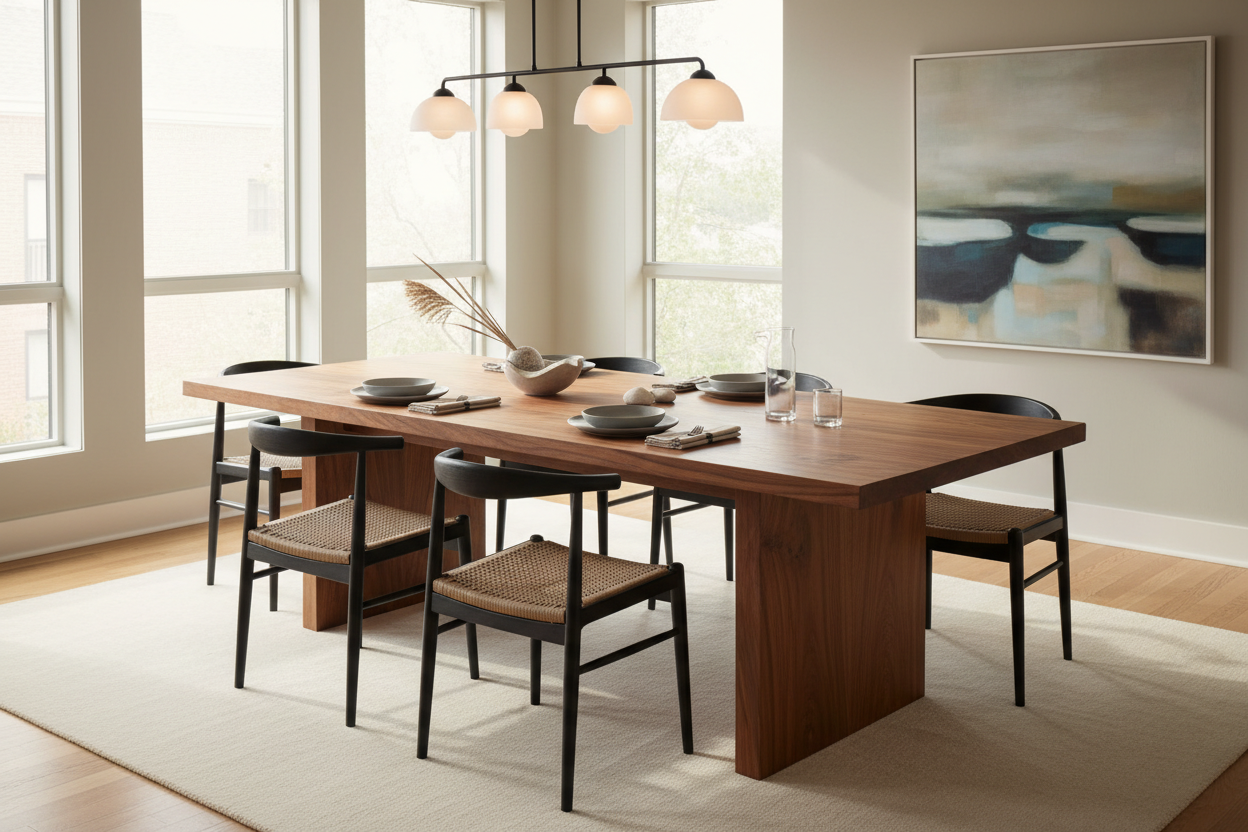
Choosing the centerpiece for your dining area often feels like a tug-of-war between aesthetics and practicality. You want something that looks sleek and current, yet you need a surface that can handle Sunday morning pancakes and late-night laptop sessions. The short answer is yes: modern wooden dining tables are almost always the right choice, provided you understand how to match the timber and silhouette to your specific lifestyle. Wood brings an inherent warmth that cold glass or industrial metal simply cannot replicate, acting as a grounding element in open-concept living spaces.
I learned this lesson the hard way a few years ago when furnishing my first open-plan apartment. I was obsessed with the idea of a glass-top table to make the small room feel "airy." Within two weeks, the constant smudging and the cold, clanging sound of ceramic plates hitting the glass drove me crazy. I swapped it out for a streamlined walnut piece with tapered legs. The room didn’t look any smaller, but the acoustic quality of the space improved immediately, and the tactile experience of resting elbows on warm wood completely changed the vibe of our dinners. That experience taught me that material choice affects more than just visuals; it dictates how a room feels to live in.
Defining the New Wave of Dining Table Wooden Design
The concept of "modern" has shifted. It no longer strictly means sharp, severe lines or high-gloss lacquer. Today, dining table wooden design is about celebrating the organic imperfections of the material while keeping the form functional and uncluttered. We are seeing a move away from the heavy, chunky farmhouse tables of the early 2000s toward lighter, more architectural profiles.
Current designs often feature chamfered edges (where the edge is cut at a 45-degree angle) to reduce visual bulk. You might also notice a resurgence of the "floating top" aesthetic, where the tabletop sits slightly above the legs on hidden spacers, creating a shadow gap that makes the heavy wood feel weightless. This approach allows you to introduce substantial materials into a room without dominating the floor plan.
Why a Contemporary Solid Oak Dining Table is the Gold Standard
If you are looking for longevity and style, a contemporary solid oak dining table remains the benchmark. Oak is incredibly dense, making it resistant to the dings and dents of daily life. However, the modern approach to oak is different from the honey-colored, varnished look of the past. Modern oak tables usually feature a matte, water-based finish or a natural oil rub. This preserves the pale, neutral tone of the raw wood—often referred to as "white oak"—which fits perfectly with Scandi, Japandi, and minimalist interiors.
Solid wood also offers a repairability factor that veneers cannot match. If your child takes a sharp toy to a veneer table, the damage is permanent. With solid oak, a light sanding and re-oiling can often erase the mistake entirely. When shopping, check the end grain of the table. If the grain pattern on the top doesn't continue over the edge, it is likely veneer. While high-quality veneers have their place, solid timber offers a heft and presence that ages beautifully over decades.
Selecting Wood Modern Kitchen Tables for High-Traffic Areas
Kitchens present a different set of challenges compared to formal dining rooms. The humidity fluctuates, spills happen hourly, and space is often tighter. Wood modern kitchen tables need to be robust. For these spaces, the shape is just as critical as the finish. Round or oval tables are increasingly popular in modern kitchen nooks because the lack of sharp corners improves flow, allowing people to squeeze past without bruising a hip.
In terms of timber for the kitchen, consider hardwoods with a tighter grain, such as maple or ash. These woods are less porous than red oak, meaning they are less likely to absorb beet juice or red wine if a spill isn't wiped up instantly. Furthermore, look for a pedestal base rather than four corner legs. This maximizes legroom and allows you to add an extra chair when guests pile into the kitchen, which is inevitably where everyone ends up gathering.
The Role of Mixed Materials
A significant trend in stylish modern wooden dining table designs is the integration of contrasting materials. You don't have to stick to all-wood construction. A slab of live-edge walnut sitting atop powder-coated black steel legs bridges the gap between rustic warmth and industrial cool. This hybrid style works exceptionally well in urban lofts or homes with concrete floors, as the metal legs tie into the architectural elements while the wood softens the overall acoustic and visual harshness.
Another rising trend is the use of stone inlays or ceramic tops framed by wood. These hybrid designs offer the heat resistance of stone with the structural integrity and warmth of a wooden frame. It is a practical compromise for families who want the look of wood but fear the maintenance of a fully wooden surface.
Maintenance: Keeping the Modern Look
Many buyers hesitate because they fear wood requires constant pampering. This is largely a myth born from the era of high-gloss shellac finishes that clouded over if you looked at them wrong. Modern sealants are remarkably durable. Polyurethane finishes offer a plastic-like barrier that renders the wood almost waterproof, though they can sometimes look a bit artificial.
Hardwax oils are the preferred choice for design enthusiasts. They penetrate the wood fibers rather than sitting on top. While they require a refresh every year or two, they allow the wood to breathe and maintain a natural, matte texture. If you opt for an oiled table, you are signing up for a relationship with the furniture—it requires care, but it rewards you with a patina that gets better with time.
Final Thoughts on Size and Scale
Before making a purchase, use painter's tape to outline the table dimensions on your floor. Modern tables often look smaller in a showroom with 20-foot ceilings than they will in your dining room. Ensure you have at least 36 inches of clearance on all sides for chairs to pull out comfortably. A table that is too large for the room will kill the modern aesthetic you are aiming for, making the space feel cluttered rather than curated. The right wooden table should feel like an anchor, not a barricade.
Frequently Asked Questions
Should I choose a light or dark wood for a modern dining room?
Light woods like white oak or ash generally create a sense of space and airiness, making them ideal for smaller rooms or Scandinavian styles. Darker woods like walnut provide drama and contrast, working best in larger, well-lit rooms where they can serve as a distinct focal point.
How do I mix a wooden table with wooden floors?
Avoid trying to match the wood tones exactly, as it usually results in a near-miss that looks unintentional. Instead, aim for contrast; if your floors are pale oak, consider a walnut table, or use a rug to create a visual break between the floor and the table legs.
Are live-edge tables still considered modern?
Yes, but the style has evolved. The current trend favors "quiet" live edges that are subtle and gently organic, rather than the jagged, aggressive rustic edges seen in the past. Pair a live-edge top with sleek, minimal metal legs to keep the look contemporary.

Leave a comment
This site is protected by hCaptcha and the hCaptcha Privacy Policy and Terms of Service apply.