










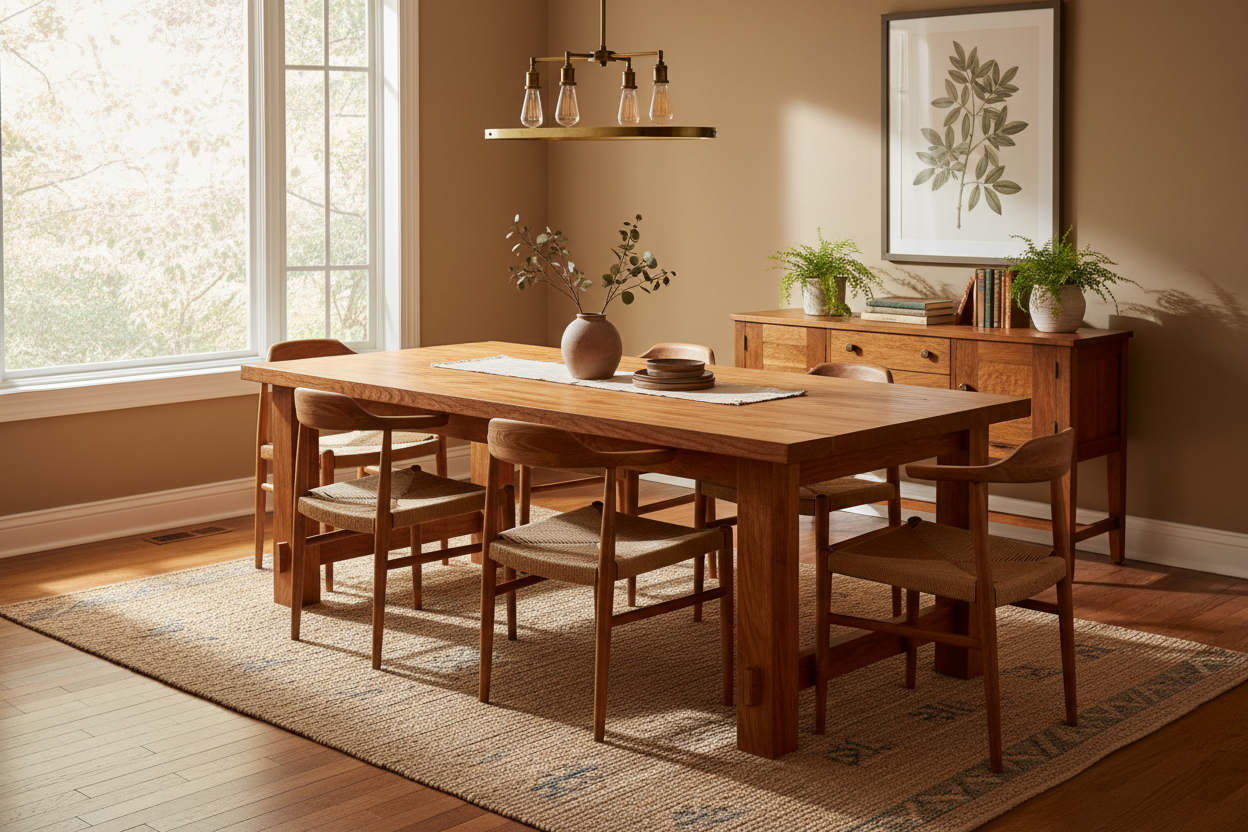
Few pieces of furniture anchor a home quite like the dining table. It is where homework gets done, holiday meals are devoured, and difficult conversations happen over coffee. When you start looking for furniture that can handle decades of daily life, solid wood dining room table sets often sit at the top of the wish list. But with the market flooded with convincing veneers and particle board composites, understanding what you are actually paying for is crucial.
The short answer to whether it is worth the money comes down to longevity and repairability. Unlike synthetic alternatives that end up in a landfill once the laminate chips, a genuine timber table can be sanded, refinished, and restored multiple times. It develops a patina—a richness in color and texture—that only comes with age. If you are looking for furniture that evolves rather than expires, solid wood is the only material that truly fits the bill.
The Real Difference Between Solid Wood and Veneer
Walking into a showroom, two tables might look identical from five feet away. One costs $400, and the other costs $2,000. The difference usually lies beneath the surface. A real wood dining table set is constructed entirely from lumber cut from trees. There are no layers of pressed glue and sawdust hidden inside. This construction allows the wood to expand and contract with the seasons, which is a natural process.
Veneer, on the other hand, is a thin slice of expensive wood glued over a cheaper core, such as plywood or MDF (Medium Density Fiberboard). While high-end veneers have their place in cabinetry, they are risky for a high-traffic dining surface. If you scratch a veneer table deep enough to expose the core, the piece is effectively ruined. With solid timber, a deep scratch is just a scar that can be sanded out or left as a mark of character.
A Lesson Learned from an Old Oak Table
I learned the value of genuine timber the hard way—physically. Years ago, I inherited a massive pedestal table from my grandmother. It was covered in dark, sticky varnish from the 1970s and looked outdated. My partner and I decided to strip it down. As we sanded through the layers, we didn't hit particle board or plastic; we hit raw, red oak. The sheer weight of the thing was unmanageable for two people. That density is the hallmark of quality. We refinished it with a simple oil, and twenty years later, that table has survived three moves, two toddlers, and countless spills. It looks better today than the day we stripped it. That is the specific reliability you get when you opt for dining room sets solid wood construction rather than disposable alternatives.
Choosing the Right Timber: Hardwood vs. Softwood
Not all wood is created equal. If you want a table that resists dents from dropped forks or heavy centerpieces, you should specifically look for a hardwood dining table set. Hardwoods come from deciduous trees—those that lose their leaves—such as oak, maple, walnut, cherry, and mahogany. These woods grow slower, resulting in a denser grain structure.
Softwoods, like pine or fir, are popular for farmhouse-style tables because they are cheaper and have a rustic look. However, pine is soft enough that you can dent it with a fingernail. If you enjoy the distressed look where every ding adds to the story, pine is fine. But for a sleek, pristine surface that stays flat and smooth, stick to maple or white oak.
Understanding Grain and Joinery
The construction method is just as vital as the material. A heavy slab of wood placed on weak legs will wobble within a month. Look underneath the table. You want to see joinery techniques like mortise and tenon or dovetail joints. Avoid tables held together primarily by staples or simple wood glue.
Additionally, look at how the tabletop is attached to the base. Real wood moves. It swells in humid summers and shrinks in dry winters. A properly built table will have "floating" clips or slotted screw holes that allow the wood to move without cracking. If the top is screwed tightly and rigidly to the frame, the wood will eventually split down the middle.
Matching the Chairs to the Table
Often, buyers focus all their budget on the table and treat the seating as an afterthought. This is a mistake. A real wood dining room table and chairs should be viewed as a cohesive structural unit. Chairs take significantly more abuse than tables. They are dragged, rocked back on, and subjected to shifting weight.
When evaluating chairs, check the stretcher—the horizontal bar connecting the legs near the bottom. This adds immense stability. Give the chair a firm shake; if it squeaks or flexes excessively on the showroom floor, it won't last a year in your home. Windsor chairs or solid wood ladder-back designs are excellent choices because their structure relies on the tension of the wood itself, making them incredibly durable.
Maintenance and Care for Longevity
Owning natural furniture requires a shift in mindset regarding maintenance. You cannot clean these surfaces with harsh chemical sprays or ammonia-based glass cleaners, which will strip the finish and dry out the timber. Dusting with a microfiber cloth is usually sufficient for daily care.
Humidity control is the unsung hero of wood preservation. Extreme changes in temperature and moisture can cause warping. Keeping your dining set away from direct heat vents or drafty windows will preserve the joinery. If the wood starts to look dry after a few years, a fresh coat of beeswax or tung oil can rejuvenate the grain and restore its water resistance.
Identifying Quality Before You Buy
Shopping for these pieces can be deceptive. Marketing terms like "all-wood" or "hardwood solids" can sometimes mask the truth. Here is a checklist to ensure you are getting the real deal:
- Lift it up: Solid wood is heavy. If you can lift one end of a large dining table with one hand, it is likely veneer over a hollow or honeycomb core.
- Check the grain: Follow the grain pattern from the top of the table over the edge. On a solid piece, the grain lines will continue seamlessly over the edge and appear on the end grain. If the top grain stops abruptly and the edge looks different, it is a veneer band.
- Look underneath: Unfinished areas often reveal the true nature of the material. You should see raw lumber, not smooth, uniform synthetic backing.
Investing in high-quality furniture is a commitment to the future. While the upfront cost is higher, the cost-per-use over a lifetime is significantly lower than replacing a cheap set every five years. Whether you prefer the dark elegance of walnut or the bright durability of oak, choosing authentic materials ensures your dining room remains the sturdy heart of your home.
Frequently Asked Questions
Does solid wood furniture require a specific humidity level?
Yes, wood thrives best in stable environments. Ideally, your home should maintain a humidity level between 40% and 45%. If the air is too dry, the wood may shrink and crack; if it is too humid, it may swell and cause drawers or leaves to stick.
Can I mix different wood types in a dining set?
Absolutely, mixing woods can add depth and visual interest to a room. A common design strategy is to have a dark walnut table paired with painted or lighter maple chairs. The key is to ensure the undertones (warm vs. cool) complement each other rather than clash.
How do I fix water rings on a real wood table?
For fresh white rings (moisture trapped in the finish), you can often remove them by gently applying heat with a hair dryer or using a minimal amount of mayonnaise to displace the moisture. Dark black rings indicate water has penetrated the wood itself, which usually requires sanding and refinishing the affected area.

Leave a comment
This site is protected by hCaptcha and the hCaptcha Privacy Policy and Terms of Service apply.