










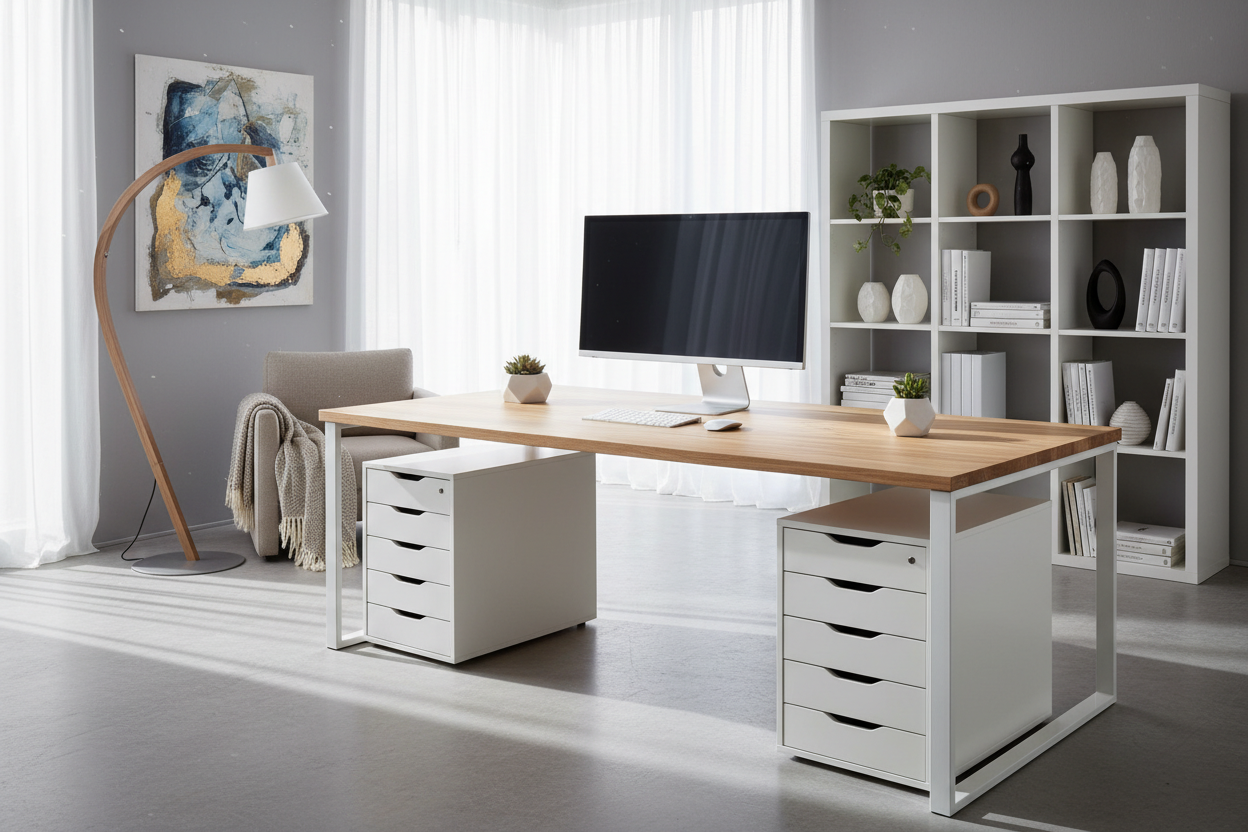
We have all been there: you need a functional workspace, but the standard office furniture options either look like they belong in a corporate cubicle or cost a small fortune. When you try to piece together a solution online, the dimensions never quite align with your room's awkward corners or your existing decor. This is exactly why the modular Ikea desktop system has become a staple in North American home offices.
But not all flat-pack slabs are created equal. Walking away with the right setup requires understanding the hidden materials beneath the finish. In this guide, I will walk you through exactly which surfaces hold up to heavy monitors, which ones warp under pressure, and how to build a custom workspace that actually lasts.
Quick Decision Guide
- Check the core: Desktops filled with honeycomb paper are incredibly lightweight but cannot support clamp-on monitor mounts without crushing.
- Prevent the sag: Any desktop wider than 55 inches requires a center support leg to prevent bowing over time.
- Kitchen hacks work: Using an Ikea kitchen countertop as a desk surface offers superior durability and a high-end solid wood look.
- Mind the depth: Ensure your chosen surface is at least 24 inches deep if you use a standard monitor; anything shallower will cause severe eye strain.
Decoding the Materials: What's Inside Matters
The Honeycomb Paper Reality
The most budget-friendly options in the showroom, like the Lagkapten, use a technique called board-on-frame. The exterior is fiberboard, but the inside is primarily recycled honeycomb paper. This makes the piece easy to carry up a narrow apartment stairwell, but it severely limits its structural integrity. If you are just using a laptop and a notepad, it works perfectly. However, if you plan to mount heavy equipment, the hollow core simply lacks the density to hold screws or withstand clamping pressure.
Veneer and Solid Wood Alternatives
If you want longevity, you need to look toward the kitchen department. Many designers bypass traditional office tables entirely and opt for butcher block countertops like the Karlby or Saljan. These feature a thick layer of wood veneer over a sturdy particleboard core. They offer excellent visual weight, bringing a grounding, organic texture to the room that pairs beautifully with mid-century or transitional aesthetics.
Space Planning: Getting the Dimensions Right
Depth is Crucial for Ergonomics
When selecting an Ikea computer desk top, the most common mistake I see is buying a surface that is too shallow. A 15-inch or 23-inch depth might look sleek and minimalist against a wall, but once you add a keyboard and a 27-inch monitor, your screen will be mere inches from your face. Always aim for a depth of 24 to 30 inches for a primary daily workspace.
Mixing Modular Components
The true advantage of this system is modularity. By mixing and matching different Ikea desk pieces, you can create a layout tailored to your exact floor plan. Pairing a long desktop with Alex drawer units on either side is a classic combination because it provides concealed storage while acting as incredibly stable base supports. Just remember to leave at least 36 inches of clearance behind the desk for your chair to roll back comfortably.
Designer's Honest Take
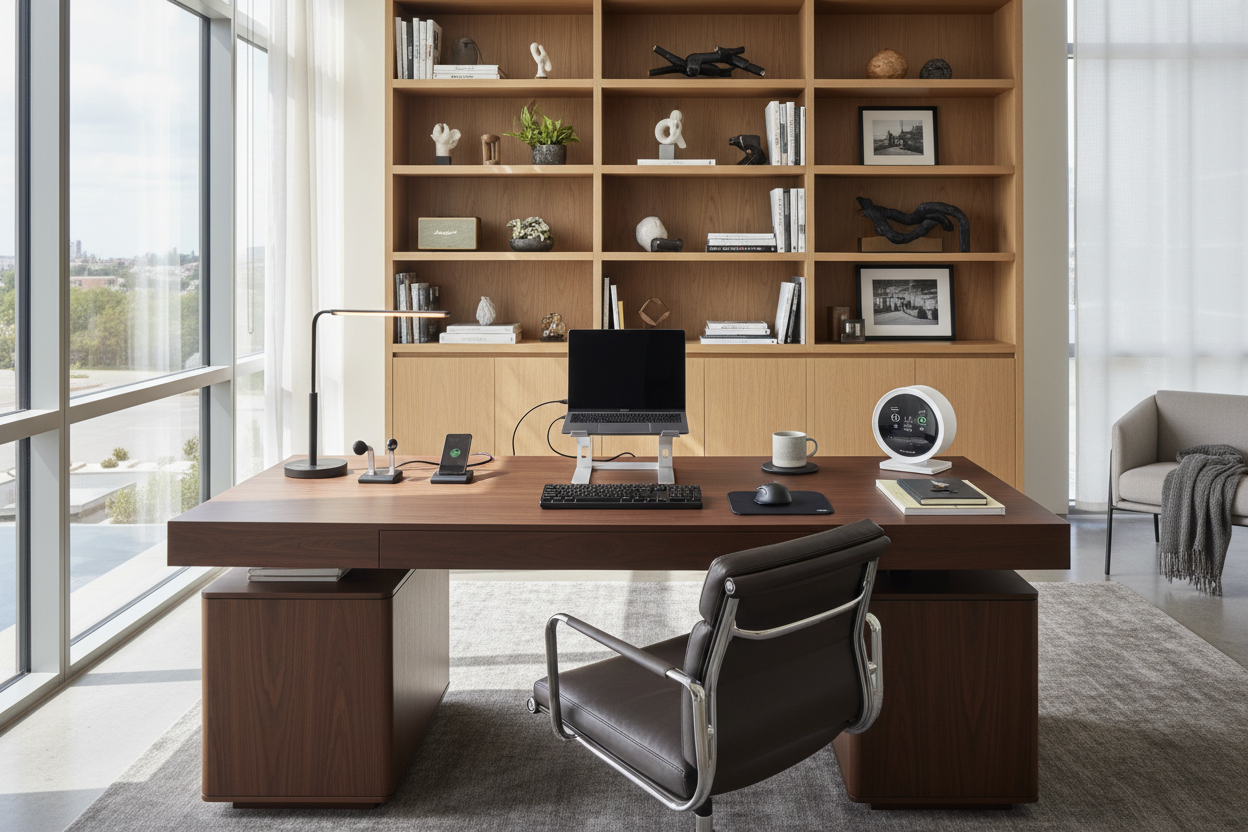
I learned a very frustrating lesson about material density a few years ago. I was designing a dual-workspace for a couple in a suburban family room. We used a beautiful, matte walnut-finished desktop that looked incredibly high-end. Two weeks later, the client clamped a heavy, articulating dual-monitor arm directly to the back edge.
Because the core was hollow fiberboard, the localized pressure of the clamp literally crushed the veneer inward, leaving a permanent, jagged indentation. I had to replace the entire surface at my own expense. Now, I never specify a hollow-core desk for heavy tech setups. If a client insists on using one, I require them to install steel reinforcement plates above and below the clamp to distribute the physical load safely.
Frequently Asked Questions
How do I prevent my desktop from sagging in the middle?
Wood and particleboard will naturally bow under sustained weight. If your desk spans more than 55 inches, you must install a basic Adils support leg dead center toward the back. Alternatively, you can run a steel C-channel bracket along the underside for invisible support.
Can I really use a kitchen countertop as a desk?
Absolutely. It is one of the most popular design solutions for custom home offices. Countertops are generally longer and denser than standard desk slabs. You simply rest them on top of two sturdy drawer units or attach standard table legs using wood screws.
How do I clean and maintain the veneer finishes?
For standard fiberboard desks, a damp microfiber cloth with mild dish soap is all you need. If you opt for a wood veneer countertop like the Karlby, you should treat it with a clear wood oil once a year to prevent the surface from drying out and to protect against water rings from your coffee mug.


Leave a comment
This site is protected by hCaptcha and the hCaptcha Privacy Policy and Terms of Service apply.