










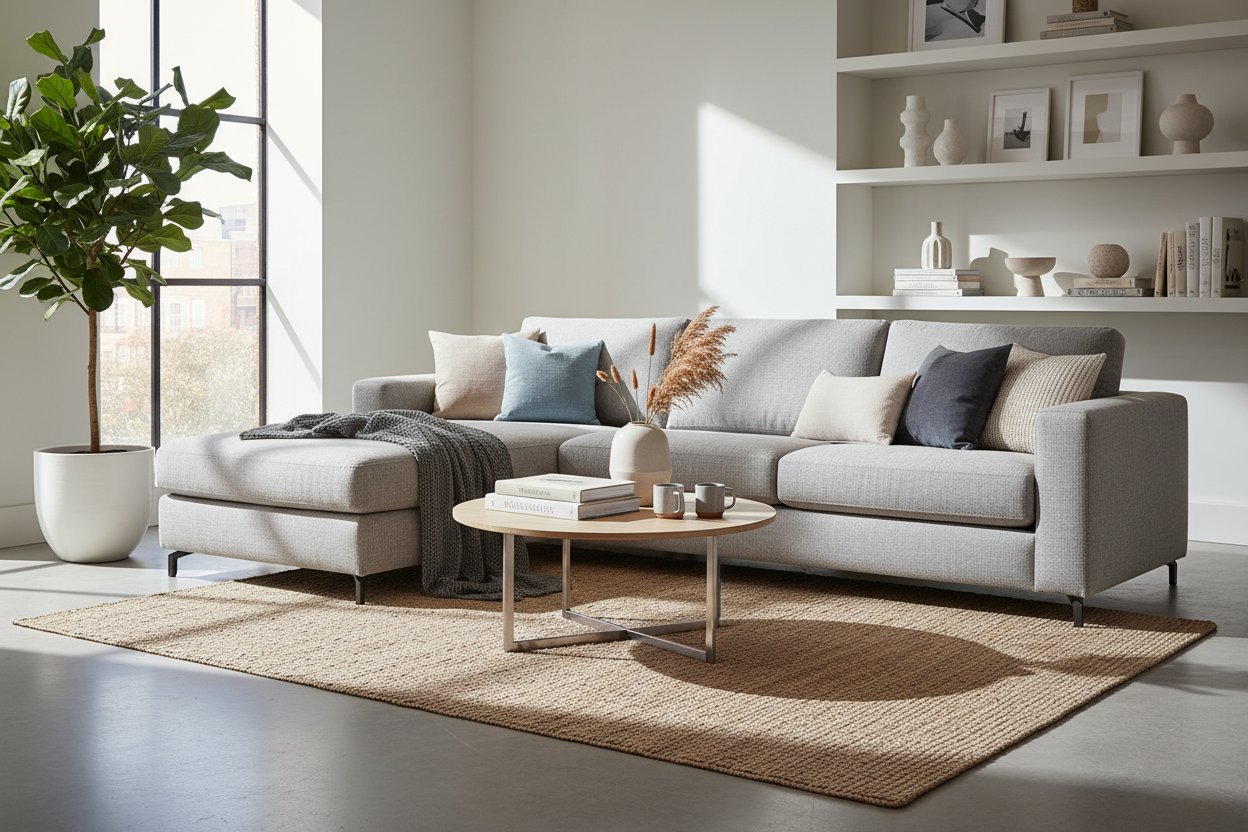
Finding the balance between fiscal responsibility and high-end aesthetics is the most common challenge I face with residential clients. You want the sprawling comfort of a lounge area, but custom upholstery often requires a significant lead time and budget. This is usually when the conversation shifts to the ikea sectional chaise. But does mass-produced furniture actually hold up against daily wear, or is it merely a temporary fix for a permanent design requirement?
Key Features to Look For
- Modular Flexibility: Ensure the chaise can be mounted on either the left or right side to future-proof your layout.
- Martindale Rating: Check the fabric's abrasion resistance; look for a count above 25,000 cycles for family living rooms.
- Cushion Composition: High-resilience cold foam retains shape longer than standard poly-foam.
- Removable Covers: Essential for longevity, allowing you to wash or replace the aesthetic without replacing the frame.
Analyzing Silhouette and Scale
When incorporating an ikea sectional with chaise into a floor plan, the first consideration is visual weight. Unlike bespoke Italian furniture which often features floating legs and slim profiles, mass-market sectionals can feel blocky. To counter this, I often advise clients to look for models with exposed legs or a lower back profile. This allows light to travel under and over the piece, maintaining the sense of space in smaller urban apartments.
Materiality and Tactile Experience
The difference between a showroom look and a lived-in feel lies in the fabric. While the stock polyester blends are durable, they can sometimes lack the tactile warmth of natural fibers. If you are selecting an ikea sectional sofa with chaise, pay close attention to the weave. Tighter, flat weaves tend to resist pilling better than loose, textured chenilles. Furthermore, the ability to swap covers is a massive functional advantage. It allows you to transition from a heavy, cozy velvet in winter to a crisp, breathable linen blend in summer—a trick designers use to keep interiors feeling fresh.
Structural Integrity and Ergonomics
Beyond the fabric, the internal architecture matters. Most of these units utilize a combination of particleboard and solid wood for the frame. While not heirloom quality, they are surprisingly resilient if assembled correctly. The ergonomics of the chaise portion are critical; ensure the depth supports your legs comfortably without cutting off circulation at the knees. The transition point where the chaise meets the sofa is often where lower-quality sofas fail; check that the connection hardware is metal-on-metal, not screwed directly into soft wood.
My Personal Take on ikea sectional chaise
I recently specified a modular series for a client's high-traffic media room in a pre-war building, and I learned a few lessons you won't find on the product tag. First, the assembly of the chaise element requires patience. Specifically, the connecting brackets can be unforgiving. If your floors aren't perfectly level—which they rarely are in older homes—the connection point between the chaise and the main seat can develop a subtle squeak over time.
I solved this by using heavy-duty felt shims under the feet to level the frame perfectly before locking the sections together. Another unpolished detail: when washing the cotton-blend covers, do not dry them completely. Put them back on the frame while they are slightly damp. If you dry them fully, they shrink just enough to make re-zipping a battle that threatens to tear the seams. Putting them on damp allows the fabric to stretch taut as it dries, giving you that crisp, upholstered look rather than a loose, wrinkly slipcover appearance.
Conclusion
Ultimately, an IKEA sectional is a blank canvas. It offers a solid, functional foundation that, with the right styling—think textured throws, upgraded custom legs, and strategic pillow layering—can mimic the look of a piece three times its price. It is a pragmatic investment for dynamic homes.
Frequently Asked Questions
Can I change the side of the chaise later?
Yes, most IKEA sectional series are designed with modularity in mind. The chaise creates a reversible configuration, meaning you can detach it and move it to the opposite side if you move homes or rearrange your living room layout.
How do I prevent the cushions from sagging?
Sagging is common with any foam-based sofa over time. To mitigate this on an ikea sectional sofa with chaise, rotate the seat cushions monthly (if the design allows) and fluff back cushions weekly. For older units, adding a layer of batting or high-density foam inside the cover can restore loft.
Is the chaise section suitable for sleeping?
While a chaise provides excellent lounging length, it is generally too narrow for a comfortable night's sleep for an adult. However, many models offer a sleeper sofa module that pairs with the chaise, creating a substantial sleeping surface comparable to a queen bed.


Leave a comment
This site is protected by hCaptcha and the hCaptcha Privacy Policy and Terms of Service apply.