










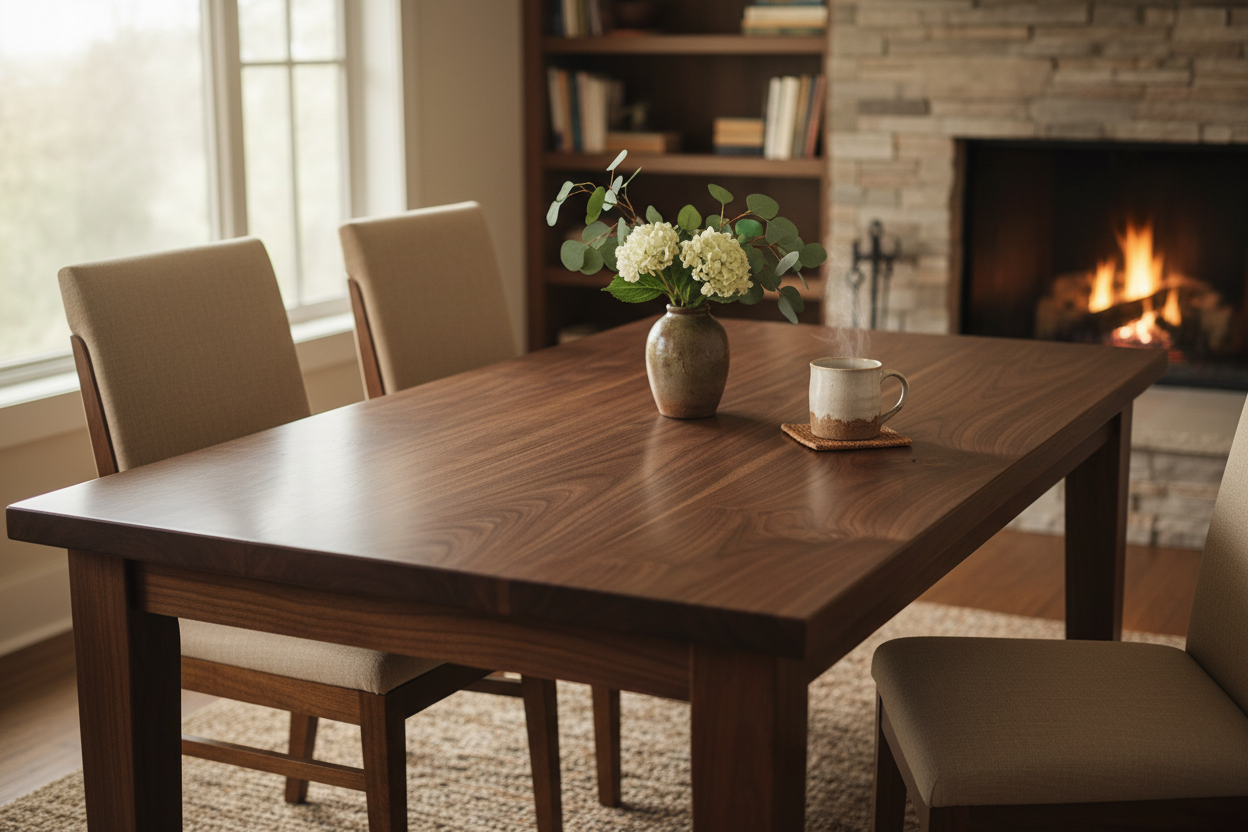
The dining table is the workhorse of the home. It’s where homework gets done, bills are paid, and inevitably, spaghetti sauce gets spilled. If you are debating whether to invest in real timber or settle for a cheaper composite, the short answer is that solid wood is almost always the superior choice for longevity and repairability. Unlike veneer or laminate, a solid wood table can survive decades of daily abuse and actually look better with age, provided you choose the right species for your lifestyle.
Choosing the right material goes beyond just matching colors with your floorboards. The specific dining room table wood you select dictates how the furniture handles scratches, dents, and humidity changes. A pine table offers a completely different lifespan and aesthetic experience than white oak or black walnut. Understanding these biological differences is the only way to ensure you aren't buying a piece of furniture you’ll have to replace in five years.
My Experience with "Disposable" Furniture
Years ago, when I moved into my first real house, I tried to save money by purchasing a trendy, mid-century modern style table from a big-box store. It looked like walnut, but it was actually a thin paper veneer over particleboard. It looked fantastic for exactly six months. Then, a condensation ring from a water glass bubbled the surface. A few months later, a fork dropped and chipped the edge, revealing the crumbly sawdust interior. There was no sanding it down; the table was ruined.
I eventually replaced it with a second-hand solid maple table found at an estate sale. It was heavy, scratched, and stained. After a weekend of sanding and sealing, it looked brand new. That table has since survived two moves and countless family dinners. That experience taught me that the initial cost of real wood is amortized over a lifetime of use. You are buying the ability to repair mistakes.
Hardness Matters: Janka Ratings and Durability
Not all wood is created equal. When shopping, you need to look at the Janka hardness rating, which measures the resistance of a sample of wood to denting and wear. This is the most critical factor if you have children or pets.
Softwoods like Pine or Douglas Fir are popular for farmhouse styles because they are affordable and abundant. However, they dent if you look at them wrong. If your kids press too hard with a ballpoint pen while doing homework, that math equation will be permanently etched into the tabletop. This isn't necessarily bad—it creates a rustic, lived-in look—but it’s a characteristic you must accept upfront.
For a family heirloom that resists impact, you want a dining table of wood sourced from deciduous trees. White Oak, Maple, and Hickory are the gold standards here. Maple, in particular, has a tight grain and is incredibly hard, making it difficult to scratch. Oak has an open grain pattern that is excellent at hiding crumbs and minor imperfections, which is a massive benefit for messy eaters.
The Kitchen Environment vs. Formal Dining
Context determines the material. A formal dining room that sees use twice a year can handle delicate finishes or softer woods like Cherry, which darkens beautifully over time but scratches relatively easily. However, a breakfast nook requires a different approach. The best kitchen table wood needs to be non-porous and hard. In a kitchen, you are dealing with heat, moisture, and grease.
Teak and Acacia are excellent options for high-traffic kitchen areas. These woods have high natural oil content, making them naturally resistant to water and rot. There is a reason teak is used on boat decks; it can handle a spilled glass of milk without warping, assuming the finish is maintained. If you prefer domestic hardwoods, Quarter-Sawn White Oak is incredibly stable and resists expanding and contracting with the humidity fluctuations typical of a kitchen.
Joinery and Construction Signs
You can identify a quality piece by looking underneath it. Manufacturers often hide their shortcuts on the underside of the tabletop. If you see staples or plastic corner blocks, put it back. A proper wood table should be held together with wood joinery (like mortise and tenon) or heavy-duty metal bolts into threaded inserts.
Furthermore, look for "allowance for movement." Wood is a living material that breathes. It expands in summer humidity and shrinks in winter dryness. If the tabletop is screwed directly into the apron or legs without slotted holes or "Z-clips" that allow the wood to slide slightly, the top will eventually crack down the middle. A well-built table is designed to move without breaking.
Finishes: Oil vs. Polyurethane
The durability of your table relies heavily on the finish. This is often a trade-off between protection and aesthetics.
- Polyurethane/Lacquer: These sit on top of the wood, creating a hard plastic-like shell. They offer the best protection against ketchup, wine, and water rings. However, if they get scratched, they are difficult to spot-repair. You usually have to strip the whole top.
- Hard Wax Oils (like Rubio Monocoat or Osmo): These penetrate the wood fibers. They offer a matte, natural feel where you actually touch the wood, not a plastic coating. While they are less resistant to standing water, they are incredibly easy to fix. If you get a scratch, you just sand that one square inch and rub in a little more oil.
Buying Vintage vs. New
Don't rule out the vintage market. Older furniture was often built with old-growth timber, which is denser and more stable than the fast-growth lumber harvested today. A wobbly vintage table can usually be fixed with some wood glue and clamps. When inspecting a vintage piece, check the feet for rot (if it was kept in a basement) and look for woodworm holes. If the structure is sound, the finish can always be changed.
Choosing a table is a commitment. By focusing on hardwood species like oak or maple and ensuring the construction allows for seasonal movement, you secure a piece of furniture that serves your home rather than becoming a source of frustration. The scratches and dents it accumulates over the years won't be defects; they will be the physical history of your family dinners.
Frequently Asked Questions
What is the most durable wood for a dining table with kids?
Hard Maple and White Oak are generally considered the best options for families. Maple is incredibly hard and resists dents, while the grain pattern of Oak helps camouflage small scratches and food debris that accumulate during daily use.
How do I tell if a table is solid wood or veneer?
Look at the grain on the edges and ends of the table. On a solid wood table, the grain lines on the top will continue over the edge and look like "end grain" (like the rings of a tree). If the edge looks like a separate strip of wood glued on, or if the grain pattern repeats perfectly across the surface, it is likely veneer.
Can I use a wood table directly in the kitchen?
Yes, but you should choose a dense hardwood and ensure it has a water-resistant finish. A kitchen table wood choice like Teak or sealed White Oak is ideal because these species resist moisture better than softwoods like Pine, which may warp or stain near cooking areas.


Leave a comment
This site is protected by hCaptcha and the hCaptcha Privacy Policy and Terms of Service apply.