










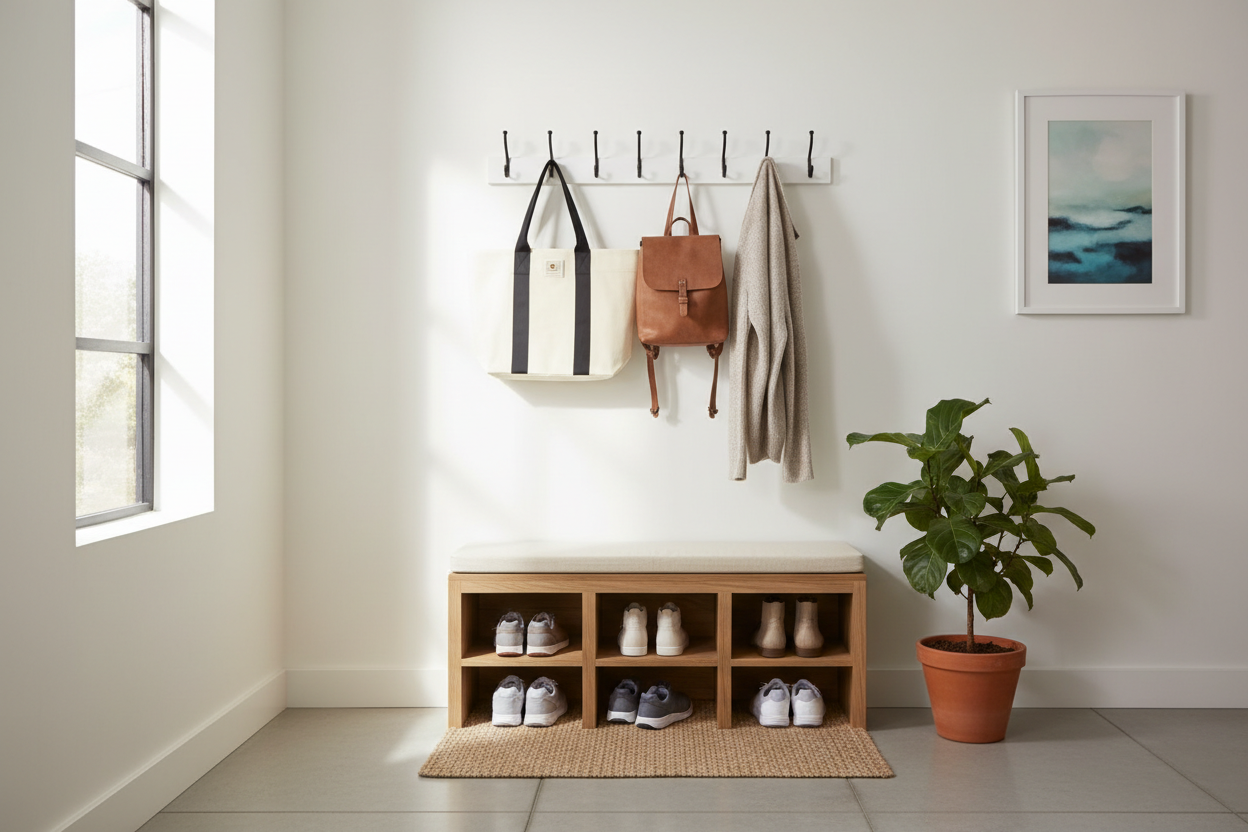
We have all been there. You walk through the front door, arms full of groceries, and immediately trip over a rogue sneaker left in the middle of the floor. Entryways are notorious for becoming clutter magnets, primarily because they are transition zones. We aren't meant to stay there; we are just passing through. However, when you are working with tight square footage, finding a solution that doesn't block the flow of traffic is a challenge. This is where the specific utility of a small hall storage bench comes into play. It is not just furniture; it is a sanity saver.
Finding the right piece requires balancing storage needs with physical dimensions. If you go too big, you choke off the walkway. Go too small, and it becomes a decorative trinket that holds nothing. Let’s look at how to select, size, and style this essential piece of furniture to reclaim your floor space.
The Reality of Narrow Spaces: My Shin-Bruising Lesson
I learned the importance of depth the hard way. Years ago, living in a city apartment with a corridor that felt more like a tunnel than a hallway, I bought a gorgeous vintage chest to use as a catch-all. It looked stunning in the photo. In reality, it stuck out 20 inches from the wall. That might not sound like much, but in a 36-inch wide hallway, it left barely enough room to squeeze by with a laundry basket.
I spent two years bruising my shins on the corners of that chest before I finally admitted defeat and swapped it for a proper small hallway storage bench. The new piece was only 13 inches deep. The difference was immediate. The hallway felt open again, yet I actually gained usable organization because the piece was designed for the space, rather than fighting against it. If you are dealing with a tight foyer or a narrow corridor, prioritize the depth measurement above all else. A shallow profile is the key to maintaining a welcoming vibe rather than an obstacle course.
Why You Need a Drop Zone (Even Without a Mudroom)
Not everyone is blessed with a dedicated room for muddy boots and wet coats. For many of us, the front door opens directly into the living room or a slender corridor. You can still create the functionality of a mudroom without the square footage by utilizing a small mud bench. This piece anchors the space and signals to everyone entering the home: "This is where the outside gear stops."
The psychology of a drop zone is simple. If there is a designated spot for shoes, they are less likely to end up kicked under the sofa. A bench provides a place to sit while untying laces, which encourages family members and guests to actually remove their shoes rather than tracking dirt through the house. Even a unit that is only 30 inches wide can hold two pairs of adult shoes and a basket for keys, effectively containing the mess that usually spreads across the floor.
Choosing the Right Configuration
Once you have measured your available floor space (and accounted for baseboards, which can steal an inch of clearance), you need to decide how you want to access your items. Manufacturers generally design these benches in three distinct styles, each serving a different type of clutter.
The Cubby System
Open cubbies are excellent for high-traffic households. If you have kids, this is often the best route because it removes barriers. Asking a child to open a drawer to put away shoes is often asking too much. A small hall storage bench with open cubbies allows them to kick their shoes directly into the slot. The downside is visual noise; you can see everything. If you prefer a cleaner look, you can slide wicker or felt baskets into the cubbies to hide the contents.
The Flip-Top Lid
For items you don't need every day, a flip-top bench is ideal. This acts like a toy chest with a seat on top. It offers a deep storage cavity perfect for winter scarves, bulky sweaters, or dog walking gear. However, be realistic about how you use it. If you plan to put decorative pillows or a stack of mail on top of the bench, you will likely get annoyed having to move everything every time you need to retrieve something from inside. This style works best as a secondary storage unit rather than for daily shoe retrieval.
Drawers and Doors
If you want to hide the mess completely but need easier access than a flip-top, look for a unit with sliding doors or pull-out drawers. Sliding doors are particularly clever for a small hallway storage bench because they don't require clearance to open. Cabinet doors that swing outward can be problematic in narrow halls, potentially banging into the opposite wall or blocking traffic when open.
Material Matters: Durability vs. Aesthetics
Your entryway takes a beating. It sees wet umbrellas, muddy paws, and heavy grocery bags. The material you choose needs to withstand this abuse. Solid wood is obviously the gold standard for longevity. It can be sanded down and refinished if it gets scratched. However, solid wood benches can be heavy and expensive.
Metal and industrial styles are increasingly popular for the "small mud bench" look. They are practically indestructible and easy to wipe down, making them perfect for wet climates. If you opt for particle board or MDF to save money, pay close attention to the veneer. In a wet zone, cheap veneer can bubble and peel if water from wet shoes sits on it for too long. Regardless of the frame material, consider the seat. A wooden top is easier to clean, but an upholstered top adds warmth and texture. If you choose upholstery, look for performance fabrics or treated leather that can handle a stray coffee drip.
Styling Your Compact Bench
Functionality does not have to mean boring. Once you have the bench in place, integrating it into your decor makes it feel intentional. Since the bench itself is small, you want to utilize vertical space to maximize utility.
Install a row of wall hooks or a floating shelf directly above the bench. This draws the eye up and balances the visual weight. A mirror is also a fantastic addition above a small hall storage bench. It allows for a last-minute outfit check before leaving, but more importantly, it reflects light and makes a narrow hallway feel significantly wider.
Don't be afraid to add comfort. A lumbar pillow or a throw blanket can soften the hard lines of a wooden bench. Just ensure that whatever decor you add doesn't impede the primary function: sitting down to put on shoes. If the bench is covered in so many decorative cushions that you can't sit, it has lost its purpose.
Making the Final Decision
The goal is to stop the clutter at the door. By carefully measuring your depth and selecting a storage style that matches your habits—whether that is tossing shoes into a cubby or hiding winter gear in a chest—you can transform a chaotic entry into a calm transition point. A small bench might seem like a minor piece of furniture, but its impact on the daily flow of your home is massive.

Leave a comment
This site is protected by hCaptcha and the hCaptcha Privacy Policy and Terms of Service apply.