










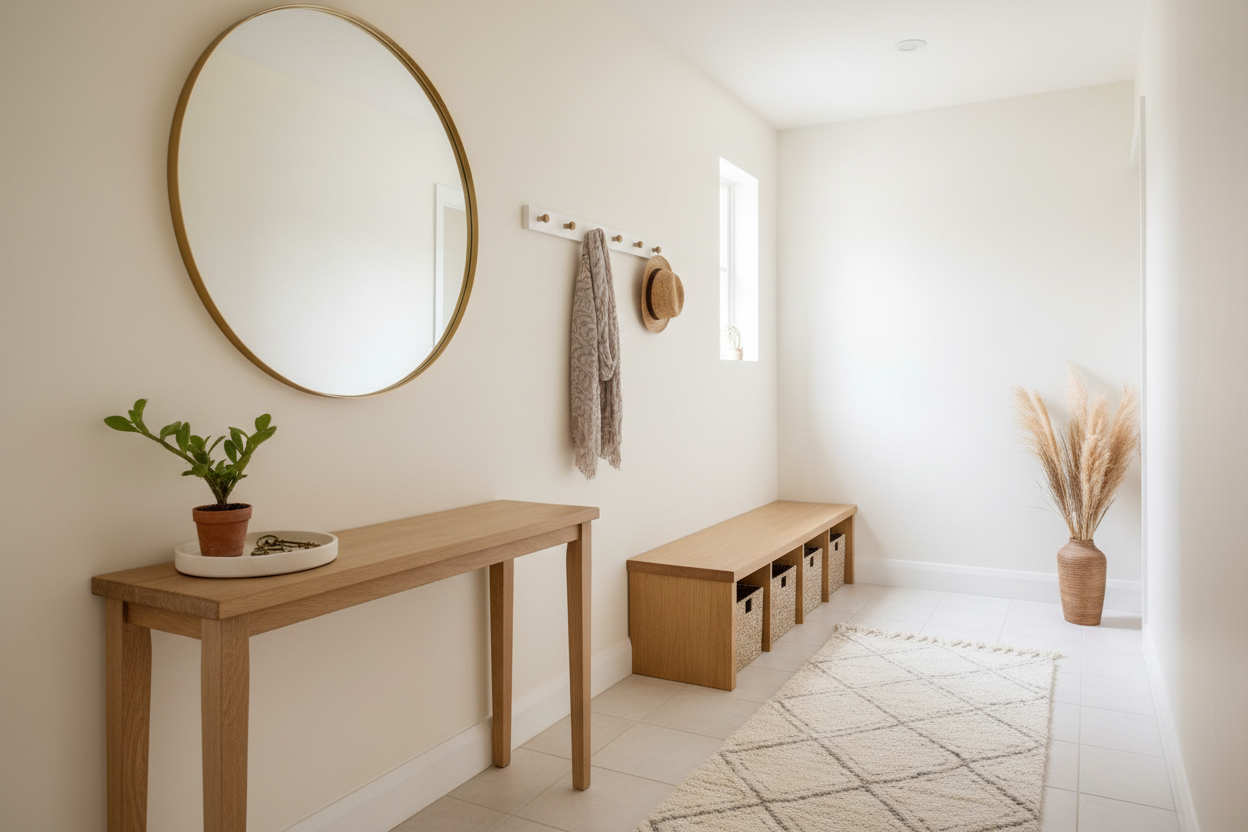
You open the front door, step inside, and immediately feel the walls closing in. If you are struggling with a corridor that feels more like a tunnel than a welcoming entrance, you aren't alone. The challenge of finding the right pieces for tight spaces is universal, but the solution isn't just about buying smaller things—it is about understanding scale and flow. The secret to conquering this space lies in prioritizing depth over width; you generally want pieces that protrude no more than 10 to 12 inches from the wall to maintain a comfortable traffic flow.
Many homeowners make the mistake of forcing standard-sized decor into slender spaces, resulting in bruised hips and a cluttered aesthetic. By selecting specialized furniture for a narrow hallway, you can reclaim that square footage for storage and style without sacrificing walkability.
My Battle with the "Chute"
I learned the hard way that measuring tape is your best friend. A few years ago, I moved into a charming, older apartment building where the entryway was essentially a long, dark chute. It measured barely 38 inches across. Optimistically, I bought a standard farmhouse console table I loved, thinking it would be fine. It wasn't. It stuck out 16 inches, leaving just 22 inches of walking space.
Every time I came home with groceries, I had to turn sideways to shimmy past my own furniture. It was ridiculous. I eventually swapped it out for a floating shelf and a tip-out shoe cabinet that was only 7 inches deep. The difference was instant. The space didn't just look bigger; my blood pressure actually dropped because I wasn't fighting my house as soon as I walked in the door. That experience taught me that in a narrow hall, every single inch of depth matters more than three feet of width.
The Golden Rules of Clearance
Before you purchase any narrow hall furniture, you need to understand the physics of your walkway. Interior design standards suggest a minimum of 36 inches of clearance for a comfortable walkway. In a tight hallway, you might be able to cheat this down to 30 inches, but anything less will feel claustrophobic.
If your hallway is 40 inches wide, you cannot afford a piece of furniture that is 15 inches deep. You are looking for "slimline" or "low-profile" pieces. The magic number for depth usually sits between 8 and 12 inches. This keeps the path open while still providing that crucial surface area for keys, mail, and decorative touches.
Choosing the Right Console Table
The console table is the anchor of most entryways, but standard tables are the enemy here. When shopping for narrow hallway furniture, look for designs specifically labeled as "sofa tables" or "skinny consoles." Materials play a massive role in how much space the furniture feels like it takes up.
Acrylic (Lucite) or glass tables are fantastic because they disappear visually. If you can see the floor and the wall through the furniture, your brain registers the space as being larger than it is. Alternatively, look for tables with hairpin legs or open metal frames. Heavy, blocky wood cabinets with solid doors will suck the light out of the space and make the hall feel even tighter.
The Vertical Advantage: Shoe Storage and Hooks
Floor space is premium real estate. If you can't go out, you must go up. One of the best inventions for tight spaces is the tip-out shoe cabinet. Unlike standard racks where shoes sit flat, these cabinets store shoes vertically at an angle. This design allows the cabinet to be incredibly thin—often under 10 inches—while still holding a dozen pairs of sneakers.
This type of narrow entryway furniture often doubles as a landing strip. The top surface is perfect for a small tray or a lamp, eliminating the need for a separate table. Combine this with wall-mounted hooks rather than a coat stand. A coat stand occupies a roughly 2x2 foot footprint on the floor. A row of shaker pegs or a wall-mounted rack occupies zero floor space. In a narrow corridor, getting items off the floor is the fastest way to reduce visual clutter.
Floating Furniture vs. Legged Pieces
There is a distinct visual difference between furniture that sits on legs and furniture mounted to the wall. Floating consoles or shelves are often superior for the narrowest of halls. Because they have no contact with the floor, they allow the flooring material to extend all the way to the wall, which tricks the eye into seeing a wider floor plan.
If you aren't handy with a drill or rent your home and can't mount heavy items, stick to legged furniture that is "leggy"—meaning it has high legs and a shallow body. You want to see as much baseboard as possible.
Mirrors and Lighting: The Supporting Actors
While not strictly furniture, the way you accessorize your narrow hall furniture dictates the success of the layout. A large mirror is non-negotiable. Place it above your console table or shoe cabinet. It reflects light and effectively doubles the visual width of the hallway. If you have a windowless hall, this is even more critical.
Lighting also changes how the furniture is perceived. Avoid floor lamps; they are tripping hazards in a 3-foot wide path. Instead, use wall sconces. If hardwiring isn't an option, there are plenty of rechargeable, battery-operated sconces that look high-end without the electrician bill. Good lighting eliminates the shadows in the corners that make a hallway feel like a cave.
Rug Runners and Visual Flow
Once your furniture is in place, you need to ground it. A runner rug draws the eye down the length of the hall, creating a sense of movement. However, be careful with the width of the rug. You want a few inches of floor visible on either side of the runner. If the rug touches the baseboards, it looks like poorly installed wall-to-wall carpet.
When positioning your furniture, try not to center it perfectly if the hallway is long. Creating "zones" works better. Place your console near the door for utility, and perhaps a piece of art further down. This prevents the "bowling alley" effect where the eye just shoots straight to the end of the hall.
Final Thoughts on Styling
Styling a narrow space requires restraint. It is tempting to fill that skinny console table with photos, plants, and bowls, but clutter closes walls in. Stick to the rule of three: a light source, a vessel for small items (keys/coins), and one decorative object. Keep the surface clean.
Your hallway sets the tone for the rest of your home. It doesn't have to be a forgotten passageway or an obstacle course. By strictly adhering to shallow depth measurements and choosing pieces that maximize vertical utility, you can turn even the tightest squeeze into a functional, stylish entrance.
Frequently Asked Questions
What is the minimum width required for a hallway to fit furniture?
Ideally, you should maintain at least 30 to 36 inches of walking space. If your hallway is 40 inches wide, look for furniture that is 10 inches deep or less to ensure you can walk past comfortably without turning sideways.
Can I use a bench in a narrow entryway?
Yes, but you must choose carefully. Look for a backless bench that can slide completely under a wall-mounted shelf or console when not in use. Alternatively, choose a shallow bench (under 12 inches deep) that serves as a perch rather than a lounge seat.
How do I stop my narrow hallway from looking cluttered?
Utilize closed storage like tip-out shoe cabinets or boxes on shelves to hide loose items. Keep the floor as clear as possible by using wall hooks for coats and bags, and ensure your furniture has a slim profile to maintain open sightlines.

Leave a comment
This site is protected by hCaptcha and the hCaptcha Privacy Policy and Terms of Service apply.