










Finding the Right L-Shape Desk Nearby: Local Sourcing vs. Direct Delivery
Searching for an L-shaped workstation often begins with finding immediate inventory close to home. When setting up a dedicated remote office or upgrading a study area, balancing the urgency of obtaining furniture against the breadth of available configurations is an essential first step. Local showrooms allow shoppers to observe surface finishes, examine physical proportions, and explore immediate collection options, but physical retail floors can only display a finite selection of corner layouts.
Opting for in-store pickup allows you to bypass carrier transit windows, making it an attractive route when a workstation is needed right away. However, corner desks present unique logistical demands compared to standard rectangular tables. The dual-wing structure often involves multiple heavy flat-pack boxes, substantial panel lengths, and complex hardware kits. If your vehicle cargo area or schedule makes self-transport challenging, exploring an online computer desk collection delivered directly to your doorstep often provides access to a wider variety of finishes, storage integration, and dimensional options without the heavy lifting.
Dimensional Categories and Room Fit Planning
Before traveling to an area warehouse or finalizing an order, precise room measurement is vital to ensure the desk integrates smoothly into your space. L-shaped desks typically fall into several distinct layout tiers, each catering to specific room scales and workflow habits:
- Compact Corner Profiles: Designed primarily for secondary bedrooms, studio apartments, or alcoves, these desks offer dedicated monitor and writing surfaces without extending far into the room's main walking pathways. A streamlined office computer desk product exemplifies how corner utility can optimize modest floor areas while maintaining ample legroom.
- Medium Dual-Wing Workstations: These configurations provide balanced surface depth on both wings, allowing for dual-screen setups on one side and analog task work, paperwork, or crafting on the other.
- Executive Corner Footprints: Characterized by extended desktop lengths, integrated return wings, and deeper work surfaces, executive models require substantial perimeter wall clearance and open floor access to prevent the room from feeling cramped.
Another crucial consideration is wing orientation. While some corner desks feature reversible returns that allow the secondary wing to mount on either the left or right side, others are fixed. Verifying your wall dimensions, window placements, power outlet locations, and door swing paths will prevent layout conflicts after bringing the unit home.
Selecting Storage and Functional Formats
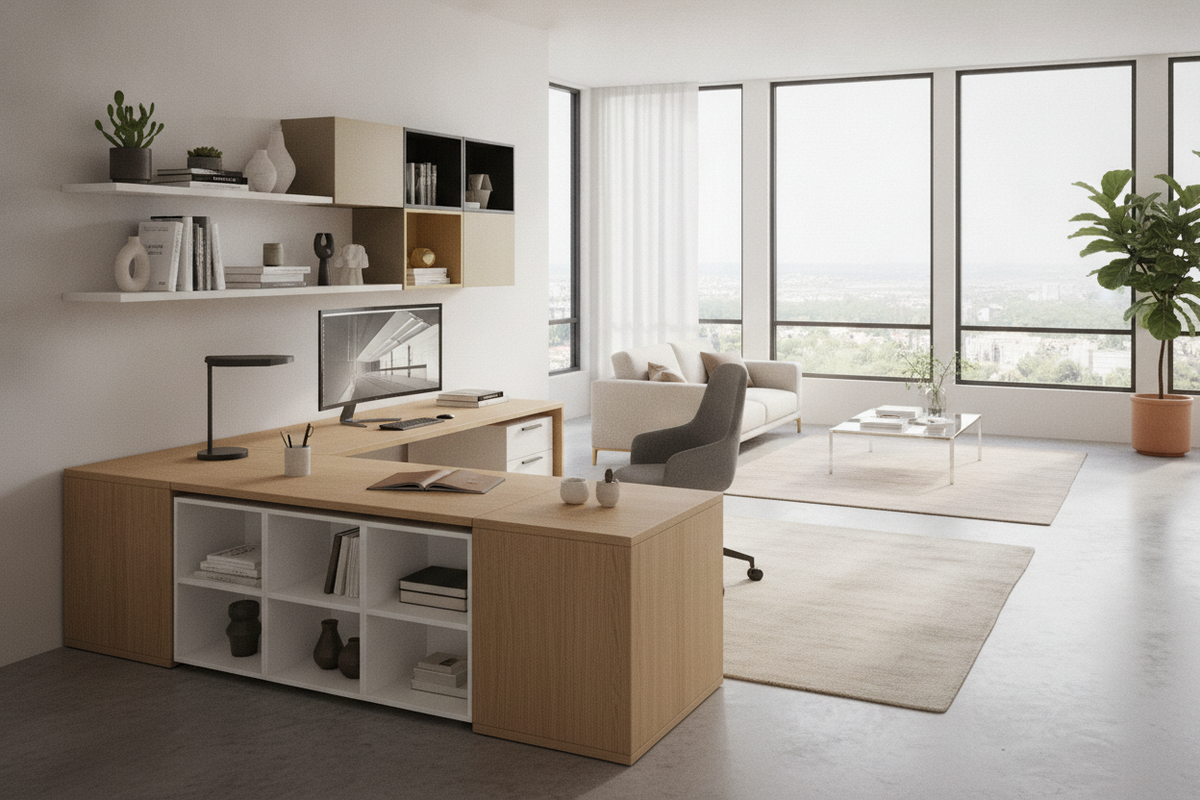
The functionality of a corner workstation depends heavily on how its storage components are integrated. An open-frame frame design offers an airy visual footprint and unhindered leg movement, which can make smaller rooms appear more open. Open lower tiers also provide practical staging zones for computer towers, ensuring clear airflow around hardware while keeping power hubs accessible.
For workflows that demand organizational privacy, integrated drawer pedestals and filing compartments keep paperwork, stationary, and tech accessories out of sight. A versatile shaped computer desk product demonstrates how built-in drawers combined with elevated work tiers can streamline high-demand office tasks. When selecting a unit with built-in storage, consulting a dedicated desk drawers office guide helps you determine how tray inserts and modular dividers will fit your daily supplies.
In-Store Inspection Checklist: What to Evaluate in Person
If you choose to evaluate floor models at a nearby furniture retailer, taking time for a structured physical inspection ensures the design meets your daily demands:
- Corner Junction Rigidity: Examine the point where the main desktop meets the return wing. Look for robust underside brackets, reinforced crossbars, or central support posts that prevent sagging or flexing across the seam.
- Surface Finish and Edge Banding: Run a hand along the desktop perimeter. Smooth, well-sealed edge banding protects the core panel from moisture exposure, friction, and premature wear along high-contact zones.
- Drawer and Hardware Alignment: Test drawer glides to ensure smooth travel without catching. Check that drawer fronts sit flush against the frame and that pulls or handles are securely fastened.
- Leg Leveler Quality: Verify whether the desk includes adjustable leveling glides at the base, which are essential for stabilizing the dual wings across uneven hardwood or tiled floors.
Transport Feasibility and Vehicle Logistics
Transporting an L-shaped desk from a regional retail location requires realistic vehicle planning. Due to the expansive surface panels, these desks are frequently packed in long, flat cartons that can exceed standard back-seat dimensions. Many mid-to-large designs are split across two separate packages to distribute overall weight and protect the larger corner tops.
Before heading to a store for same-day pickup, measure the interior cargo depth of your vehicle with the rear seats folded flat. Account for hatch diagonal openings, center console clearance, and wheel-well intrusions. Ensuring you have moving blankets, tie-down straps, and an extra pair of hands for threshold loading will prevent damage to your vehicle interior and keep the furniture cartons flat and secure during transit.
Post-Purchase Assembly and Spatial Layout Optimization
Bringing your new workstation into your home office leads to the final stage: staging and assembly. Because corner desks occupy two perpendicular walls, building them in place requires strategic spatial preparation. Clearing a wider staging perimeter than the desk's final footprint ensures you have room to rotate large desktop sections without scuffing baseboards or walls.
During assembly, loosely attach frame components and corner connector plates before fully tightening the hardware. This allows subtle adjustments so the desktop surfaces align seamlessly at the corner junction. Once the structure is level and solid, position task lighting, manage power cords along internal cable clips, and arrange primary work equipment within comfortable reach. For those working within multi-use spaces who appreciate compact organization strategies, exploring an alternative computer desk office guide offers additional perspective on maintaining an orderly, productive room environment.


Leave a comment
This site is protected by hCaptcha and the hCaptcha Privacy Policy and Terms of Service apply.