










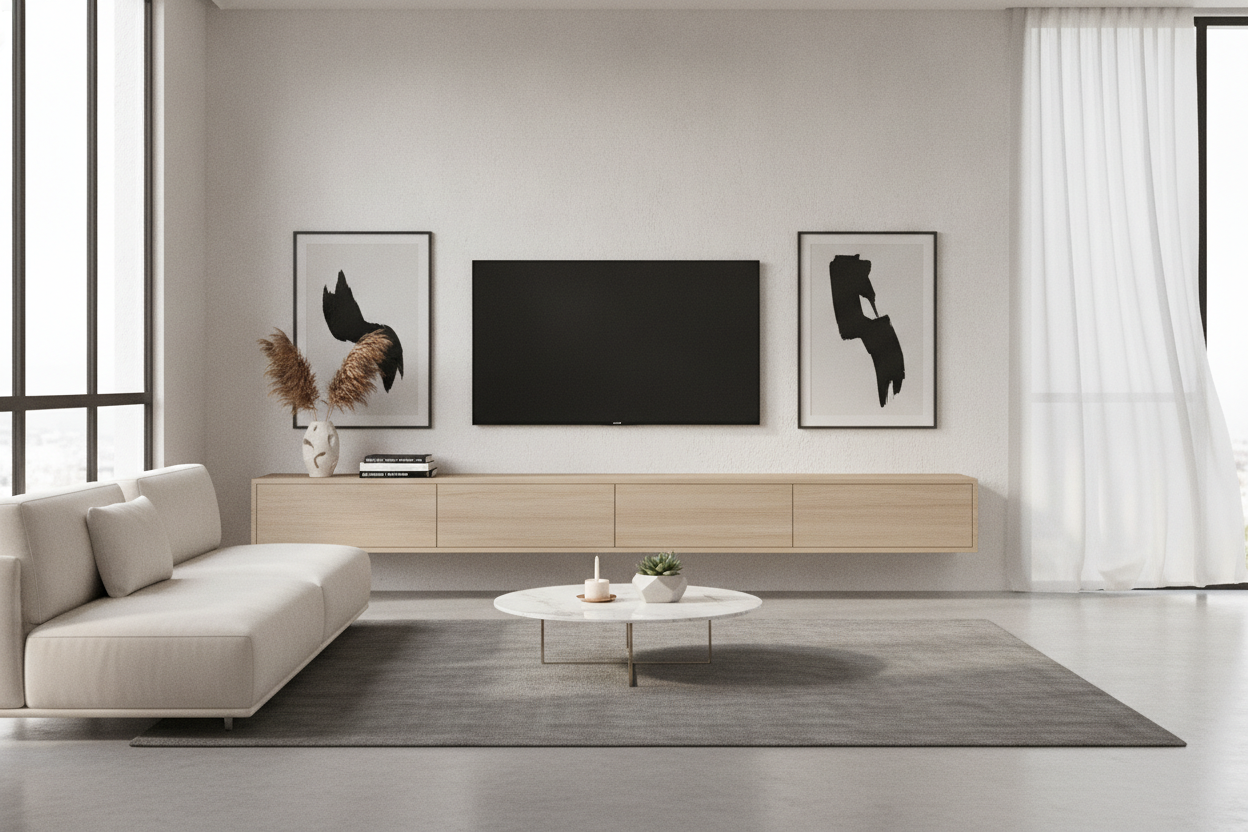
I spent years staring at a massive mahogany console that looked like it belonged in a 19th-century library. It was heavy, it trapped enough dust to create a second ecosystem underneath, and it made my 12x14 living room feel like a cramped closet. Switching to a floating tv stand entertainment center was less about following a trend and more about my desperate need for visual breathing room.
The moment I got that bulky box off the floor, the room finally felt like it could exhale. If you are tired of your furniture feeling like it is permanently anchored to the floorboards, it is time to look up.
- Freeing up floor space makes a room feel significantly larger by exposing the baseboards.
- Cleaning becomes a breeze since you can actually run a vacuum or Roomba under the unit.
- Wall mounting allows you to set the perfect ergonomic height for your specific seating.
- Cable management is mandatory—without it, the floating look is ruined by a mess of wires.
Why I Finally Said Goodbye to Furniture Legs
Traditional floor-standing units are anchors. They have a visual weight that pulls the eye downward and stops it dead at the base of the cabinet. Even a mid-century piece with tapered legs still creates a shadow-filled 'dead zone' on the floor. A modern floating tv cabinet removes that chunky base entirely. It is the difference between wearing a heavy winter boot and a sleek sneaker.
When I swapped my old unit for a black floating tv stand 65 inch model, the change was immediate. The room felt lighter, and the furniture no longer dominated the floor plan. It turns a piece of utility furniture into a architectural feature that looks like it was built specifically for your house.
The Optical Illusion of an Empty Floor
There is a classic design trick: if you can see the corners of a room and the baseboards are uninterrupted, the brain perceives the space as larger. A wall mounted floating entertainment center exploits this perfectly. Because the floor continues underneath the unit, your eyes do not register a hard stop at the front of the console.
This is especially true in tight apartments. Even a small white floating tv stand can make a narrow living room feel wider. If you are not ready to commit to a massive 80-inch setup, you might start with a floating tv shelf Target sells to test the waters. It provides that clean, off-the-floor aesthetic without the price of a custom built-in unit.
Let's Talk About the Drywall Anxiety
The most common question I get is: 'Is that thing going to rip out of my wall?' I get it. The idea of hanging a 65 in floating tv stand and then putting a heavy soundbar on it is terrifying. But here is the reality: if you find the studs, that unit is not going anywhere. Drywall anchors are fine for pictures, but for a floating media wall unit, you need to hit wood.
Invest in a decent stud finder—not the $5 one that gives false positives. Most floating tv stand hardware is designed to span 16-inch or 24-inch stud spacing. I have seen people mount a floating entertainment center for tvs up to 70 inches without a single wobble, provided they used lag bolts into the wall framing. If you are renting and cannot drill, this might be the one time I suggest sticking to legs, but for homeowners, the drill is your friend.
The Cord Management Reality Check
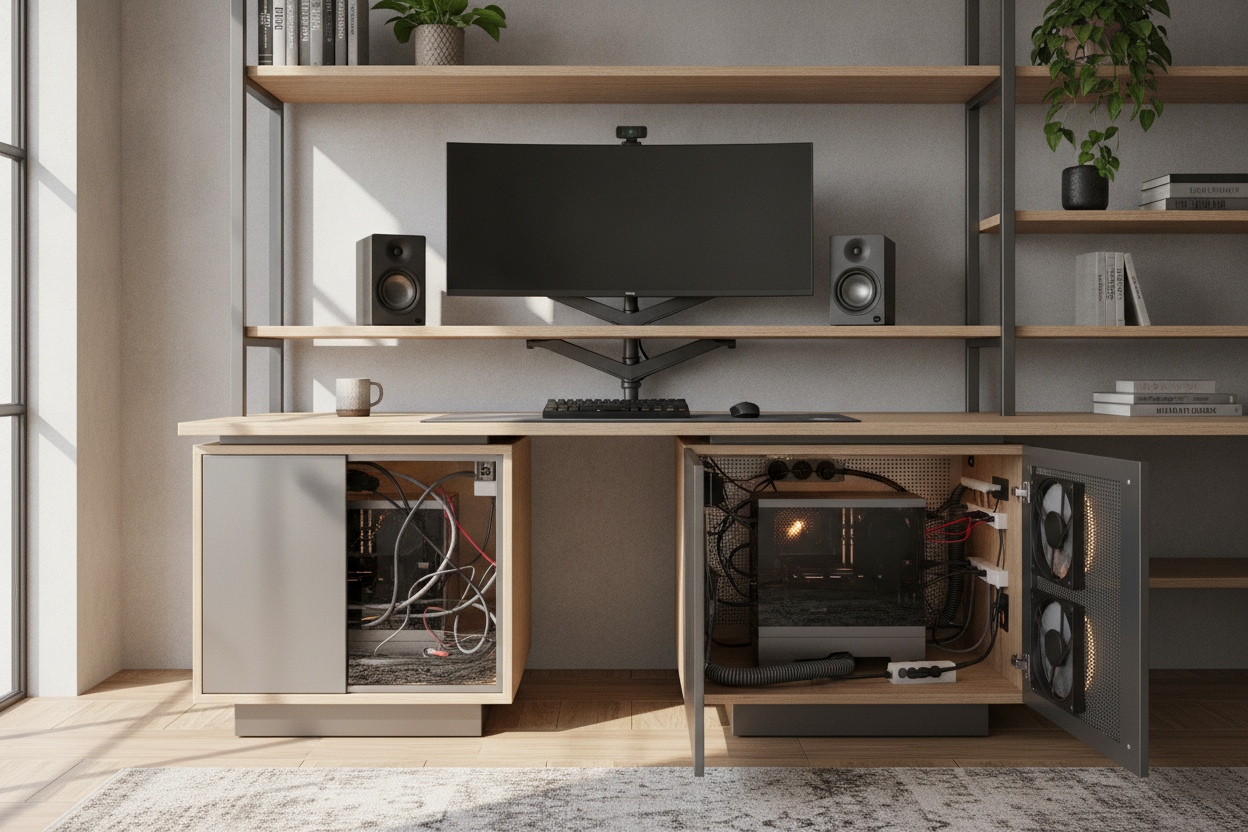
A floating console tv looks like magic until a thick black power cord and three HDMI cables are dangling down like a tail. It completely kills the illusion. To make a floating wall tv unit work, you have to commit to the cord hide. You have two real options: go behind the wall or use a cover.
In-wall power kits are the gold standard. They let you run cables behind the drywall safely. If you are not comfortable cutting holes, a paintable cord cover that matches your wall color is the next best thing. I spent two hours tucking wires into a sleek floating tv stand living room setup, and it was the most productive two hours of my renovation. If you see the wires, you have failed the mission.
Taking It Up a Notch With Under-Glow Lighting
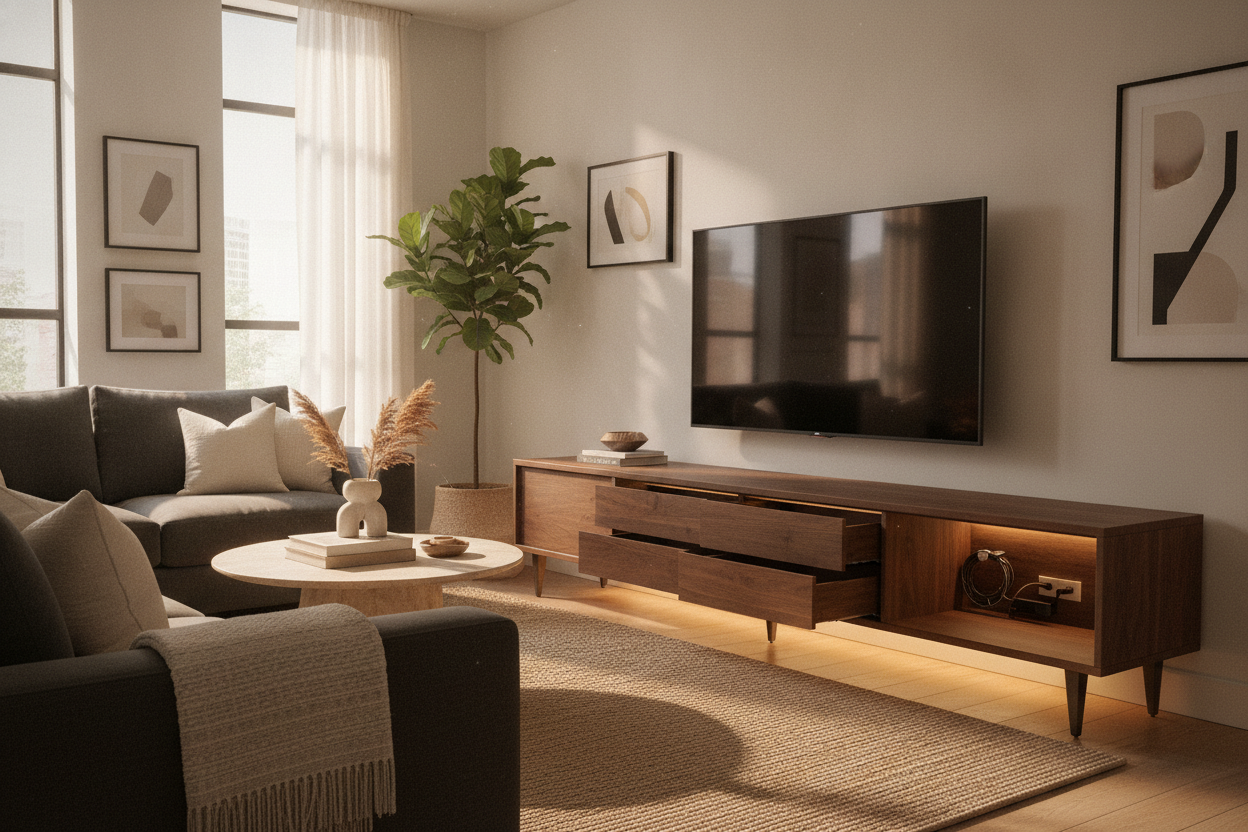
If you want that high-end, cinematic mood, add bias lighting. Putting a simple LED strip on the underside of the cabinet emphasizes the gap between the furniture and the floor. It makes the piece look like it is actually hovering. I highly recommend a floating TV stand with LED lights if you do a lot of nighttime movie watching.
It is not just for show, either. That soft glow acts as a nightlight and reduces eye strain by providing a bit of ambient light that does not reflect off the TV screen. It turns a standard industrial floating entertainment center into a focal point that looks twice as expensive as it actually was.
How high should a floating tv stand be?
Usually, you want the bottom of the unit to be 8 to 12 inches off the floor. This leaves enough room for a vacuum to pass under while keeping the TV at a comfortable eye level when you are seated on the sofa.
Can I mount a floating entertainment center on a brick wall?
Yes, but you will need a masonry drill bit and sleeve anchors. It is actually sturdier than drywall once it is set, though it is a bit more permanent and harder to patch if you change your mind later.
What size stand do I need for a 65-inch TV?
Always go wider than the TV. A 65-inch TV is about 57 inches wide. You should look for at least a 70-inch floating media table to avoid the 'top-heavy' look. A unit that is the same width as the TV looks accidental and cramped.

Leave a comment
This site is protected by hCaptcha and the hCaptcha Privacy Policy and Terms of Service apply.