










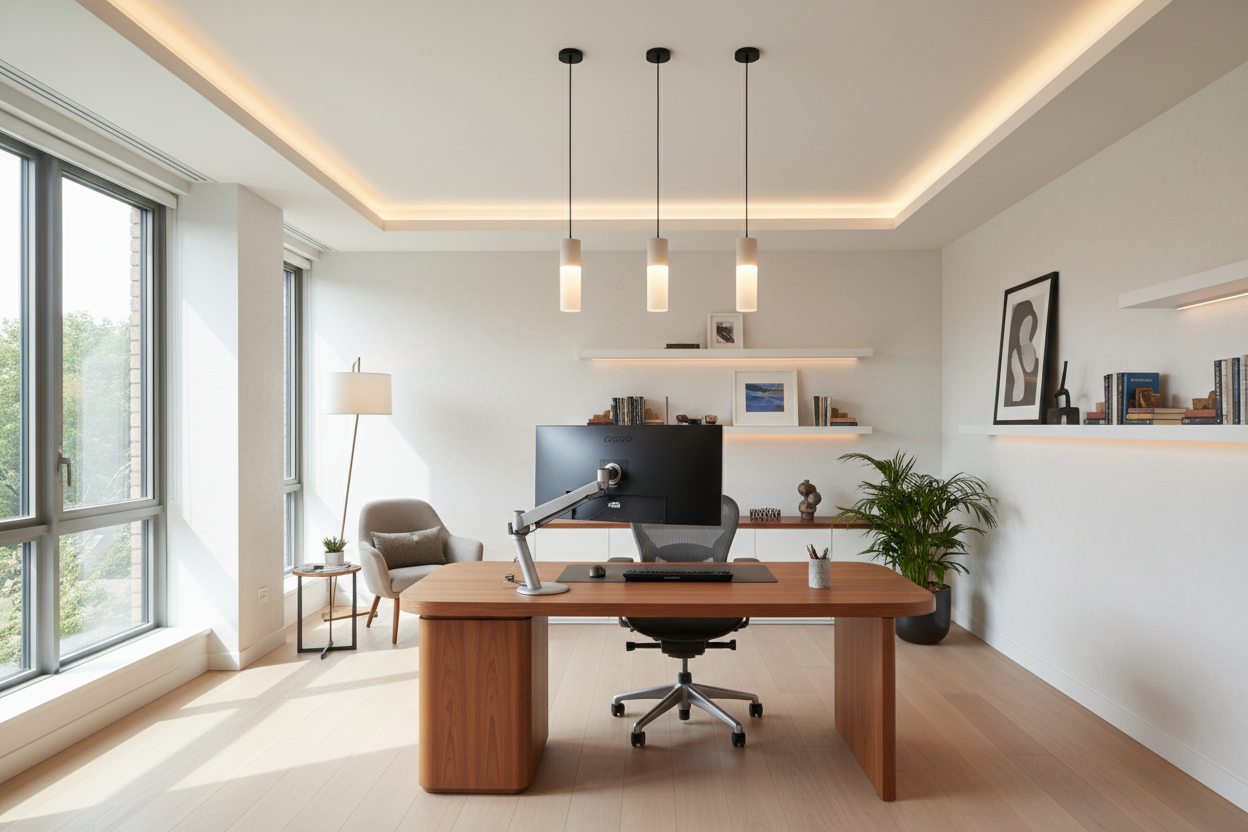
We often treat lighting as an afterthought, prioritizing the desk chair or the shelving unit. Yet, poor illumination is the silent killer of productivity, leading to eye strain and a lackluster atmosphere. As a designer, I see this constantly: a beautiful room ruined by a single, harsh bulb. Selecting the right light fixtures for offices is about balancing architectural beauty with ergonomic necessity. Whether you are retrofitting a corporate suite or refining a cozy study, the goal is to create a scheme that minimizes glare while elevating the room's visual weight.
Key Features to Look For
- Color Temperature: Aim for 3500K to 4000K for a balance of focus and comfort; avoid overly warm (sleepy) or cool (clinical) tones.
- Diffused Output: Look for fixtures with frosted glass or acrylic diffusers to prevent harsh shadows and monitor glare.
- Scale and Drop: Ensure the fixture size correlates with your room dimensions; a home office ceiling light should not overwhelm a small footprint.
- Dimmability: Essential for transitioning from high-focus work hours to evening ambiance.
Mastering the Layered Lighting Approach
The biggest mistake in workspace design is relying on a single source of illumination. The best office ceiling lights act as the foundation—your ambient layer—but they cannot do the heavy lifting alone. When specifying a home office light fixture, I look for pieces that cast light broadly rather than focusing it in a tight beam, which creates contrast spots that tire the eyes.
Ambient vs. Task Lighting
Your overhead lighting for home office setups should provide general illumination. Flush mounts or semi-flush mounts are practical for standard ceiling heights (8 feet), while pendants work beautifully in rooms with vaulted ceilings. However, always supplement this with task lighting. A modern home office ceiling light sets the mood, but a desk lamp protects your vision.
Materiality and Aesthetics
Lighting is the jewelry of the room. Currently, we are seeing a shift away from industrial, exposed-bulb fixtures which, while trendy, are terrible for glare. Instead, the best ceiling light for home office environments features integrated LEDs with silicone diffusers or linen shades that soften the output.
If you are aiming for a sophisticated look, consider mixed metals. A matte black office ceiling lamp with brass accents adds a touch of luxury without being distracting. For a minimalist aesthetic, a linear suspension light offers a clean, architectural silhouette that mirrors the lines of a desk.
Sizing and Placement Strategy
Proportion is paramount. A common error is installing a ceiling light fixture for home office use that is too small, making the room feel cheap. A good rule of thumb: add the length and width of the room in feet, and use that sum in inches for the diameter of your fixture.
Furthermore, consider the placement relative to your screen. You generally want the home office overhead lighting slightly behind or to the side of your seating position, not directly in front where it will reflect off your monitor, nor directly above your head where it casts shadows on your work surface.
Choosing the Right Bulb Technology
When selecting light fixtures for home office usage, the CRI (Color Rendering Index) matters. Look for a CRI of 90+. This ensures that colors in your room—and on your video calls—look accurate. Many modern home office ceiling lights come with tunable white technology, allowing you to shift from a cool, focus-enhancing blue light in the morning to a warmer, relaxing amber tone in the late afternoon.
Lessons from My Own Projects
I learned the hard way that "sculptural" doesn't always mean functional. I once specified a stunning, intricate metal chandelier for a client's home office ceiling. It looked incredible in the catalog. However, once installed, the open-framework design cast distinct, spiderweb-like shadows across the client's desk and, worse, across her face during Zoom calls.
We had to swap it out for a drum pendant with a bottom diffuser. The lesson? Always check how the light interacts with the fixture's body. If you are buying a light fixture for home office use, specifically look for "fully enclosed" or "bottom diffuser" in the specs. It saves you the headache of visual noise when you're trying to concentrate.
Frequently Asked Questions
What is the best color temperature for a home office?
The sweet spot for productivity is between 3500K and 4000K. This range mimics natural daylight, keeping you alert without the harsh, sterile feeling of 5000K commercial lighting or the drowsiness associated with 2700K warm residential lighting.
Can I use a chandelier as an office ceiling light?
Yes, but with caveats. Ensure it hangs at least 7 feet above the floor if it's in a walkway. If it is centered over the desk, ensure it doesn't obstruct your view. Avoid exposed clear bulbs; opt for shaded chandeliers to maintain a soft, professional light quality.
How do I light a home office with low ceilings?
For ceilings 8 feet or lower, avoid pendants. The best ceiling lights for home office spaces with low clearance are flush mounts or ultra-slim LED panels. These provide a clean, modern look and make the room feel taller by hugging the ceiling plane.
Final Thoughts
Transforming your workspace starts with looking up. By investing in high-quality home office light fixtures ceiling options that prioritize diffusion and scale, you create an environment that supports your workflow rather than hindering it. Treat your lighting as a long-term investment in your daily comfort.


Leave a comment
This site is protected by hCaptcha and the hCaptcha Privacy Policy and Terms of Service apply.