










There is a specific kind of visual noise that kills creativity faster than anything else: a cluttered surface. As a designer, I see this constantly. Clients want a space that feels like a sanctuary of productivity, yet they often choose furniture based solely on dimensions rather than workflow. The secret to a high-functioning environment lies in the seamless integration of desks and storage. It is not just about having a place to put your laptop; it is about curating a system where every file, peripheral, and pen has a home, allowing your mind to focus on the task at hand.
Key Features to Look For
Before committing to a purchase, review these critical elements to ensure your furniture serves your spatial and functional needs:
- Footprint vs. Surface Area: Ensure the desk fits the room without dominating it, while providing enough desktop depth (minimum 24 inches) for monitors and keyboards.
- Storage Accessibility: Look for office desks with storage where drawers extend fully and open shelving is within arm's reach to maintain workflow.
- Cable Management: High-quality home office desk furniture should include grommets or hidden channels to manage tech clutter.
- Material Durability: Assess whether the finish (melamine, veneer, or solid wood) can withstand daily wear, coffee rings, and mouse friction.
Orchestrating the Layout: Function First
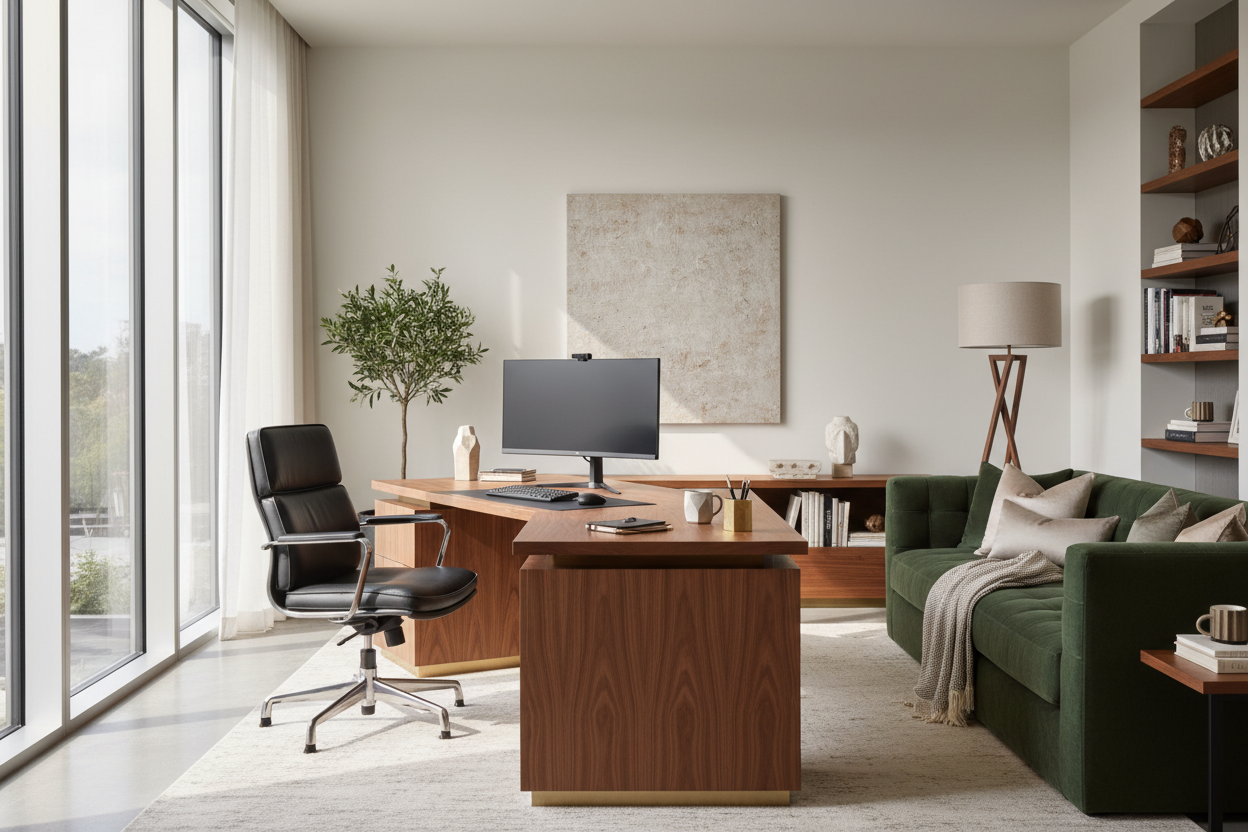
When selecting office desks and storage, the first step is spatial planning. A common error is placing a heavy workstation desk with storage against a wall that blocks natural light. Instead, consider floating the piece in the room if space permits. This anchors the room and commands authority.
For tighter footprints, home workstations utilizing verticality are essential. A storage table desk with a hutch or overhead shelving draws the eye upward, making the room feel taller while keeping essential reference materials accessible. The goal is to minimize the distance between you and your tools.
The Silhouette: Selecting the Right Style
The Executive Approach
If your work involves paper-heavy processes, office tables with storage built into the pedestal are non-negotiable. Deep file drawers hide visual clutter. However, be wary of bulk. A heavy, blocky desk can suffocate a small room. Look for designs with "floating" tops or recessed plinths to add a sense of lightness to the piece.
The Minimalist Hybrid
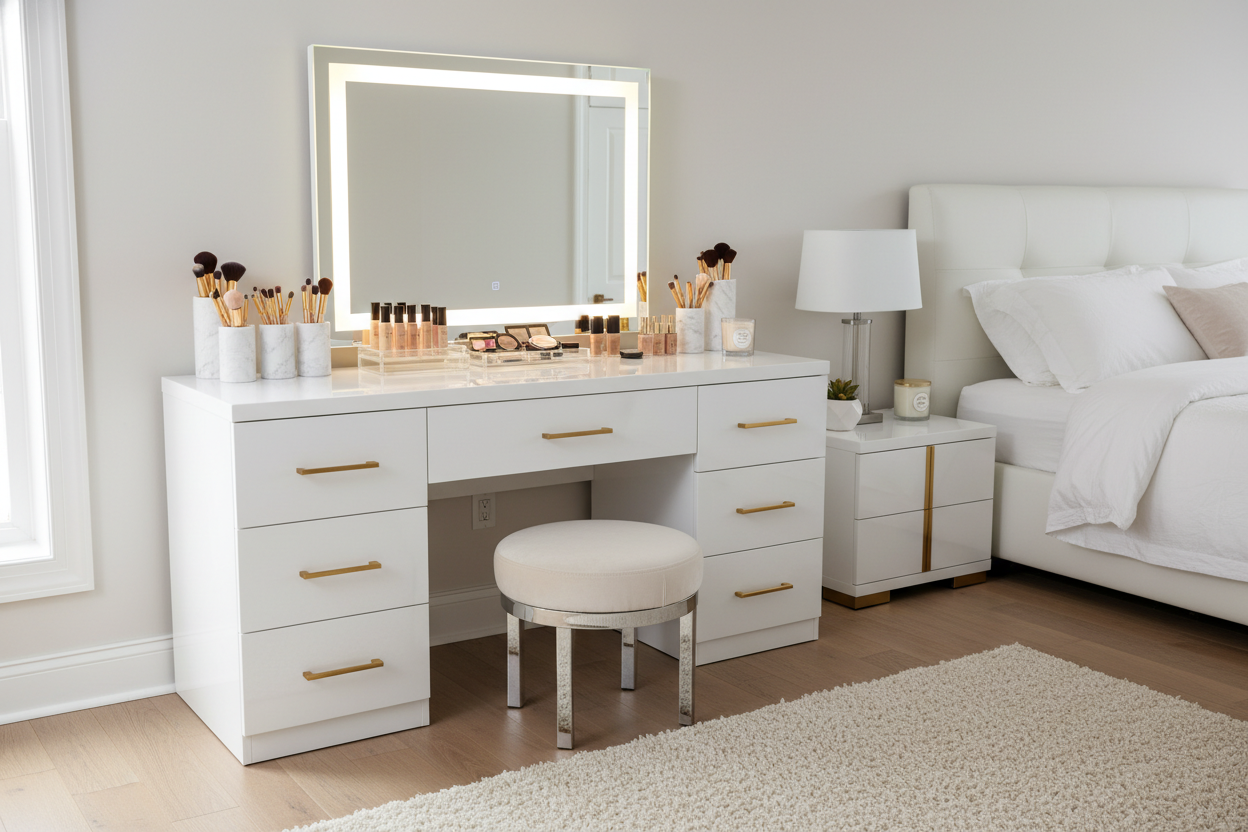
For those working primarily on laptops, a desk table with storage—often featuring shallow frieze drawers—offers a cleaner aesthetic. These home office desks with storage act more like architectural console tables. They maintain the elegance of a living space while providing just enough utility for a home computer desk with storage requirements.
Materiality and Tactile Experience
The surface you touch for eight hours a day matters. Solid wood study desks with storage offer warmth and gain character over time, but they require coasters and humidity control. High-pressure laminates have come a long way; they are excellent for office work table with storage setups where durability is paramount, resisting scratches and heat.
When integrating home office storage desk units, ensure the hardware matches the room's vernacular. Soft-close hinges and brushed metal pulls can elevate a standard piece into something that feels bespoke.
Lessons from My Own Projects
I learned a hard lesson early in my career regarding desks for home office with storage. I once specified a stunning, vintage-inspired desk for a client who used dual monitor arms. The desk had a beautiful, integrated modesty panel and a fixed storage hutch on the back.
The problem? The lip of the desk was too shallow to clamp the monitor arms, and the backing prevented us from drilling grommets without ruining the structural integrity. We had to completely rethink the setup. Now, I always check the "under-desk" clearance and lip depth. If you are buying a work desk with storage, physically sit at it if possible. Check if the drawer handles dig into your knees or if the storage pedestal forces you to sit off-center. Those minor ergonomic annoyances become major pains after a six-month period.
Conclusion
Investing in the right home office desks and storage is an investment in your own mental clarity. By prioritizing ergonomics, appropriate material selection, and intelligent layouts, you transform a simple room into a powerhouse of productivity. Don't settle for wobbly flat-packs; choose pieces that offer stability and style.
Frequently Asked Questions
How much space do I need behind my desk for a chair?
To move comfortably, you generally need at least 30 to 40 inches of clearance between the edge of your desk and the nearest wall or storage unit. This allows you to slide back and swivel without damaging the furniture.
What is the difference between a writing desk and a computer desk with storage?
A writing desk typically has a simple flat surface and minimal drawers, focused on aesthetics. A home computer desk with storage usually features dedicated compartments for CPU towers, cable management systems, and sliding keyboard trays to support hardware.
Can I mix and match desk and storage finishes?
Absolutely. In fact, buying a matching set can sometimes look too "corporate" for a home. Try pairing a natural wood desk with matte black or white metal filing cabinets. This creates a curated, layered look rather than a catalog-bought appearance.

Leave a comment
This site is protected by hCaptcha and the hCaptcha Privacy Policy and Terms of Service apply.