










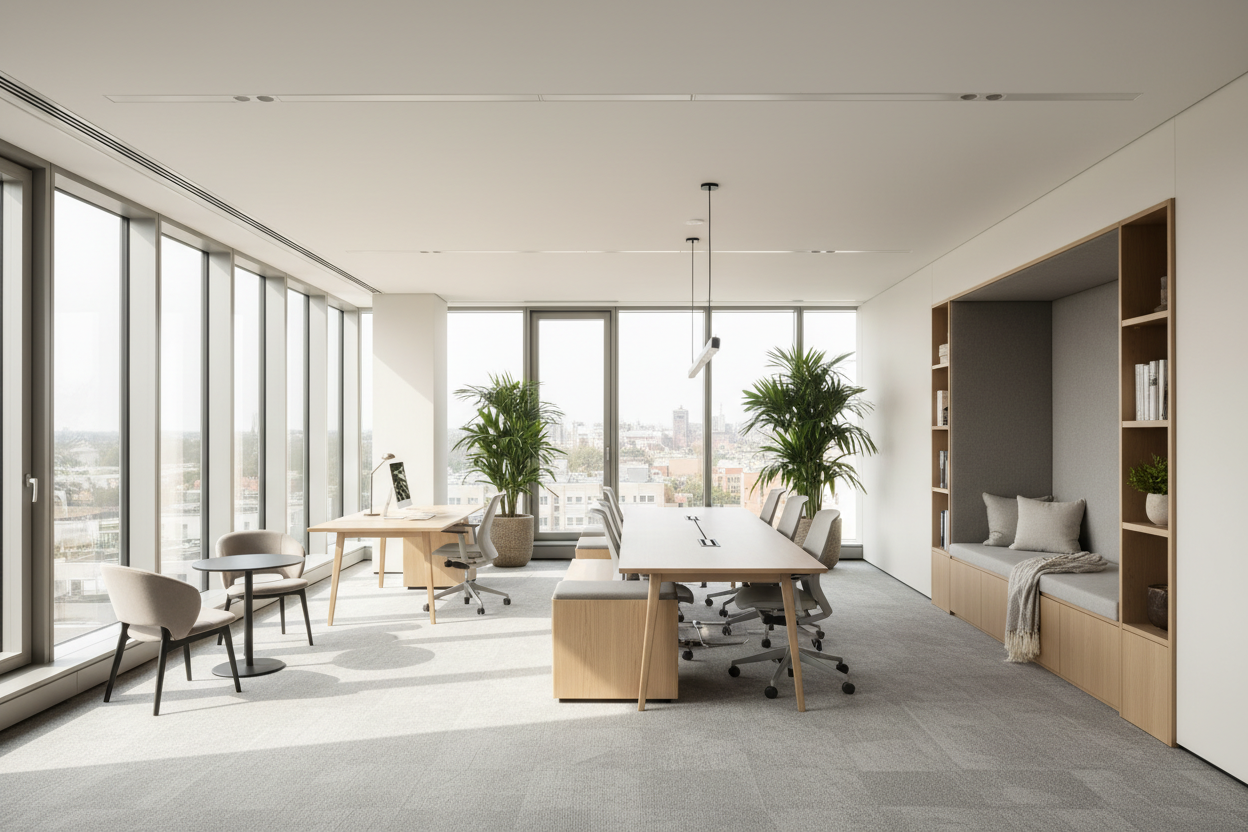
There is a distinct challenge when designing a workspace that is longer than it is wide. The fear is always the same: creating a "bowling alley" effect where furniture lines the walls and the center feels like a vacant runway. However, as a designer, I view a rectangular office layout as one of the most versatile floor plans available. It allows for distinct zoning that square rooms simply cannot accommodate, provided you understand how to manipulate visual weight and circulation paths.
Quick Decision Guide: Key Layout Factors
If you are planning your space right now, these are the critical elements to consider for a balanced aesthetic and functional workflow:
- Desk Placement: Avoid pushing the desk directly against the long wall; floating it perpendicular or facing the door commands authority.
- Zoning: Use the room's length to separate "work" (desk) from "thinking" (lounge chair or bookshelf).
- Verticality: In narrow spaces, use floor-to-ceiling shelving to draw the eye up and reduce footprint.
- Lighting Layers: A single overhead fixture creates shadows in corners; use task and floor lamps to widen the perceived space.
- Circulation: Ensure a minimum 36-inch clearance behind your chair for movement.
Breaking the "Corridor" Effect
The primary goal in a rectangle office layout is to disrupt the tunnel vision. When clients ask me how to arrange these rooms, I almost always advise against lining every piece of furniture against the perimeter. This creates a dead zone in the center.
Instead, try floating your desk. Positioning your desk perpendicular to the long wall, or facing the room's entrance, establishes a "power position." It anchors the room and forces the circulation path to curve around the workspace, which immediately makes the room feel wider and more dynamic.
Zoning: The Luxury of Length
The beauty of a rectangle home office layout is the ability to create micro-environments. In a square room, everything happens in one pile. In a rectangular space, you can dedicate the far end near the window to deep work and the area near the door to storage or a secondary seating area.
Material Consistency Across Zones
To keep the room cohesive, repeat materials. If your desk is a walnut veneer, ensure the legs of your accent chair or the shelving unit at the opposite end share that same timber tone. This carries the eye through the room without visual clutter.
Solving the Small Rectangular Office Layout
When dealing with a small rectangular office layout, floor space is premium currency. Here, heavy executive desks are the enemy. Look for writing desks with exposed legs (parson style) rather than solid block sides. Seeing the floor continue underneath the furniture tricks the brain into perceiving more square footage.
Furthermore, consider the depth of your storage. Standard filing cabinets are 18-24 inches deep. In a narrow room, switch to 12-inch deep bookcases or wall-mounted floating shelves. This saves nearly a foot of circulation space, which is massive in a tight footprint.
Lessons from My Own Projects: The "Caster Clash"
I once designed a home office for a client in a narrow brownstone—the room was barely 8 feet wide but 16 feet long. On paper, the layout looked perfect: a credenza behind the desk for storage and a floating desk in front.
However, once we installed the furniture, I realized a practical error I hadn't accounted for in the CAD drawings. The finish on the credenza was a high-gloss lacquer, and the desk chair had hard plastic casters. Every time the client pushed back from the desk, the chair hit the credenza handles with a jarring metal-on-metal sound. More importantly, the drawers of the credenza couldn't fully open while he was seated.
We had to swap the credenza for sliding-door storage (no handles protruding) and switch the chair wheels to soft rubber rollerblade-style casters to protect the rug and stop the sliding. It taught me that in rectangular rooms, the "zone behind the chair" is the most critical inch-by-inch calculation you will make.
Conclusion
Don't let the shape of your room dictate a boring layout. By pulling furniture off the walls and creating distinct zones, you can turn a narrow corridor into a sophisticated, multi-functional workspace. It’s about controlling the flow, not just fitting the furniture.
Frequently Asked Questions
Where is the best place to put a desk in a rectangular office?
Ideally, place the desk near a natural light source (window) but perpendicular to it to avoid glare on screens. Avoid facing the wall directly if possible; facing the door or the center of the room improves focus and reduces the feeling of being cramped.
How do I choose a rug for a long, narrow office?
Avoid using a long runner down the middle, as this accentuates the "bowling alley" look. Instead, use two separate area rugs to define zones (one for the desk, one for a seating area) or use a large rectangular rug that leaves about 12-18 inches of bare floor around the perimeter.
What is the best color strategy for a narrow office?
Cooler, lighter colors on the long walls can make them feel like they are receding, widening the room. You can paint the shorter, far wall a darker accent color to visually "shorten" the room and create a cozy focal point.


Leave a comment
This site is protected by hCaptcha and the hCaptcha Privacy Policy and Terms of Service apply.