










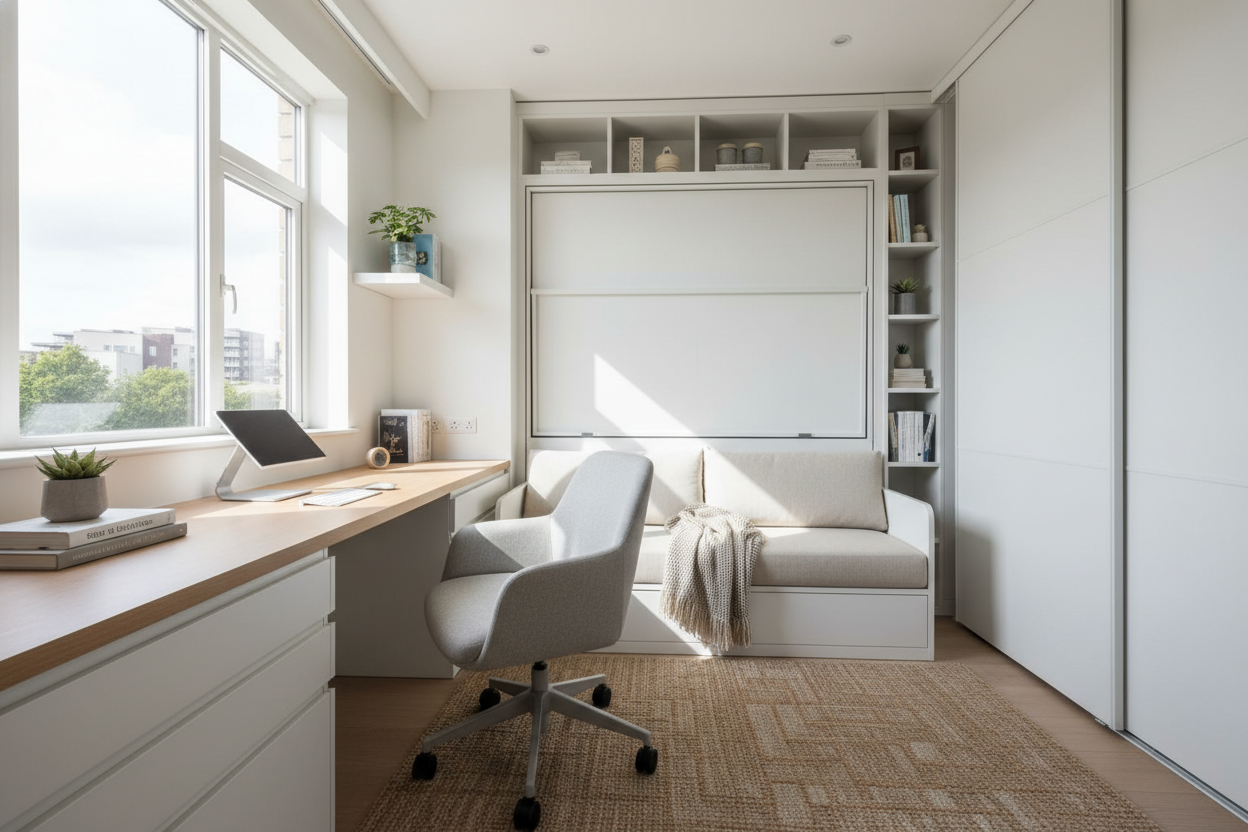
Merging a sanctuary for sleep with the rigorous demands of a workday is a delicate balancing act. When square footage is at a premium, the wrong configuration can make a room feel claustrophobic rather than cozy. The goal is not just to fit a desk in a corner; it is to curate a small bedroom office setup that respects the room's primary function—rest—while providing a distinct, professional zone for productivity.
Key Considerations for Compact Layouts
- Visual Weight: Opt for furniture with exposed legs or glass surfaces to maintain a sense of openness.
- Vertical Utilization: Use wall-mounted shelving or secretaries to free up valuable floor space.
- Lighting Zones: distinct task lighting for work and warm ambient lighting for sleep are non-negotiable.
- Ergonomics vs. Scale: Prioritize chairs that offer lumbar support without the bulk of a traditional executive chair.
Strategic Zoning and Flow
In a dual-purpose room, the layout must dictate the mindset. One of the most effective small bedroom and office ideas is to position the desk so that your back is to the bed while working. This creates a psychological boundary; you aren't staring at your pillows while trying to focus. Conversely, when you are in bed, the technology should ideally be out of your direct line of sight.
For small room office and bedroom configurations, consider the 'nook' approach. If you have an alcove or a space beside a wardrobe, recessing the desk there creates a natural architectural separation. Ensure you maintain at least 30 inches of clearance behind your chair to allow for comfortable movement without hitting the bed frame.
Minimizing Visual Weight with Materiality
As a specialist, I often advise clients to look beyond just the dimensions of furniture and consider its 'visual weight.' In tiny bedroom office ideas, a solid oak desk with drawers down to the floor will dominate the room, making it feel smaller. Instead, look for a 'Parsons' style silhouette or a writing desk with slender metal or wood legs.
The Role of Transparency
Acrylic or glass desks are excellent small bedroom workspace ideas because they disappear into the room. However, they require impeccable cable management. If you prefer wood, lighter stains like ash or white oak reflect light, whereas dark mahogany absorbs it, shrinking the perception of space.
Ergonomics in Tight Quarters
Comfort cannot be sacrificed for aesthetics, but scale is critical. A high-back executive chair often overwhelms a small bedroom. Look for mid-back task chairs with a slim profile. Upholstery matters here; a fabric or mesh finish feels more residential and softer than cold black leather, helping the office chair blend with the bedroom's textile narrative.
My Personal Take on small bedroom office setup
In my years of designing city apartments, the biggest failure point I see isn't the desk size—it's the 'visual noise' of technology. I once worked on a project where we installed a beautiful, custom floating desk. It looked perfect until the client plugged in their monitor, laptop, and phone charger. The tangle of black wires against the serene bedroom wall was a disaster.
From that project on, I learned a specific lesson: Always prioritize furniture with integrated cable concealment in bedrooms. Even if the desk is small, if it has a hidden channel for cords, it saves the room's aesthetic. I also recommend a 'shutdown ritual' for bedroom offices. I encourage clients to buy a desk with a single drawer deep enough to stash the laptop at night. Seeing a blinking standby light from your pillow is the quickest way to ruin a good night's sleep.
Conclusion
Integrating a workspace into your sleeping quarters requires a disciplined approach to scale and clutter. By choosing materials that keep the room feeling airy and adhering to strict zoning principles, you can create a space that supports your career without compromising your rest.
Frequently Asked Questions
How much space do I strictly need for a desk setup?
At a minimum, a functional work surface should be 24 inches deep and 36 inches wide. You also need roughly 30 to 36 inches of clearance behind the desk to push your chair back comfortably.
How can I hide my office equipment when not in use?
Consider a 'secretary desk' or a drop-front desk. These vintage-inspired pieces allow you to close the lid on your work at the end of the day, physically hiding the laptop and papers to restore the bedroom atmosphere.
What is the best lighting for a bedroom office?
Avoid relying solely on the bedroom's overhead ceiling light, which casts shadows. Use a dedicated, adjustable task lamp with a cool-temperature bulb (4000K) for focus, and keep your bedside lamps warm (2700K) to differentiate the zones.

Leave a comment
This site is protected by hCaptcha and the hCaptcha Privacy Policy and Terms of Service apply.