










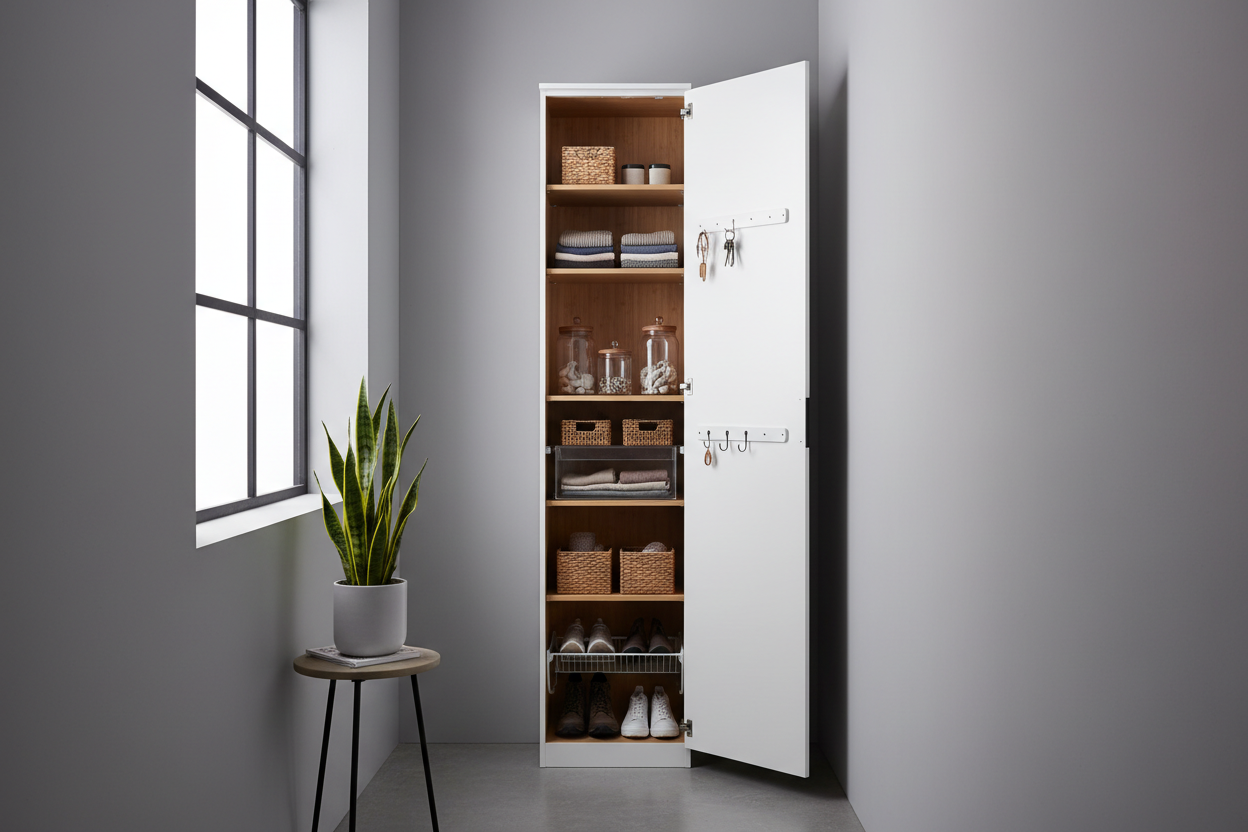
Finding storage solutions for tight corners and awkward gaps is a challenge almost every homeowner faces eventually. Whether it is a slender gap beside a bathroom vanity or a narrow strip of wall in the laundry room, standard double-door units simply won't fit. This is where the cabinet with one door shines as a dedicated problem solver. These units offer a surprising amount of vertical storage without encroaching on your floor plan, making them essential for organizing compact living areas.
Why a Single Door Cabinet is a Space-Saving Hero
The primary appeal of a single door cabinet lies in its footprint. Unlike wider buffets or dressers, a single cabinet utilizes verticality. By reducing the width, you can slide a storage cabinet with one door into nooks that would otherwise remain dead space. This is particularly useful in rooms where every inch counts, such as powder rooms, entryways, or small home offices.
Beyond dimensions, the swing radius is a critical factor. A cabinet with single door requires less clearance to open fully compared to wider doors. This makes a 1 door cabinet ideal for high-traffic areas or tight corridors where a larger door might block a walkway or hit an opposing wall.
A Personal Brush with Narrow Storage
I learned the value of these units the hard way during a renovation of my downstairs guest bath. The layout was incredibly unforgiving, leaving a mere 15-inch gap between the pedestal sink and the wall. Towels were piling up on the floor, and cleaning supplies were visible to guests. After measuring three times to be sure, I installed a white single door cabinet with a shaker-style front. It wasn't just about hiding the clutter; the vertical lines actually made the ceiling look higher. That one door tall cabinet transformed a chaotic corner into the most organized part of the house, holding everything from extra toilet paper to guest linens.
Choosing Between Tall and Small
When shopping for these units, you generally fall into two camps: those looking for height and those looking for discreet, low-profile storage. Understanding the difference in utility helps you make the right purchase.
The Vertical Advantage: Tall Cabinets
A one door tall cabinet is a powerhouse for storage volume. These units often stand anywhere from five to seven feet high. In a kitchen pantry context, a single door tall cabinet serves as an excellent pull-out larder or broom closet. Because they draw the eye upward, they can make a room feel less cluttered. A tall single door storage cabinet is particularly effective in bathrooms for linen storage, where you need to stack bulky items like bath towels vertically.
Compact Solutions: Small Cabinets
On the flip side, a small cabinet with one door offers versatility in placement. You can tuck a small one door cabinet under a desk to hold paperwork or place it beside a bed as a nightstand. A small single door cabinet is also excellent for bathrooms with wall-mounted sinks, sliding easily underneath to utilize that empty plumbing space. If you are looking for a small 1 door cabinet, pay attention to the top surface material, as it will likely double as a display shelf or counter space.
Functionality: Shelves and Utility
The exterior look is important, but the interior configuration determines how useful the furniture actually is. A one door cabinet with shelves is only as good as the adjustability of those shelves. Fixed shelving can be a nightmare if you are trying to store tall bottles of cleaning solution or a stack of board games. Always look for a single door cabinet with shelves that can be moved up or down via peg holes.
For rougher environments like garages or mudrooms, a single door utility cabinet is usually the best bet. These are often made of metal or heavy-duty laminate rather than solid wood. A 1 door storage cabinet in a utility setting needs to withstand weight. If you plan to store paint cans or tools, ensure the weight capacity per shelf is rated for heavy loads. A flimsy single storage cabinet might bow under the pressure of heavy hardware.
Material and Aesthetic Considerations
Because these cabinets stand alone, they become a focal point. A white single door cabinet is the most common choice for bathrooms and coastal-style living rooms because it reflects light and keeps the visual weight of the furniture light. However, natural wood tones are making a comeback for a warmer, organic feel.
In the kitchen, these units are often referred to as single cupboards. Integrating a standalone cupboard into existing cabinetry requires matching the finish and hardware. If you cannot match the existing cabinets perfectly, go for a deliberate contrast. A navy blue or charcoal one door storage cabinet can act as a statement piece against white kitchen joinery.
Installation and Safety Tips
Installing a single door cabinet small enough to sit on the floor is straightforward, but taller units require safety precautions. Because a single door tall cabinet has a narrow base and a high center of gravity, it is prone to tipping, especially when the door is open and loaded with items. Anchoring the unit to the wall is not optional; it is a necessity for safety.
Furthermore, consider the swing direction. Most high-quality single cupboards or cabinets allow you to reverse the door. If your single door cabinet small or large is placed in a corner, ensure the door opens away from the wall so you have full access to the interior. Nothing is more frustrating than a single door storage cabinet that only opens 80 degrees because the handle hits the adjacent wall.
Final Thoughts on Organization
Once you have your storage cabinet with one door in place, organize it strategically. Use clear bins for smaller items to prevent them from getting lost in the back. Since these cabinets are often deep and narrow, pull-out organizers can be a game-changer, preventing you from having to dig blindly into the back of a 1 door storage cabinet. Whether you choose a sleek modern design or a rustic farmhouse look, the humble single door unit remains one of the most efficient ways to reclaim space in a crowded home.
Frequently Asked Questions
How do I know if a single door cabinet will fit in my space?
Measure the width and depth of the floor space, but also measure the "swing space" required for the door to open. Ensure that opening the door won't hit a toilet, sink, or doorframe. Allow at least two inches of clearance on the hinge side if the cabinet is placed directly against a side wall.
Can I change the direction the door opens?
Many ready-to-assemble cabinets feature reversible doors, allowing you to mount the hinges on either the left or right side. However, pre-assembled or antique units often have fixed hinges. Always check the product specifications for "reversible door" features before purchasing if you have a specific layout requirement.
How much weight can a typical single door cabinet hold?
This depends entirely on the material. A metal utility cabinet might hold 50-75 pounds per shelf, while a standard particleboard residential cabinet may only support 20-30 pounds per shelf. Always check the manufacturer's load rating, especially if you plan to store heavy items like canned goods or tools.

Leave a comment
This site is protected by hCaptcha and the hCaptcha Privacy Policy and Terms of Service apply.