










The Evolution of Mid-Century Modern Sit-Stand Workspaces
Mid-century modern architecture has long celebrated an intentional harmony between organic forms, practical utility, and uncluttered silhouettes. Yet for remote workers and design enthusiasts, bringing active ergonomics into a period-inspired interior often presents a visual puzzle. Traditional height-adjustable furniture historically relied on sterile, industrial aesthetics—chunky metal T-frames, powder-coated gray finishes, and exposed cabling that clashed with warm timber tones and vintage decor.
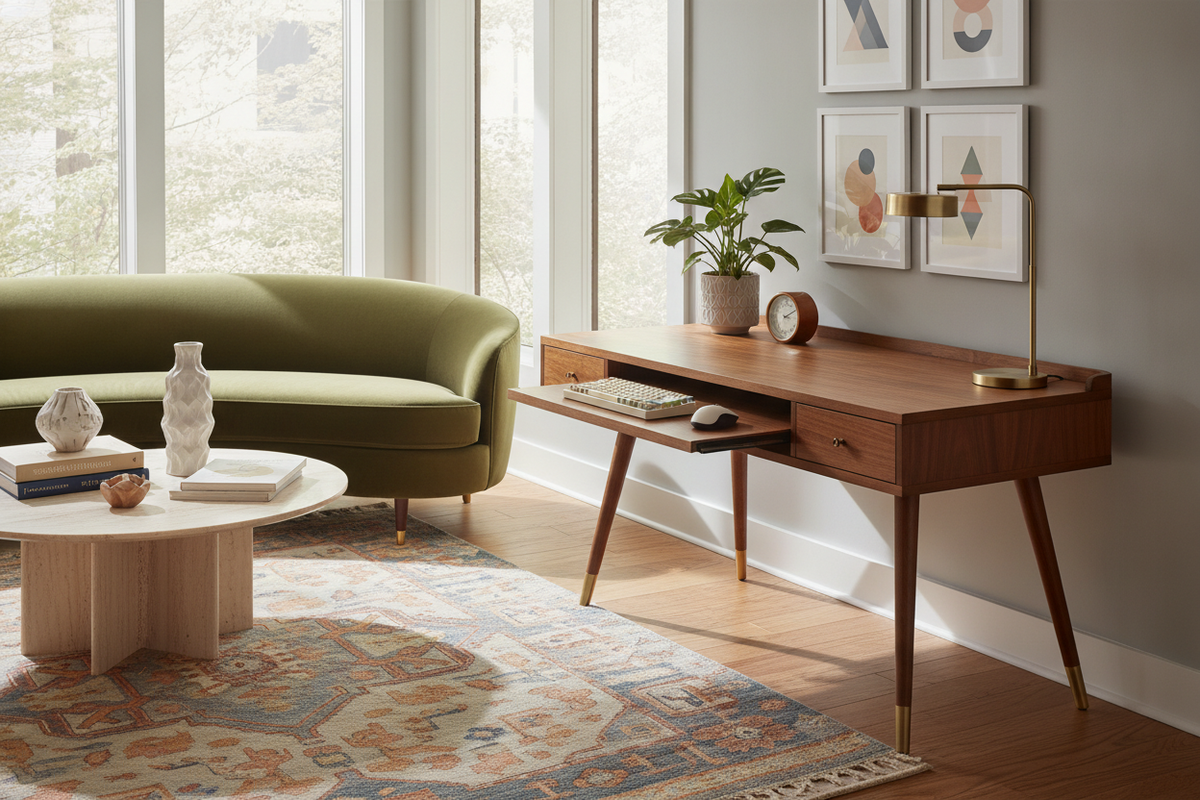
Contemporary design thinking bridges this gap by merging classic twentieth-century styling with discreet motorized components. A thoughtful standing desk resource demonstrates that sit-stand workstations no longer need to resemble laboratory fixtures. Instead, modern iterations adopt walnut stains, bevelled worktops, and elegant structural shrouds that honor 1950s and 1960s craftsmanship while still accommodating dynamic daily movement.
Key Design Hallmarks of a Mid-Century Standing Desk
Identifying an authentic mid-century silhouette requires looking closely at surface treatments, edge geometry, and leg profiles. While vintage desks frequently rested on splayed, pencil-tapered wooden dowel legs, height-adjustable variants must integrate telescoping lifting columns. Designers solve this by using matte-finished columns, warm metallic accents, or specialized timber casings that evoke classic proportions.
- Rich Timber Grains: Warm walnut, amber acorn, teak tones, and natural oak veneers serve as the foundational palette. These grains create depth and surface character that synthetic laminates rarely replicate.
- Softened Edge Treatments: Classic mid-century furniture avoids aggressive, sharp edges. Look for rounded bullnose contours, angled chamfers, or curved perimeter borders that soften the visual footprint of a broad desktop.
- Subtle Hardware and Accent Trim: Rather than glossy chrome, mid-century styles favor brushed brass, muted antique bronze, or textured matte black metal for lifting pedestals, drawer pulls, and grommet covers.
- Airy Visual Profiles: Even when accommodating motorized assemblies, the framework should emphasize open sightlines, avoiding overly bulky box pedestals that weigh down a room.
Dimensional Categories and Room Footprint Planning
Spatial balance is central to mid-century interior design, which values proportional breathing room around every piece of furniture. Before selecting a desk, consider how its footprint interacts with pathways, wall art, and ambient window light throughout the full height of its vertical travel.
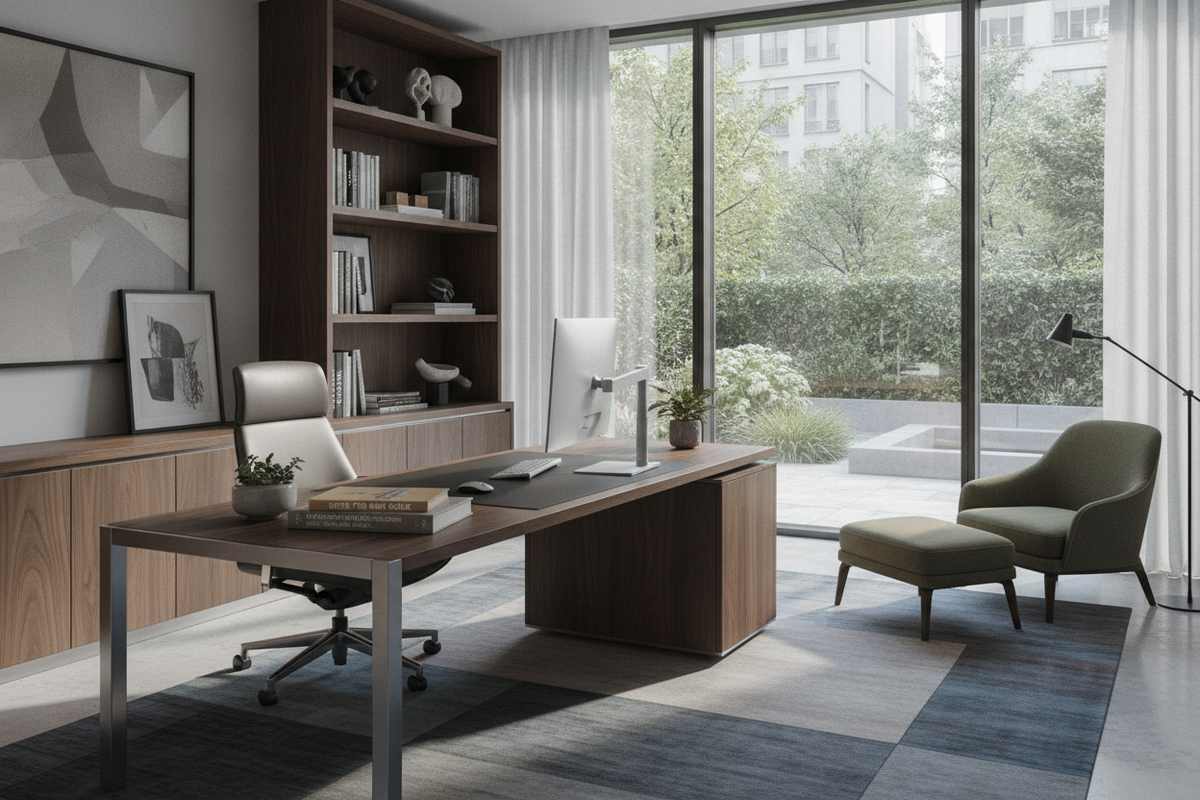
For compact spaces and multipurpose living nooks, a streamlined desk surface provides sufficient area for a laptop, task lighting, and minimal desktop organization without overwhelming the surrounding room. In contrast, dedicated private offices benefit from broader surfaces that accommodate multiple displays and physical reference materials. An electric height adjustable product with integrated organization offers an expansive tabletop paired with functional staging zones, proving that a substantial work surface can still maintain structural elegance and refined wood grain appeal.
Vertical Travel and Surroundings
Unlike stationary furniture, a sit-stand desk moves dynamically through vertical space. Take care to assess items mounted on adjacent walls, such as floating book ledges, framed prints, or low-hanging pendant light fixtures. Ensuring unobstructed vertical movement preserves your wall decor and prevents accidental contact when transitioning between sitting and standing postures.
Storage Architecture: Balancing Vintage Minimalism with Utility
Original mid-century executive desks often featured floating pedestals, integrated return cabinets, or delicate pencil drawers directly below the desktop. Translating these features to an active lifting frame requires careful proportioning to preserve proper knee and thigh clearance across both seated and standing positions.
Shallow, centered drawers maintain a sleek apron profile while storing writing utensils, notepads, and peripheral cables out of sight. When extensive filing or technology storage is necessary, pairing your desk with an independent credenza or a dedicated corner configuration keeps heavy storage anchored near the floor. Utilizing a multi-tier electric height adjustable product provides the tactile organization of vintage cabinetry alongside the active utility of modern lifting columns, establishing distinct zones for focused computer work and administrative storage.
Cable Camouflage and Mechanism Integration
Nothing diminishes the serene lines of a mid-century interior quite like a tangle of exposed power cords, transformer bricks, and monitor cables. Because standing desks move continuously, wire routing requires proactive design strategies that combine flexibility with concealment.
- Undermounted Wire Trays: Securing a steel or felt cable basket directly to the underside of the desk surface holds power bricks and power strips completely out of direct sightlines.
- Flexible Cable Spines: A segmented, articulating cord manager routes wires cleanly from the underside of the desktop down to the baseboard outlet, expanding and compressing effortlessly as the desk height shifts.
- Slack Loop Management: Always provide adequate slack in main power cords to accommodate maximum upper extension without tugging wall receptacles or pulling on equipment.
- Integrated Power Blocks: Recessed power modules and concealed grommet caps maintain clean horizontal surfaces while keeping daily charging cables accessible.
Curating a Cohesive Mid-Century Home Office Layout
To integrate an ergonomic sit-stand desk seamlessly into an existing residential layout, look beyond the desk itself and consider the surrounding decorative ensemble. Mid-century rooms thrive on layered textures, natural foliage, warm lighting, and complementary wood tones.
Rather than pushing the desk flush against a perimeter wall, consider floating it diagonally or facing it toward the entryway if square footage allows. Ground the workspace with a low-pile geometric wool rug that anchors the lifting frame without impeding chair castors. In shared or open-concept living zones, coordinating desk woodwork with nearby accent pieces creates cohesive continuity; reviewing a dedicated mid century modern guide can offer helpful context on matching walnut tones, brass fittings, and minimalist leg profiles across entertainment credenzas and workspace furniture.
Complete the environment with a sculptural bentwood or leather task chair, an arched brass floor lamp, and ceramic planters. By prioritizing organic warmth and thoughtful mechanism camouflage, your workspace delivers all the ergonomic versatility of modern engineering without sacrificing vintage mid-century character.

Leave a comment
This site is protected by hCaptcha and the hCaptcha Privacy Policy and Terms of Service apply.