










Rethinking the Minimal Desk: Aesthetic Restraint Meets Daily Function
The appeal of a minimal desk lies in its quiet visual presence. By stripping away ornamental trim, bulky modesty panels, and fussy hardware, a streamlined workstation allows an interior room to feel open and breathable. Yet the most successful workstations avoid the trap of treating a desk merely as an empty display piece. True minimalism in home furniture is an exercise in intentional utility: providing sufficient surface area for screens, notebooks, and input devices while eliminating visual clutter.
When planning a productive minimalist workspace, the goal is to balance sleek geometry with the practical demands of daily computing or writing. An ultra-bare tabletop quickly loses its serene appeal if pens, charging cables, external drives, and daily paperwork have nowhere to live. Exploring a comprehensive workspace minimal desk guide helps clarify how intentional furniture architecture establishes an uncluttered foundation before a single device is placed on the surface.
Dimensional Footprints and Room Fit: Choosing the Right Proportions
Choosing the correct footprint is the primary step in selecting a modern minimal desk. Because minimal furniture relies on crisp silhouettes, a desk that is disproportionately deep or excessively wide can quickly overwhelm a modest room. Conversely, an undersized surface can force hardware into cramped configurations, undermining both comfort and clean sightlines.
Workspace footprints generally fall into three practical categories:
- Compact Single-Zone Surfaces: Tailored for apartment alcoves, guest bedrooms, and multipurpose living areas, a minimalist desk small in scale accommodates a laptop, slim task lamp, and notebook without encroaching on surrounding room traffic.
- Balanced Mid-Sized Workstations: Designed for primary home offices, these mid-scale tabletops provide sufficient depth to maintain a comfortable viewing distance from standard desktop monitors while leaving space for full-sized keyboards and wrist rests.
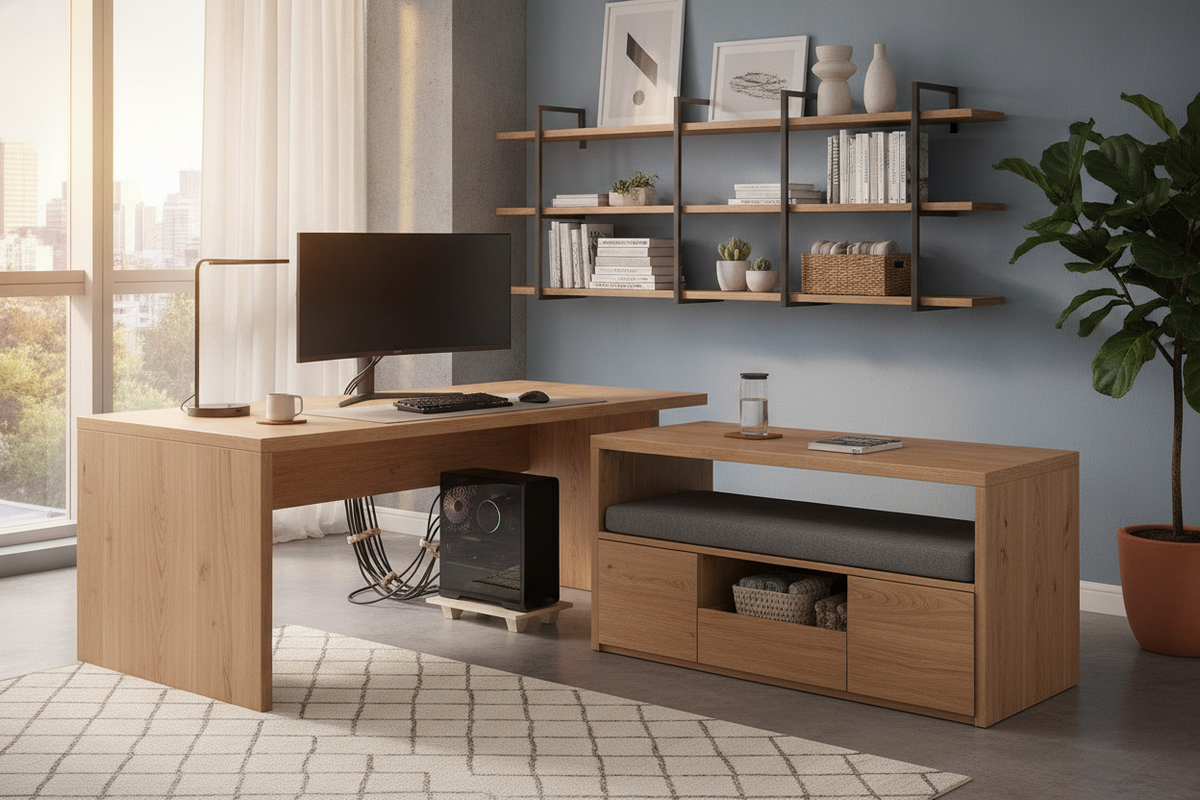
- Expansive Multi-Surface Layouts: For professionals managing multiple screens or physical reference binders, an L-shaped or corner workstation such as a modern minimalist office product maximizes peripheral space along wall perimeters, preserving open floor area in the center of the room.
When measuring your room, consider not only the physical tabletop perimeter but also chair clearance and door swing paths. A minimal desk maintains its light architectural presence only when surrounded by ample breathing room.
The Storage Architecture Dilemma: Floating Legs vs. Concealed Compartments
One of the central debates in home office design is whether to choose an entirely open-frame table or a minimalist desk with storage. An open table with slender legs delivers unmatched airiness, making small rooms appear larger by leaving wall baseboards and flooring unobstructed. However, without built-in containment, daily accessories inevitably migrate onto the desktop surface.
For many home workers, integrating a minimalist desk with drawers offers a reliable defense against everyday tabletop drift. Shallow push-to-open pencil drawers or flush side pedestals preserve the crisp, rectilinear front profile while offering designated homes for small electronics, stationary, and paperwork. Before committing to a completely drawer-free setup, reviewing the hard-earned lessons in this minimalist desk office guide can help you evaluate your actual containment needs.
If your room design favors a completely open minimal computer desk, you can preserve clean lines by pairing the workstation with external storage pieces. Selecting complementary units from a broader bedroom storage collection allows you to keep larger project archives, spare peripherals, and binders tucked neatly away in nearby credenzas or armoires rather than cluttering your primary work surface.
Material Selection, Structural Stability, and Visual Weight
The visual lightness of a minimalist home office desk depends heavily on material selection, frame geometry, and color temperature. Because minimal pieces lack decorative carving, the quality of surfaces, edge banding, and joinery takes center stage.
Engineered wood cores wrapped in smooth melamine or durable laminates provide uniform, clean surfaces that resist everyday wear while maintaining crisp edges. Pairing light-reflective finishes, such as smooth matte white or pale natural woodgrains, with slender metal leg profiles reduces the perceived bulk of the furniture piece. When organizing an open-plan room or dual-purpose bedroom office, coordinating your desk finish with a tall wardrobe or storage cabinet—such as a modern minimalist drawers product—establishes cohesive visual continuity throughout the space.
Pay close attention to structural support systems. Minimalist desks with wide spans between legs require sturdy crossbars or rigid structural aprons beneath the surface to prevent long-term sagging under monitor mounts. Cantilevered, trestle, or hairpin-style steel legs offer robust stability while keeping footwells open, allowing office chairs to tuck fully beneath the surface when work is done.
Curating the Minimalist Desk Setup: Cable Discipline and Surface Zoning
Once your desk is in place, creating an intentional minimalist desk setup requires deliberate staging. The key to preserving a clean aesthetic during active work hours is dividing your desktop into distinct operational zones:
- Primary Reach Zone: Keep only immediate tactile essentials—your keyboard, mouse, and current notepad—directly in front of you.
- Secondary Peripheral Zone: Position display monitors, slim task lamps, and small desktop speakers along the rear edge, ensuring stands occupy minimal surface space.
- Peripheral Cable Discipline: Utilize under-desk cable baskets, channel raceways, and adhesive clips along rear leg profiles to route power cables entirely out of view.
Adopting wireless accessories and consolidating computer connections through single-cable docking stations significantly reduces desktop clutter. In my own workspace planning, I have found that routing every monitor and charger cable behind a single desk leg instantly transforms how organized the entire room feels.
Assembly Considerations and Everyday Maintenance for Clean Surfaces
Proper assembly is essential for ensuring that a minimal desk maintains its structural integrity and sharp architectural lines. Lay down a clean blanket or cardboard sheet during unboxing to protect smooth laminate surfaces from accidental abrasions. Tighten all cam locks, bolts, and frame fasteners evenly, checking the frame with a level before fully securing tabletop hardware. Uneven torque can cause subtle alignment gaps along drawer fronts or leg joints that disrupt the desk's sleek silhouette.
Preserving a pristine desktop finish requires simple daily maintenance habits. Wipe surfaces regularly with a soft, slightly damp microfiber cloth to remove dust and hand oils, avoiding abrasive chemical cleaners that can degrade matte topcoats. Finally, adopt a brief end-of-day reset routine: return notebooks to drawers, tuck the chair under the frame, and stow charging leads. By pairing deliberate furniture design with mindful daily habits, your minimal desk will continue to provide an inspiring, distraction-free environment for years to come.


Leave a comment
This site is protected by hCaptcha and the hCaptcha Privacy Policy and Terms of Service apply.