










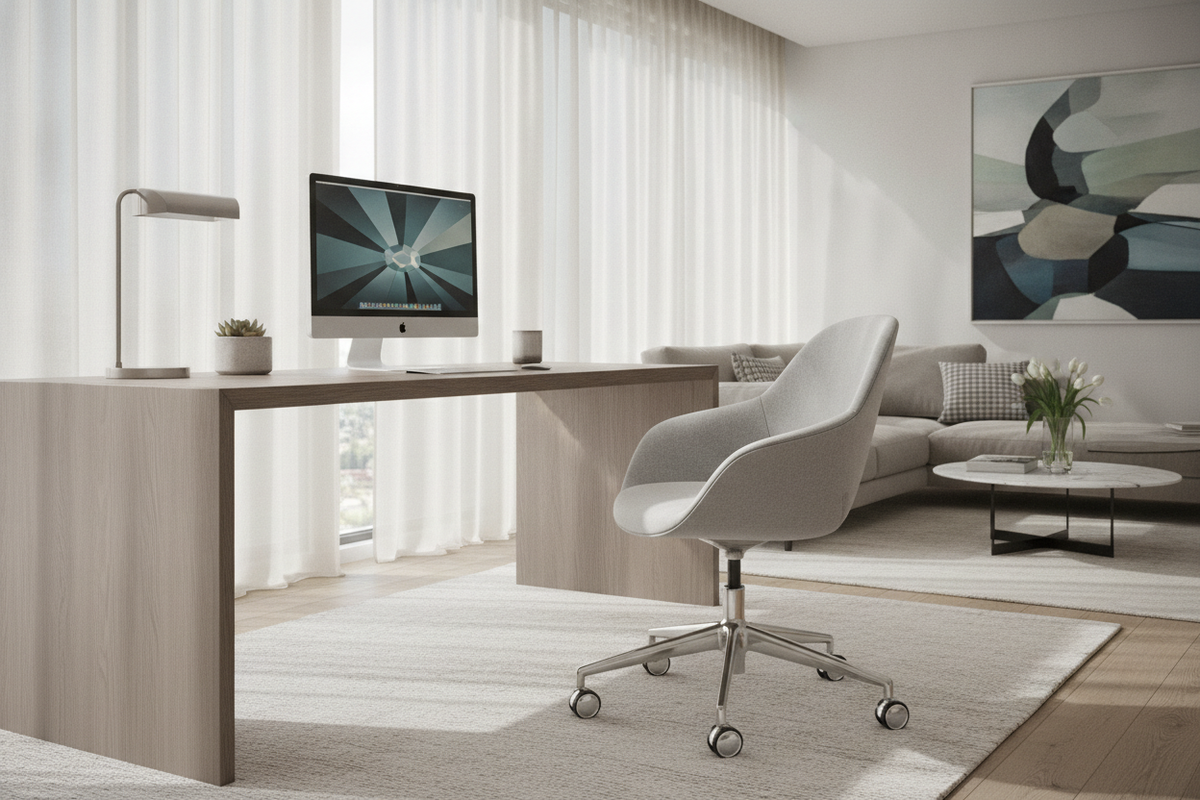
Mobility Dynamics and Modern Workspace Architecture
A modern desk chair with wheels serves as an essential bridge between dynamic task mobility and intentional interior design. While traditional task seating often prioritized purely industrial mechanics at the expense of room aesthetics, contemporary seating focuses on visual lightness, streamlined silhouettes, and refined floor movement. Choosing the right chair requires looking beyond superficial fabric choices to evaluate how the wheel assemblies, five-star base, and overall proportions interact with the room.
Contemporary workspaces frequently feature open floor plans, uncluttered credenzas, and streamlined writing desks. Within these environments, modern office chairs with wheels must offer effortless glide without creating distracting scraping noises or scuffing delicate flooring. By understanding the mechanical balance between rolling resistance, structural geometry, and daily comfort, you can select seating that elevates both personal focus and room harmony.
Caster Mechanics: Matching Modern Office Chair Wheels to Floor Surfaces
The performance of any rolling chair depends fundamentally on its casters. Different floor surfaces interact with caster compounds in distinct ways, influencing movement friction and long-term surface preservation.
- Hardwood, tile, and laminate surfaces: Hard flooring demands soft-tread casters, commonly wrapped in polyurethane or soft rubber coatings. These modern office chair wheels provide gentle traction, preventing uncontrolled skidding while protecting polyurethane clear coats and delicate wood grain from micro-abrasions. Rollerblade-style casters with clear polyurethane rims are particularly popular in minimalist studios because they glide silently and carry a light, open profile.
- Rugs and low-pile commercial carpeting: Softer floor coverings require harder dual-wheel nylon casters. Hard nylon cuts through rug pile rather than compressing against it, allowing directional turns without snagging fabric loops. Using overly soft wheels on dense rugs can create excessive drag, straining both the user and the mechanical stem fittings during transitions.
- Caster stem fittings and hooded enclosures: Most contemporary five-star bases use standard friction-ring push stems. Hooded casters conceal internal wheel axels behind sleek covers to keep dust and stray threads away, whereas open-wheel casters showcase industrial bearings for an airy, architectural look.
Dimensional Proportions and Workstation Clearance
Visual balance in an office relies on proportional scale. A modern office chair with wheels should tuck smoothly beneath work surfaces without crowding nearby drawer banks or clipping side aprons.
When planning your layout alongside a spacious workstation like a modern office desk product, consider the relationship between seat height travel and the desk frame. Ensure the lowest point of the desk frame clears the top of the chair arms when the pneumatic cylinder is adjusted to your preferred working height. If a desk features lower crossbars or suspended drawer pedestals, a chair base with a modest footprint ensures smooth swivel rotation without knocking into adjacent cabinetry.
Push-back clearance is another spatial factor to measure. The circular perimeter circumscribed by the rolling base requires adequate room behind the seated position so you can stand up smoothly without striking walls, return units, or floor-length curtains.
Materiality, Textures, and Structural Ergonomics
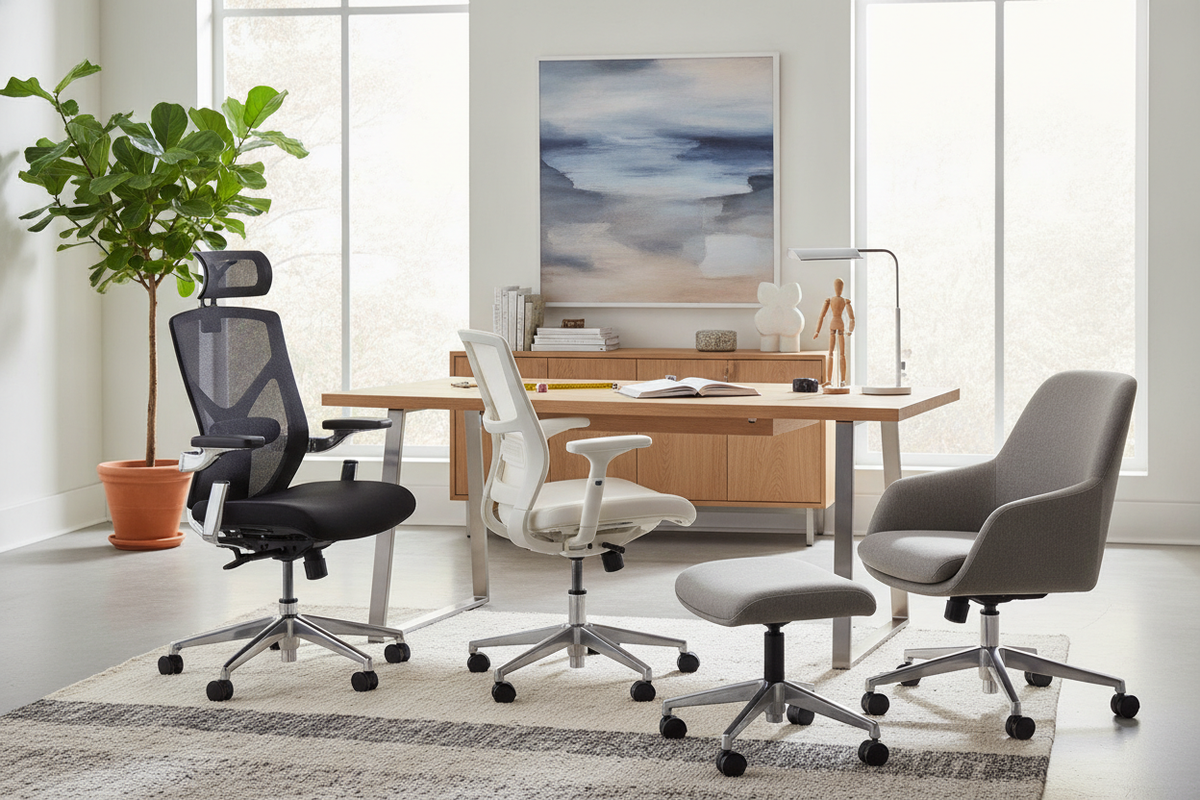
The materials that compose a contemporary chair define its tactile appeal and daily resilience. Blending modern lines with long-term utility requires mindful evaluation of upholstery, foam density, and structural frame elements.
Breathable mesh backs present a crisp, architectural silhouette while encouraging steady airflow during long work periods. Alternatively, tailored woven textiles and supple vegan leathers introduce warmth and refined texture to home offices, aligning seamlessly with creative decor concepts outlined in our modern office desk guide. When opting for padded seats, high-resilience molded foam retains its tailored perimeter far better over extended use than loosely packed polyfill.
Underneath the seat, the mechanical chassis anchors daily function. Pneumatic cylinders provide fluid height adjustment, while tilt-tension knobs let you calibrate recline resistance against your natural posture. Polished aluminum, matte powder-coated steel, and reinforced composite five-star bases each establish distinct visual anchors, with metallic finishes adding sleek contrast against warm wood surfaces.
Workstation Layouts and Desk Pairings
Arranging seating within your wider layout requires coordinating user pathways and daily tasks. Rolling chairs thrive in active workstations where tasks span multiple surfaces, such as secondary monitor bays, reference shelves, and document caddies.
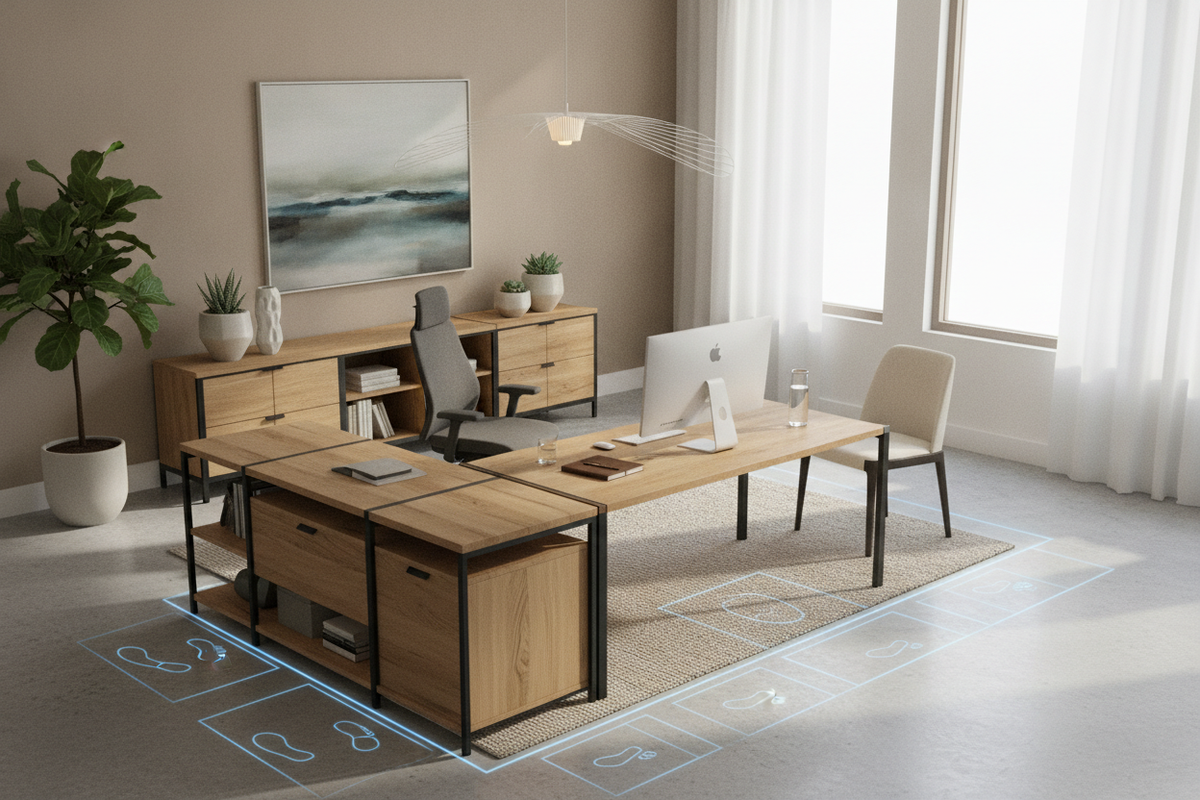
In larger suites featuring an expansive L-shaped workstation or a modern desk office product, high-mobility casters reduce physical strain when shifting between primary computer displays and transaction counters. The chair base must glide effortlessly along the corner return without catching on interior support legs.
For deeper insights into matching desk depths and under-frame knee spaces with active seating selections, consult our comprehensive office desk guide. In our editorial experience, coordinating base finishes with desk leg profiles creates a cohesive, intentional working environment that feels balanced rather than assembled piecemeal.
Assembly Protocols and Preventive Caster Maintenance
Proper assembly and routine upkeep protect both the floor surface and the mechanical integrity of modern desk chairs. Careless installation or neglected wheel hubs can introduce squeaks, uneven travel, and unnecessary resistance.
- Stem insertion: Firmly press each caster stem straight into the five-star base socket until the retention ring clicks securely into place. Avoid angling the stem during insertion to prevent damaging internal socket sleeves.
- Cylinder seating: Lower the pneumatic lift cylinder directly into the center hub of the base without introducing heavy industrial lubricants, which can attract household lint and carpet fibers.
- Routine lint removal: Every few months, invert the chair to inspect wheel axels. Carefully trim away trapped thread, hair, or pet fur using a utility blade, as accumulated debris can freeze the wheel hub and drag flat spots into soft treads.
- Hardware checks: Periodically verify that the fasteners securing the seat plate mechanism and armrest brackets remain snug, preventing subtle wobbles that strain the central gas cylinder.
Strategic Selection Framework for Modern Office Chairs with Wheels
Choosing the ideal modern desk chair with wheels brings together aesthetic preferences, spatial dimensions, and functional floor demands. Review this checklist when comparing options:
- Floor compatibility: Soft polyurethane treads for polished hard surfaces; dense nylon twin-wheels for low-pile carpets and rugs.
- Armrest design: Fixed, height-adjustable, or armless formats that tuck cleanly under your desk apron.
- Base footprint: A stable five-star base that rotates freely within your workstation footwell.
- Visual coordination: Upholstery tones and metal base finishes that harmonize with surrounding cabinetry and desks.
By assessing mobility mechanics alongside tailored proportions, you can invest in a chair that moves gracefully, safeguards your flooring, and enriches your workspace design.

Leave a comment
This site is protected by hCaptcha and the hCaptcha Privacy Policy and Terms of Service apply.