










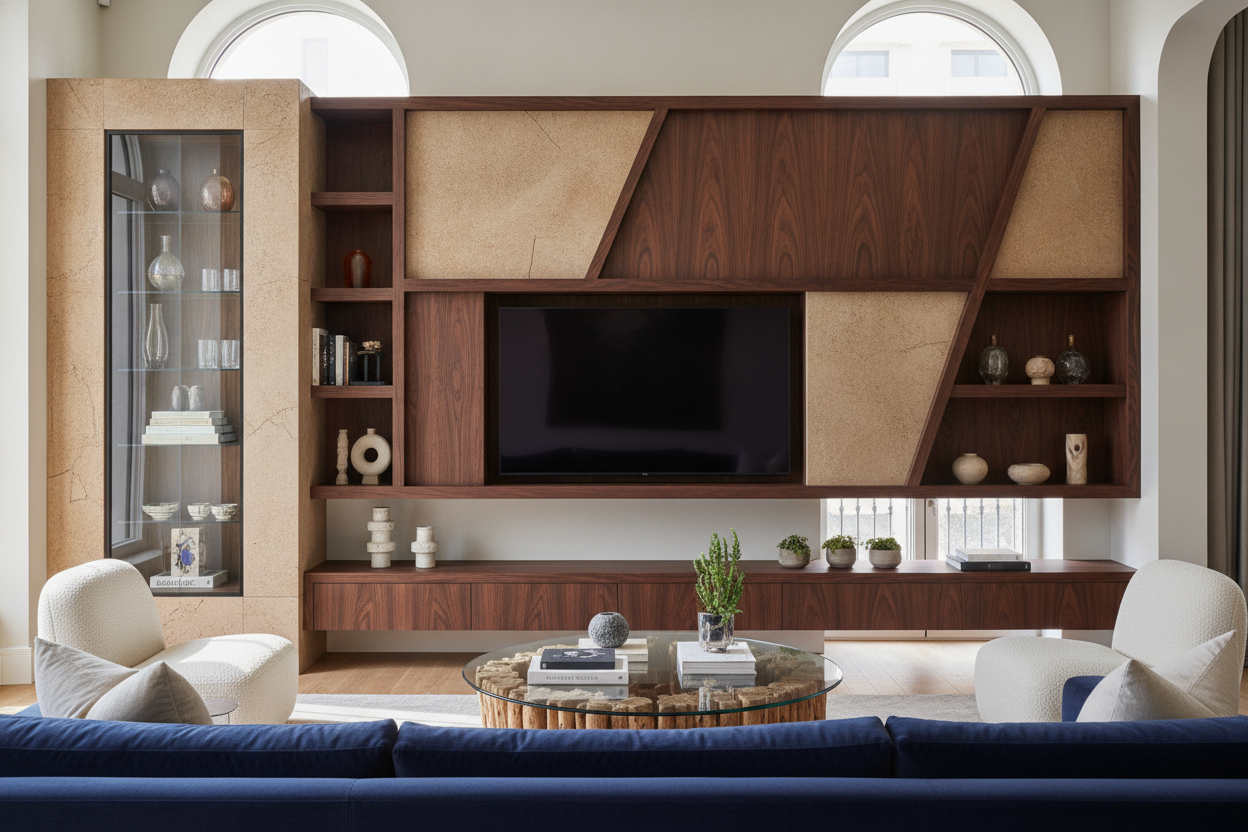
I spent three weeks staring at a 65-inch black rectangle that felt like an obsidian monolith in my living room. I tried every trick—leaning art against it, surrounding it with plants—but it still looked like a piece of tech that had crash-landed in a cozy space. That was the moment I realized I needed a permanent tv showcase design in wall.
My contractor, Mike, sighed so loudly I thought he’d popped a lung when I showed him the sketches. He saw extra labor; I saw a room that finally looked finished. Here is the reality of what happens when you stop shopping for furniture and start hacking into your house.
- Recessing a TV requires at least 4-6 inches of wall depth, often necessitating a 'bump-out' wall.
- Heat is the enemy; you need at least 2 inches of clearance around the screen for airflow.
- Cable management must be planned before the first piece of drywall is cut.
- Styling the surrounding niches requires a 'less is more' approach to avoid a cluttered 90s look.
The Moment I Realized Standard Furniture Wasn't Enough
I’ve owned plenty of standard freestanding TV stands. Some were solid oak, others were that 'mystery meat' particle board that screams college dorm. They all had the same problem: they took up floor space and left a mess of wires dangling like tech-spaghetti against the wall. I wanted something that felt like architecture, not an afterthought.
A traditional tv stand with showcase can look nice, but it still sits on the floor. It creates a visual break. By moving the display into the wall itself, the room suddenly felt twice as big. You aren't just placing a TV; you're creating a focal point that doesn't demand a footprint. It’s the difference between a suit off the rack and one that’s actually tailored to your shoulders.
Planning the Depth (And Fighting With Your Studs)
Here is the part where things get messy. Most interior walls use 2x4 studs. Once you account for the thickness of the TV and the mounting bracket, you’re looking at about 4.5 to 5 inches of depth. Unless you have 2x6 framing—which is rare for interior walls—you’re going to have to build a 'false wall' or a bump-out.
I learned this the hard way when I sliced open my own drywall only to find a vent pipe exactly where the center of the TV was supposed to be. We had to reroute the plumbing and reinforce the header. It added two days and $400 to the budget. If you’re doing this, buy a high-end stud finder that detects metal and PVC, or prepare for a mid-project heart attack.
The Unglamorous Truth About Heat and Ventilation
Modern OLEDs and LEDs run hot. If you box them into a tight wooden cavity without breathing room, you are basically slow-cooking your $1,500 investment. I’ve seen people flush-mount TVs so tightly you couldn't slide a credit card in the gap. Don't do that. You’ll be replacing the panel in eighteen months when the internal components fry.
I built a 2-inch 'shadow gap' around the perimeter of the screen. To the eye, it just looks like a dark border, but it allows hot air to rise and escape. We also used a perforated metal grate at the top of the recessed niche, painted the exact same matte black as the interior, so it’s virtually invisible. It keeps the hardware cool and the aesthetic clean.
Styling the Niches Without Making a Mess
The danger of a tv showcase set is the temptation to fill every square inch of shelving. My first attempt looked like a thrift store exploded. I had tiny succulents, old DVDs, and a collection of glass birds that just looked... busy. It distracted from the screen and made the whole wall feel heavy.
Now, I stick to the 'Rule of Three.' Three large objects (like a heavy ceramic vase or a thick art book) beat ten small ones every time. Use the niches to balance the weight of the TV. If the screen is a giant dark mass, use light-colored pottery or neutral-toned books on the side shelves to pull the eye away from the 'black hole' effect when the TV is off.
Afraid of Plaster Dust? How to Fake the Look
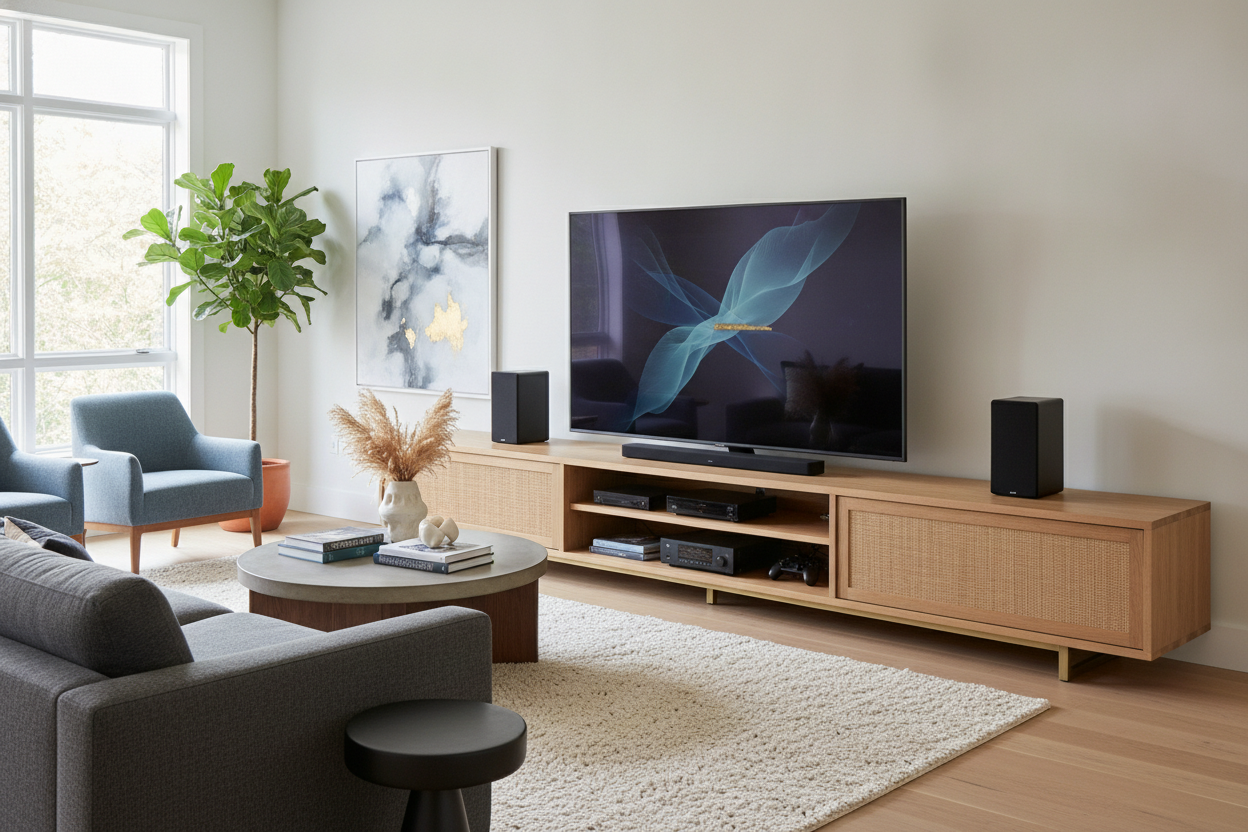
If you're renting or if the thought of a reciprocating saw makes you sweat, you can still fake a custom media wall. The trick is using furniture that spans the entire width of the wall. When the furniture goes wall-to-wall, it mimics the built-in look without the structural commitment.
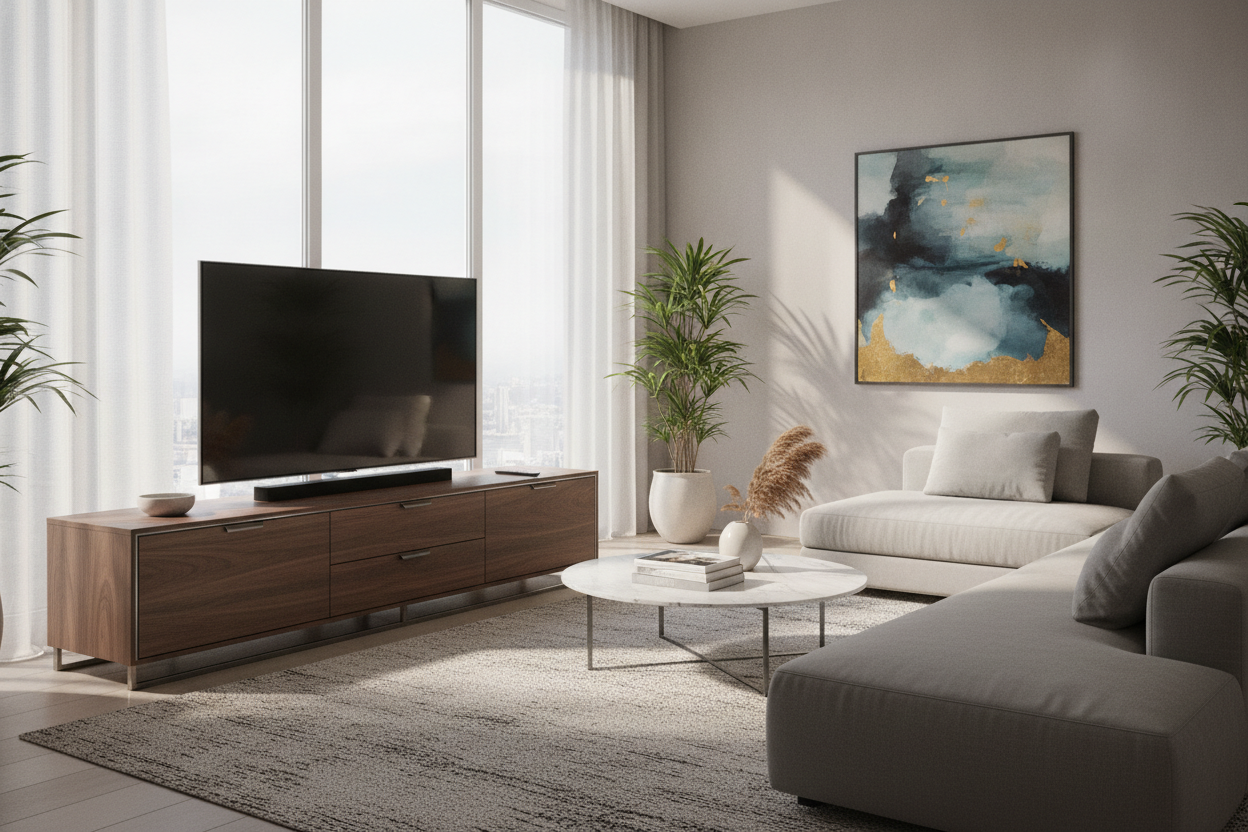
I often recommend a wall mounted and freely arranged unit for this. By mounting floating cabinets and painting the wall behind them a darker, receding color (like charcoal or deep navy), you create the illusion of depth. It gives you that recessed vibe and some sweet LED backlighting for about 10% of the cost of a full renovation.
How deep should a TV niche be?
Aim for at least 6 inches. This gives you 4 inches for the TV and mount, plus 2 inches of 'wiggle room' for plugs and airflow. If you use a super-slim mount, you can get away with 5 inches, but it's a tight squeeze for your hands during installation.
Do I need a special mount for a recessed TV?
You want a 'thin profile' mount that still allows for a slight tilt. Avoid the massive articulating arms that pull out 20 inches; they usually have a thick baseplate that defeats the purpose of a flush look.
Will a recessed TV overheat?
Only if you don't vent it. Leave a gap around the edges or use a cabinet fan system if the enclosure is completely sealed. Most passive venting is plenty for home use.

Leave a comment
This site is protected by hCaptcha and the hCaptcha Privacy Policy and Terms of Service apply.