










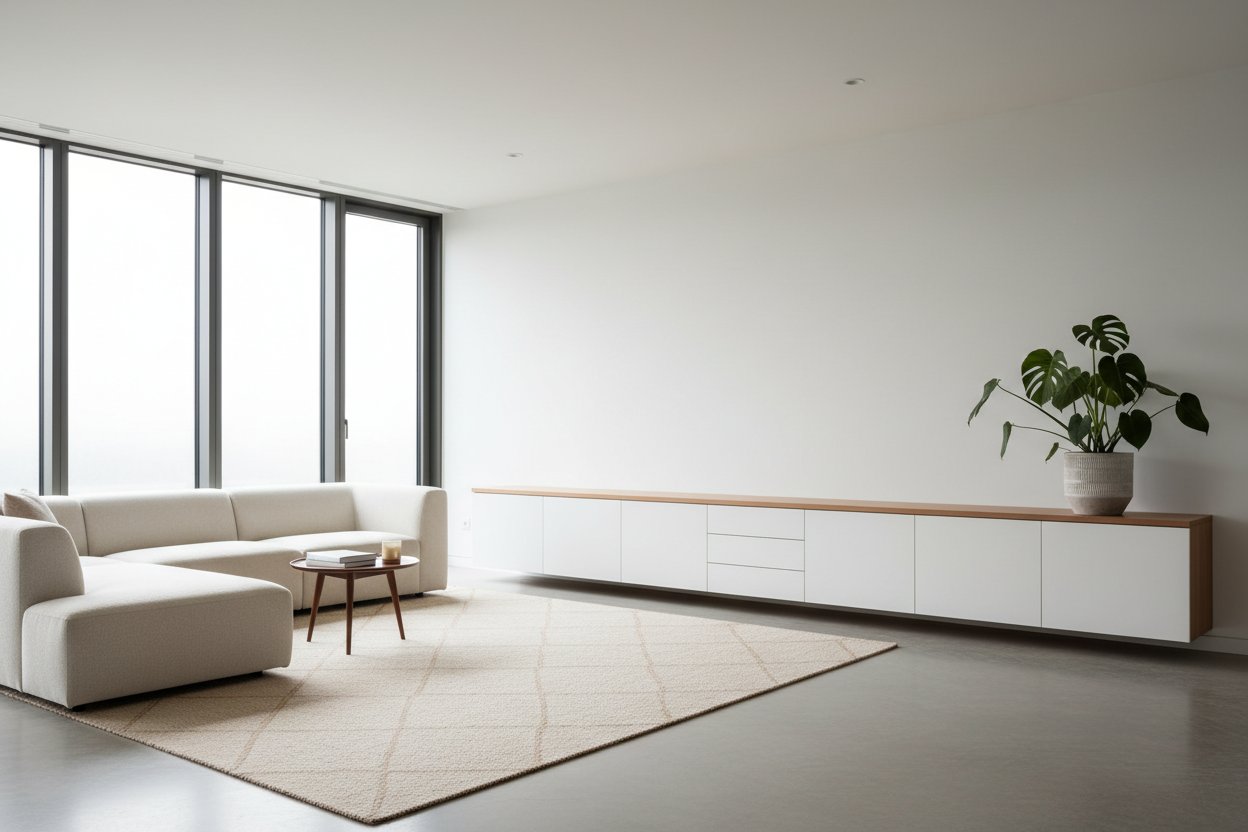
Clutter has a way of creeping into a home until it feels like the walls are closing in. You might find yourself stepping over piles of mail, searching for batteries in three different junk drawers, or wondering where to stash the extra linens. The most effective solution often isn't just throwing things away, but giving every item a specific home. A wide storage cabinet with drawers serves as the ultimate anchor for a room, providing the surface area of a table with the cavernous organization capability of a closet. Unlike tall, imposing bookcases that can make a room feel smaller, a lower, wider unit keeps sightlines open while swallowing up the mess that usually sits on your counters.
Defining Your Storage Needs
Before buying furniture, you have to audit what you actually own. A wide storage unit is versatile, but its utility depends entirely on the internal configuration. If you are storing heavy tools or stacks of printer paper, you need reinforced shelving. If your primary goal is hiding away knick-knacks, charging cables, and paperwork, the drawer configuration takes precedence.
Many homeowners make the mistake of buying open shelving units, thinking they look airy and modern. Two weeks later, those shelves look chaotic. Drawers are the secret weapon of a tidy home because they conceal the inevitable disarray of daily life. You want a unit that offers a mix: deep drawers for bulky items and shallow ones for the small essentials you need to grab quickly.
Material Matters: Wood, Metal, or Composite?
The durability of your furniture dictates how long it stays in your home. Solid wood offers longevity and aesthetic warmth, making it ideal for dining rooms, hallways, and bedrooms. However, solid wood reacts to humidity and can be incredibly heavy to move. If you are looking for a piece to serve as a media console or a buffet, wood or high-quality veneer is usually the best choice because it handles the weight of a television or heavy serving platters without bowing.
For utilitarian spaces like the garage or a craft room, metal is superior. A metal wide storage cabinet with drawers creates a workspace that can take a beating. These units often come with ball-bearing slides that can hold significant weight—sometimes up to 50 or 100 pounds per drawer. This is crucial if you plan to store power tools or heavy hardware.
Particleboard or MDF is the budget-friendly option. While these can look great, they have a structural weakness: they hate water and they sag under sustained heavy loads. If you choose an MDF unit, ensure it has a center support leg. Without that fifth leg in the middle, a wide unit will eventually smile at you—bowing in the center until the drawers no longer close properly.
A Lesson Learned in Assembly
I learned the importance of structural integrity the hard way a few years ago. I bought a sleek, mid-century modern style sideboard for my hallway. It looked fantastic online and claimed to support 200 pounds. I spent an afternoon assembling it, ignoring the fact that the back panel was just a flimsy piece of cardboard held on by tiny nails. I loaded it up with photo albums and dinnerware. Within six months, the entire unit started to rack—leaning slightly to the left like a parallelogram. The drawers started binding, and eventually, the tracks bent. The lesson was clear: the back panel provides the shear strength for the cabinet. If you are assembling a wide storage unit, never skip the back panel nails, and consider reinforcing it with wood glue. That thin backing is the only thing keeping the cabinet square.
The Mechanics of Movement
Nothing ruins the experience of new furniture faster than a drawer that sticks or falls off the track. When shopping, pay close attention to the runner mechanism. Standard roller slides (a wheel on a track) are common in budget furniture. They work fine for socks and lightweight items, but they allow the drawer to tip if pulled out too far.
Full-extension ball-bearing slides are the gold standard. They allow you to pull the drawer out completely to reach the items at the very back without the drawer falling out. If you are looking at a wide storage cabinet with drawers for a home office or kitchen, prioritize soft-close hinges and slides. It prevents the jarring noise of slamming drawers and protects the frame from impact damage over time.
Placement and Flow
Because these units are wide, they dominate the horizontal flow of a room. You need to measure more than just the wall space. Consider the depth and the clearance required to open the drawers. A standard unit might be 18 inches deep, but with a drawer fully extended, it occupies nearly 3 feet of depth. If you place this in a narrow hallway or behind a dining table, you might create a bottleneck.
In a living room setting, a wide cabinet often doubles as a media center. Look for units that include cable management holes in the back panel. If the unit you love doesn't have them, you can easily use a hole saw drill bit to create them, keeping your cords hidden and organized.
Safety and Stability
Wide units feel stable because they have a low center of gravity, but they can still tip, especially if multiple drawers are opened simultaneously. The weight shifts forward rapidly. If you have children or pets, anchoring the unit to the wall is not optional. Most reputable manufacturers include an anti-tip kit. Even if the unit feels heavy and solid, the leverage created by a toddler climbing on an open drawer is enough to pull thousands of pounds of furniture forward.
Furthermore, check the leg levelers. Floors are rarely perfectly flat. A wide storage unit that sits on uneven ground will twist, causing the doors to misalign and the drawers to rub against the frame. Adjustable feet allow you to level the piece perfectly, ensuring smooth operation for years.
Styling the Surface
Once the practical side is handled, the top surface of a wide cabinet becomes a design opportunity. Because the unit is low, it leaves plenty of wall space above for a large mirror or a gallery wall of art. This vertical styling draws the eye up, making the room feel taller.
Avoid cluttering the top surface with the same small items you just hid inside the drawers. Use the rule of three: a lamp for height, a tray to corral remotes or keys, and a plant or sculptural object for texture. This keeps the unit looking like a deliberate design choice rather than just a utility box.
Frequently Asked Questions
Can I use a wide dresser as a TV stand?
Yes, this is a very common and stylish use for wide storage cabinets. Just ensure the unit is rated to hold the weight of your television, and check that the width of the cabinet is wider than the TV screen for visual balance.
How do I fix a drawer that keeps sticking?
First, check if there is debris in the metal tracks and clean it out. If it's a wood-on-wood slide, apply a layer of beeswax or candle wax to the runners to reduce friction. If the cabinet is sagging in the middle, you may need to shim the center leg to level the unit.
What is the difference between a sideboard and a credenza?
Historically, sideboards were used in dining rooms for serving food and have shorter legs, while credenzas were for offices. Today, the terms are often used interchangeably to describe any wide storage unit with short legs and a combination of cabinets and drawers.

Leave a comment
This site is protected by hCaptcha and the hCaptcha Privacy Policy and Terms of Service apply.