










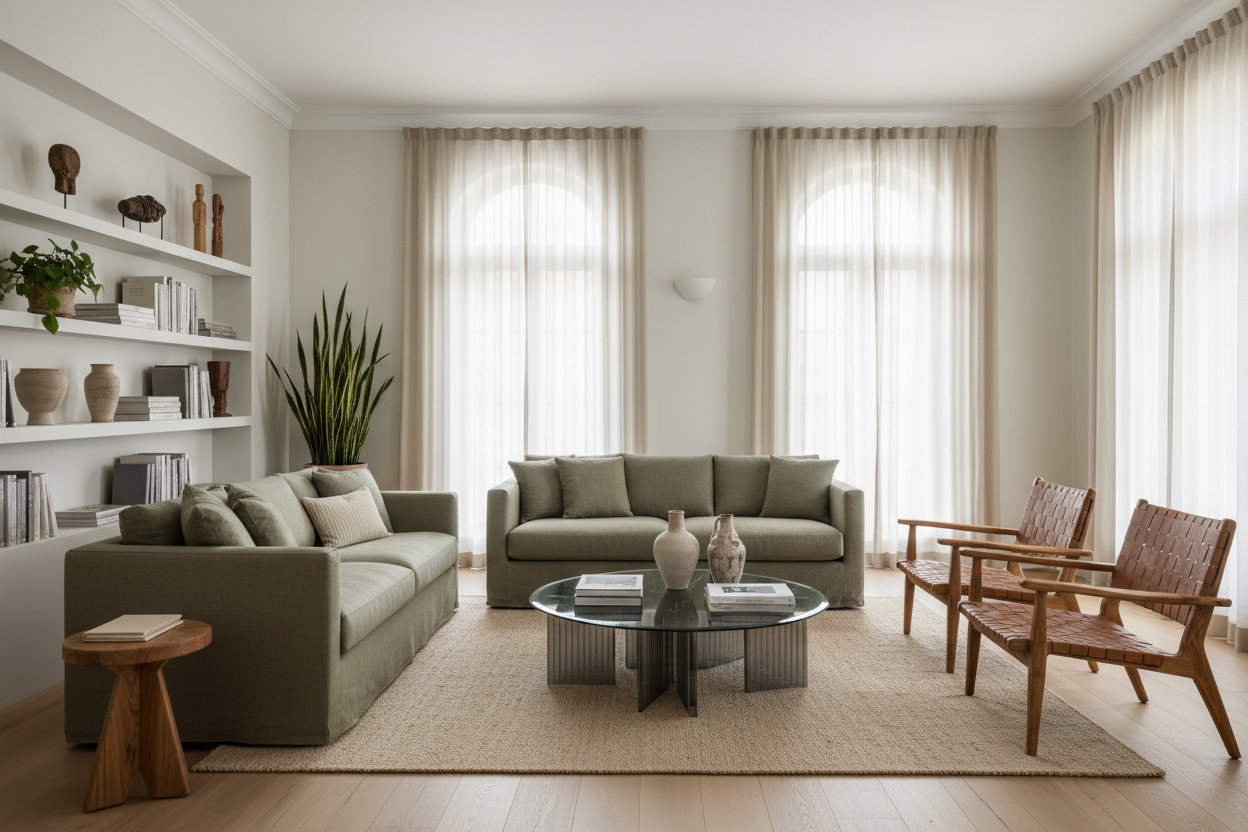
There is nothing quite as disheartening as falling in love with a sofa in a showroom, only to have the cushions sag and the fabric pill within six months of getting it home. The gloss of a retail floor often hides the structural realities of the piece. As a designer, my job is to look past the silhouette and inspect the bones. Finding truly high-quality living room furniture isn't just about the price tag; it is about understanding construction mechanics, material integrity, and how a piece interacts with your specific lifestyle.
Key Features to Look For
- Kiln-Dried Hardwood Frames: Prevents warping and cracking over time; avoid particleboard or softwoods.
- Joinery Techniques: Look for mortise-and-tenon or double-doweled joints rather than staples and glue.
- Suspension Systems: 8-way hand-tied springs or heavy-gauge sinuous springs offer the best longevity.
- Cushion Fill: High-resiliency (HR) foam wrapped in down or batting ensures the seat retains its shape.
- Upholstery Flow: Patterns should match at the seams, and skirts should be lined and weighted.
The Backbone: Frame Construction and Joinery
The longevity of any seating relies entirely on what you cannot see. When sourcing pieces for clients, I always inquire about the frame first. High-quality furniture utilizes kiln-dried hardwood—such as oak, maple, or ash. The kiln-drying process removes moisture, ensuring the wood won't shrink or split as the humidity in your home changes.
Equally critical is how that wood is connected. In mass-produced furniture, manufacturers often rely on staples and epoxy. However, an heirloom-quality piece will feature blocked, nailed, and glued corners. If you are investing in a heavy sectional or a statement armchair, ask if the joints are double-doweled or mortise-and-tenon. These mechanical bonds are far stronger than chemical adhesives alone.
Suspension and Ergonomics
Comfort is subjective, but support is objective. The gold standard remains the 8-way hand-tied spring system, where artisans tie springs front-to-back, side-to-side, and diagonally. This provides a localized suspension that doesn't transfer motion—meaning if someone sits on one end, you don't bounce on the other.
Evaluating Cushion Density
When testing a seat, pay attention to the "deck" (the part under the cushion). It should feel firm but have some give. For the cushions themselves, look for High-Resiliency (HR) foam with a density of at least 1.8 to 2.5 pounds. Pure down cushions offer a luxurious, sinking feeling but require daily fluffing to maintain their structure. For most living rooms, I recommend a hybrid: a foam core wrapped in a down-proof ticking. This gives you the visual softness of down with the resilience of foam.
Textiles and Tactility
The fabric is the interface between the user and the furniture. Durability here is measured in "double rubs." For a high-traffic living room, I never specify anything under 30,000 double rubs. Natural fibers like wool and linen offer beautiful breathability and texture, but they can be high-maintenance.
If you have children or pets, consider performance fabrics like solution-dyed acrylics. These have come a long way from the stiff outdoor fabrics of the past; many now mimic the soft hand of velvet or chenille while being bleach-cleanable.
My Personal Take on High-Quality Living Room Furniture
I want to share a specific "unpolished" reality from a project I worked on last year. We ordered a stunning, expensive Italian leather sofa that looked perfect on paper. However, when it arrived, I did my standard "Lift Test." I lifted one front corner of the sofa about six inches off the ground. The other front leg remained firmly on the floor.
This was a red flag. It meant the frame had too much flex—it was torquing. A truly rigid, high-quality frame should lift the other leg almost immediately because the structure is stiff and unified. Despite the beautiful leather, the internal frame was likely plywood held together with insufficient bracing. We returned it.
Another detail I always check: the zippers on the cushion covers. I once opened a "luxury" cushion to find the internal foam was raw and yellow, without a fabric wrapping (ticking). Without that inner wrapping, the foam rubs directly against the upholstery fabric, creating friction that eventually shreds the cover from the inside out. Always unzip and peek inside; the insides should look as finished as the outside.
Conclusion
Curating your home with exceptional furniture is an exercise in patience and education. By prioritizing structural integrity—kiln-dried woods, proper suspension, and performance textiles—you move away from the disposable culture and toward a home that ages gracefully. Buy the best frame you can afford; you can always recover it a decade from now.
Frequently Asked Questions
How can I tell if a sofa is high quality just by sitting on it?
Listen for squeaks or creaks, which indicate loose joinery or springs rubbing against the frame. Also, you should not feel the hard frame through the padding on the arms or back. If the upholstery shifts significantly when you stand up, the fabric may not be cut or tensioned correctly.
Is custom furniture worth the investment over retail brands?
Often, yes. Custom upholstery allows you to specify the seat depth and cushion fill to match your body type, which retail options rarely offer. Furthermore, custom workrooms usually offer greater transparency regarding the construction materials used inside the piece.
What is the most durable fabric for a living room?
Leather is generally the most durable natural option, as it develops a patina rather than wearing out. However, for fabric, look for tightly woven synthetics or blends with a high Martindale or double-rub count (over 50,000) and stain-resistant treatments woven into the fiber, not just sprayed on top.

Leave a comment
This site is protected by hCaptcha and the hCaptcha Privacy Policy and Terms of Service apply.