










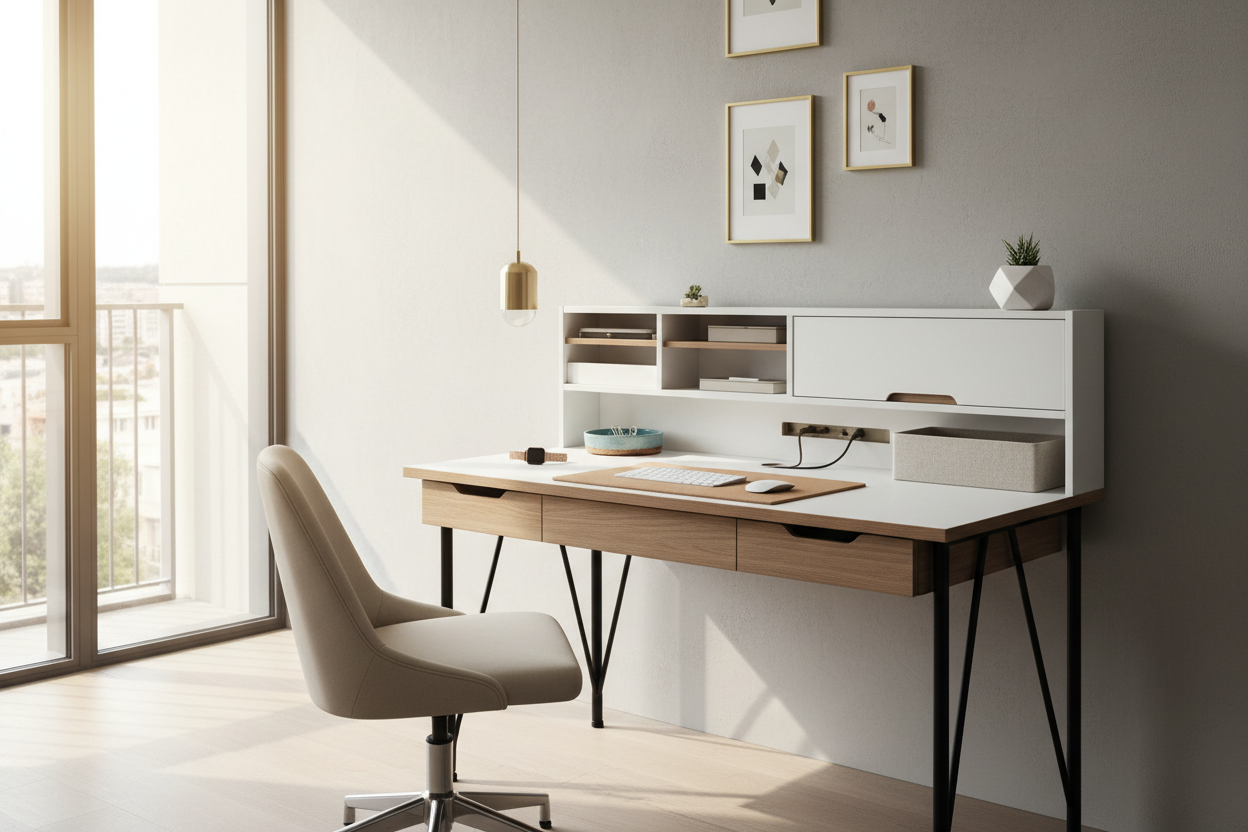
There is a distinct difference between a workspace that merely holds your equipment and one that actively supports your workflow. As an interior designer, I often walk into home offices where the furniture is beautiful, but the surface is chaotic. The visual noise created by clutter doesn't just look messy; it fragments your focus. Implementing the right desk organization ideas is less about buying plastic bins and more about curating a system that balances ergonomics with aesthetics. Whether you are navigating a compact nook or an expansive executive suite, the goal is to establish a sense of visual equilibrium.
The Core Pillars of Desk Organization
- Zoning Strategy: Divide the desk into primary (daily use), secondary (weekly use), and reference (storage) zones.
- Vertical Integration: Utilize wall space and risers to preserve precious surface area.
- Material Continuity: Select organizers that complement your desk's finish (e.g., walnut trays on a walnut desk) to reduce visual clutter.
- Cable Management: The unseen hero; poor wire management ruins even the best organization schemes.
Curating the Layout: Function Meets Form
When planning your office desk organization, start by stripping the surface bare. The most common mistake clients make is trying to organize clutter rather than editing it. Your primary reach zone—the semi-circle formed by your arms—should only contain essentials: the keyboard, mouse, and perhaps a daily planner.
Defining Your Workflow Zones
For effective work desk organization, place your desktop organizer ideas outside this primary zone. Use the left and right peripherals for active storage. If you are right-handed, keep your notepad and pens to the right to avoid crossing your body, which disrupts ergonomic flow. For home office desk organization, where the desk often serves dual purposes, consider lidded boxes that can hide work materials after hours, transitioning the space back to a domestic feel.
Materiality and Texture: Beyond Plastic
Design is tactile. Avoid cheap, flimsy plastics that rattle. Instead, look for professional office desk organization ideas involving substantial materials like felt, leather, or solid wood. A felt desk pad not only defines the space but also dampens sound and softens the hard surface of a laminate or glass desk.
For desk and storage ideas, consider the concept of "negative space." Leaving parts of the desk empty is just as important as filling them. Cool desk organization ideas often involve sculptural elements—a ceramic bowl for paperclips or a brass tray for keys—that serve a function without looking like standard office supply ware.
Small Space Solutions: The Vertical Advantage
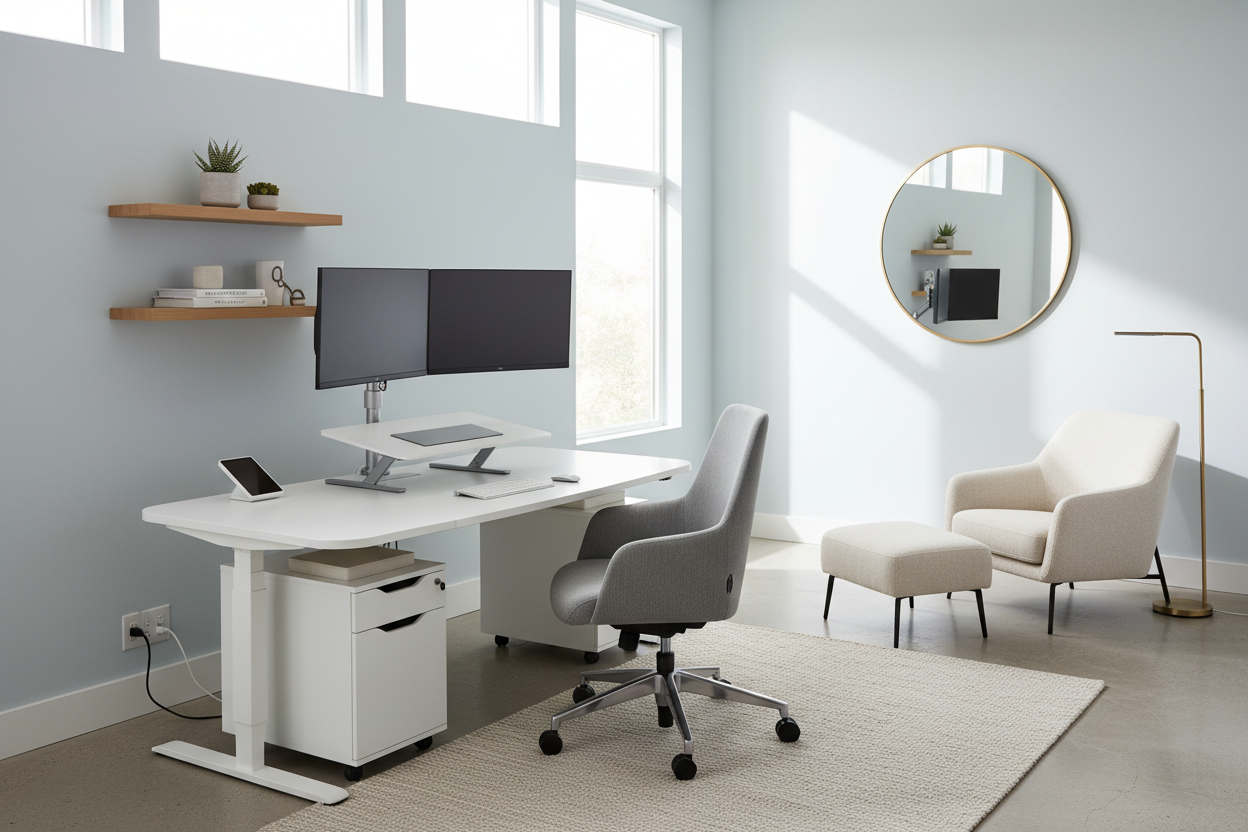
When dealing with small desk organization ideas, the footprint is your enemy. You cannot afford to spread out. Here, desk storage ideas must go up. A monitor riser is non-negotiable in small office desk organization ideas; it lifts the screen to eye level and creates a "garage" underneath for your keyboard or notebooks.
Wall-Mounted Systems
Don't limit your organization of desk components to the table itself. Pegboards or floating shelves act as excellent space-saving desk organizer systems. They keep the surface clear for active work while keeping tools visible and accessible. This approach is vital for work from home desk organization in shared living areas, where floor space is at a premium.
My Personal Take on Desk Organization Ideas
In my years of styling home offices, I have learned a hard lesson about wire mesh organizers: avoid them. Years ago, I outfitted an entire startup office with trendy, industrial wire mesh sets. Within six months, the clients were complaining. Why? Because wire mesh catches dust in the grid that is nearly impossible to wipe out without a can of compressed air. Furthermore, the "see-through" nature of mesh or clear acrylic means you see the mess inside the container.
Now, I almost exclusively recommend opaque storage—leather boxes, wooden drawers, or ceramic vessels. It hides the visual chaos of multicolored pens and crumpled receipts. If you can't see the clutter inside the organizer, the desk looks instantly cleaner. It creates a calming, monolithic look that clear or mesh organizers simply cannot achieve.
Conclusion
Transforming your workspace requires a shift in mindset from simple storage to intentional curation. By selecting materials that age well, utilizing vertical space, and hiding visual noise, you create a desk that invites you to work rather than repelling you with clutter. Treat your desk organization as a design project, and the productivity will follow.
Frequently Asked Questions
How do I organize a desk with no drawers?
For desks lacking built-in storage, utilize desktop storage ideas like stackable paper trays or a monitor stand with integrated drawers. Additionally, a mobile pedestal cabinet rolled underneath the desk can provide the deep storage that neat desk organization ideas require without cluttering the surface.
What is the best way to hide cables on a glass desk?
Glass desks are unforgiving. Use adhesive cable clips that run along the back of the metal legs to guide wires down to the floor. Sleeve your cables in a neoprene wrap that matches the leg color to make them disappear visually. This is a crucial desk organization hack for maintaining a clean silhouette.
How do I maintain an organized desk long-term?
Adopt the "reset" ritual. Spend the last five minutes of your workday returning items to their designated desk organizer designs. If every item has a "home"—a specific tray, hook, or box—maintenance becomes muscle memory rather than a chore.


Leave a comment
This site is protected by hCaptcha and the hCaptcha Privacy Policy and Terms of Service apply.