










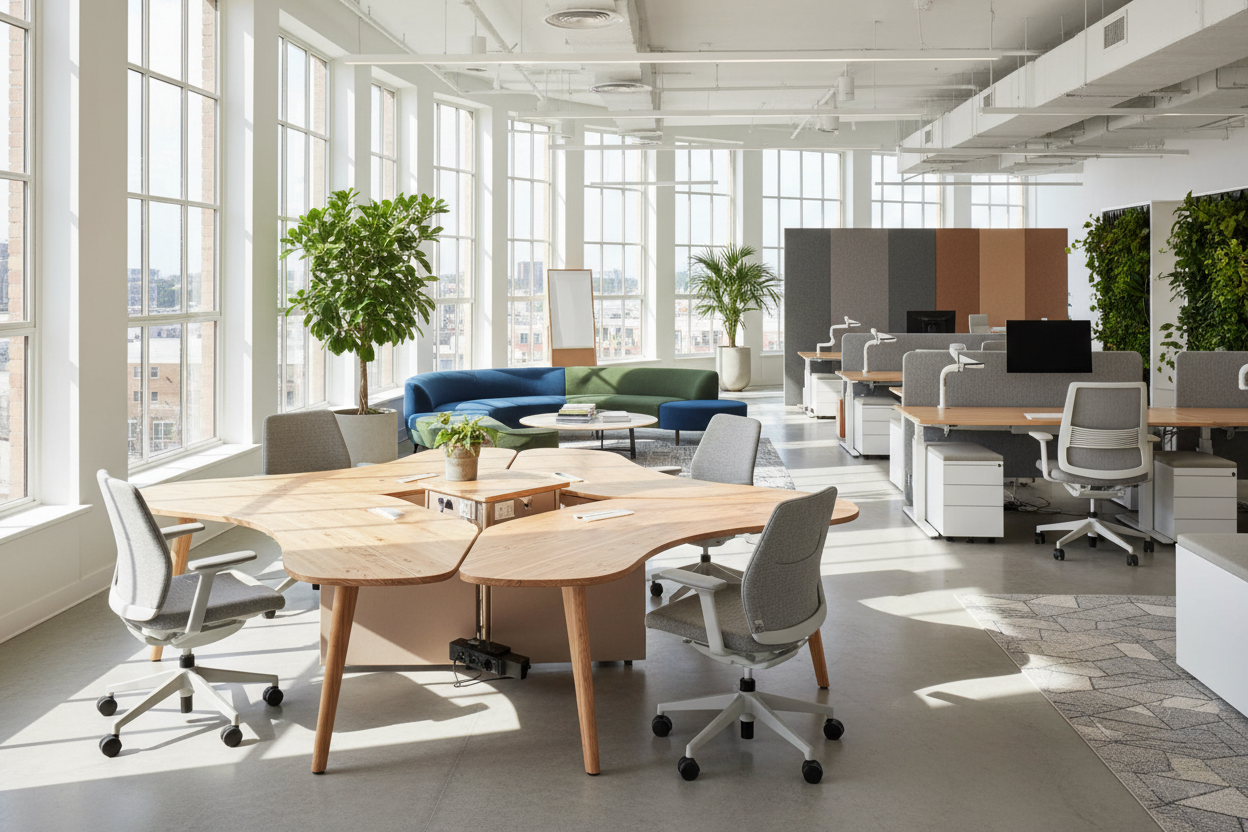
We often underestimate how profoundly our environment dictates our output. As an interior designer, I see it constantly: a brilliant professional working at a dining table, wondering why their back aches and their focus drifts. The truth is, selecting the right furniture for office spaces is less about decoration and more about engineering a habitat for productivity. Whether you are outfitting a corporate headquarters or a dedicated home workspace, the pieces you choose act as the silent partners in your daily success.
Quick Decision Guide: What Matters Most
Before you visit a showroom or browse online, use this checklist to filter your options. These are the non-negotiables for high-performance workspaces.
- Ergonomics First: Look for technical furniture with adjustable lumbar support, seat depth, and armrest height.
- Material Integrity: Differentiate between high-pressure laminate (durable) and cheap thermal foil (peels easily).
- Workflow Footprint: Ensure office tables chairs allow for a minimum of 36 inches of clearance for movement.
- Connectivity: Modern work furniture must have integrated cable management to reduce visual clutter.
Navigating the Commercial Furniture Landscape
When you decide to shop for office furniture, you are presented with a dichotomy: residential-grade decor versus commercial-grade systems. For any space intended for more than two hours of daily use, I always steer clients toward commercial furniture stores. Why? Because a chair from a standard home decor shop is rated for occasional sitting, whereas items from a specialized office furniture showroom are engineered for 8+ hours of continuous load.
The Desk: The Anchor of the Room
Your desk is the command center. When browsing office furniture websites or visiting a site office furniture location, consider the surface area relative to your tech stack. If you use dual monitors, a standard 48-inch desk will feel claustrophobic. Look for office desk suppliers that offer "return" desks (L-shaped configurations) to separate your computer work from your analog paperwork.
Seating: The Health Investment
If you have a limited budget, spend 60% of it on your chair. When you buy office furniture, specifically seating, you are buying spinal health. Avoid the "executive plush" leather chairs that look impressive but offer zero support. Instead, look for office work furniture that features breathable mesh and dynamic recline tension. The goal is a chair that moves with you, not one that locks you in place.
Sourcing: Where to Find Quality Pieces
The hunt for the perfect piece can be overwhelming. If you are wondering where to buy nice office furniture, you have distinct options:
- Specialized Dealers: A dedicated office furnishings store will offer customization—fabrics, finishes, and sizes that big-box stores cannot match.
- Online Retailers: Online shopping of office furniture has improved drastically. Many office furniture online purchase platforms now offer augmented reality tools to visualize the item in your space.
- Second-Hand Liquidators: If you want high-end brands like Steelcase or Herman Miller on a budget, look for office furnitures for sale at liquidation centers. This is often where you find the best value in office usa furniture.
Lessons from My Own Projects: The "Wobble" Factor
Let me share a mistake from my early years that changed how I specify interior office furniture. I was designing a boutique agency and, trying to save the client money, I approved a bulk order of desks from a generic online office furniture store that looked great in photos. They had sleek, mid-century legs and a beautiful walnut finish.
The day we installed them, disaster struck. The moment someone typed vigorously, the monitors would shake. The desk legs lacked the internal steel reinforcement found in true contract-grade furniture. We had to return the entire lot—a logistical nightmare. Now, whether I shop office furniture for a client or myself, I physically test the "racking" (side-to-side wobble). If I'm ordering office furniture order online, I dig deep into the specifications sheet for "steel gauge" and "weight capacity." If a desk weighs less than 50 lbs, it’s going to wobble. Real quality has weight.
Conclusion
Curating your workspace is an investment in your own efficiency. Don't settle for wobbly tables or back-breaking chairs. Whether you find your pieces at a local office furniture place or through a high-end office supply furniture store, prioritize function and durability. Your best work deserves a foundation that supports it.
Frequently Asked Questions
How do I determine the right desk size for my office?
Measure your room and ensure you have at least 30-36 inches of walkway space behind the desk. As a general rule, a 60-inch width is the sweet spot for most professional office furnishing layouts, allowing for a laptop, monitor, and writing space.
Is it safe to buy office furniture online without sitting in it?
It can be, provided you check the return policy. When looking at office furniture buy online options, check for detailed dimension charts and read reviews specifically mentioning height and cushion density. Stick to reputable home office furniture retailers with generous trial periods.
What is the difference between laminate and veneer?
Veneer is a thin slice of real wood glued to a core, offering a rich, authentic look but requiring care. Laminate is a synthetic print; it is much more durable and resistant to scratches and water rings, making it a practical choice for high-traffic office furniture retail environments.

Leave a comment
This site is protected by hCaptcha and the hCaptcha Privacy Policy and Terms of Service apply.