










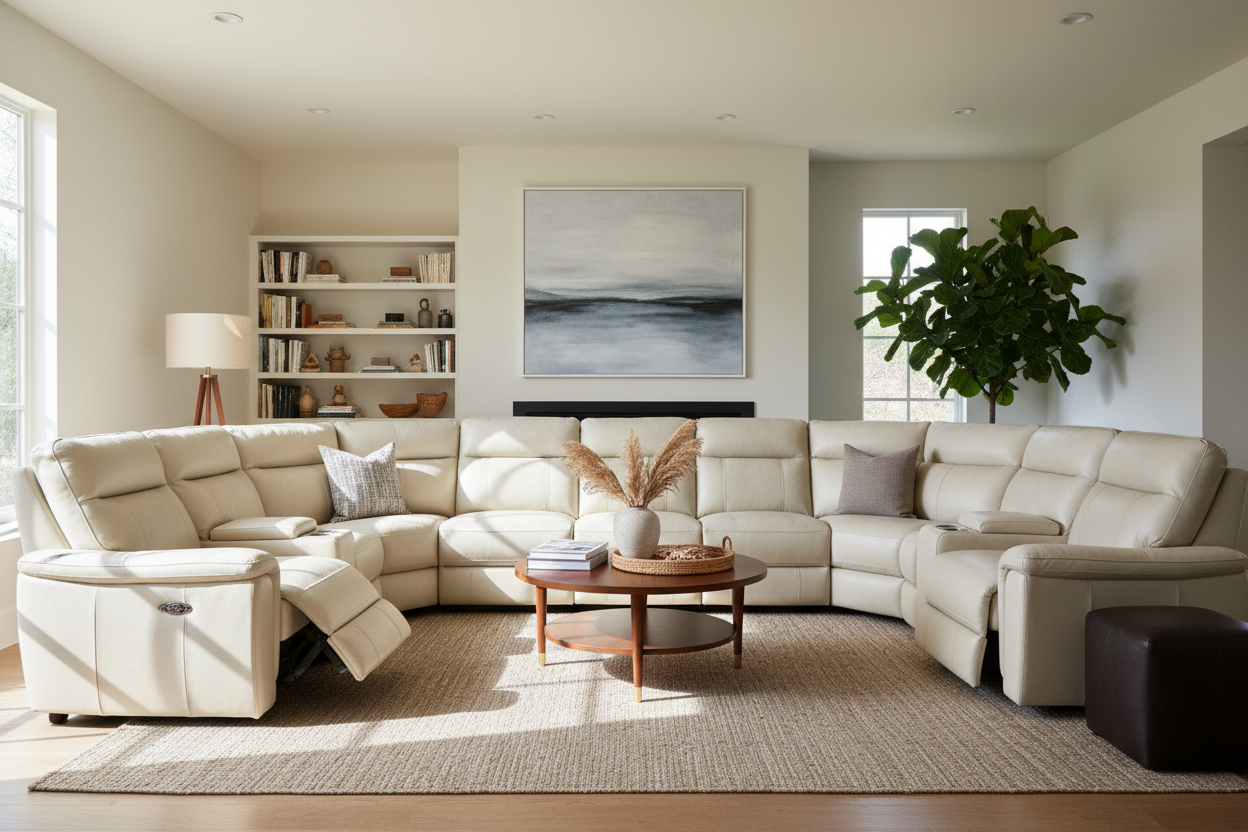
There is a pervasive tension in interior design between high-end aesthetics and genuine comfort. Clients often walk into a showroom craving the sleek, low-profile look of Italian modernism, but they also want the deep-tissue relaxation of a recliner. This is where leather motion sectionals usually enter the conversation—often accompanied by hesitation. The fear? That bringing a recliner into the living room means sacrificing style for bulky, unrefined utility.
It does not have to be that way. As technology in furniture manufacturing has advanced, the gap between form and function has narrowed. However, navigating the market requires a discerning eye to avoid pieces that look dated or mechanically fail within a few years. This guide cuts through the marketing noise to help you select a piece that anchors your room with sophistication.
Quick Decision Guide: Key Features to Look For
- Leather Grade: Prioritize Top Grain or Full Grain leather. Avoid "Bonded" or "Genuine" leather blends, which peel over time.
- Wall Clearance: Look for "zero-wall" or "wall-hugger" mechanisms that require only 2-4 inches of space behind the sofa.
- Suspension System: Sinuous springs or kiln-dried hardwood frames ensure the piece holds its shape under the weight of the motion mechanisms.
- Power vs. Manual: Power reclining offers infinite positioning and often includes adjustable headrests, whereas manual is limited to two or three set angles.
- Motor Quality: German-engineered motors (like Okin) are the industry standard for quiet, smooth operation.
Analyzing Leather Quality and Patina
The allure of leather lies in its tactile nature and visual depth. When selecting a motion sectional, the leather grade is paramount because the mechanism creates friction between cushions. Lower-grade leathers will crack at these friction points.
Top Grain vs. Corrected Grain
For a family room that sees heavy traffic, pigmented top-grain leather is the sweet spot. It offers a protective coating that resists spills while maintaining a luxurious hand. If you prefer a softer, more natural feel and do not mind the occasional scratch telling the story of the piece, an aniline leather offers incredible depth and warmth, though it requires more maintenance.
Space Planning and The "Reclined Footprint"
The most common error I see in floor plans is measuring for the sectional in its upright position only. A motion sectional is a dynamic object; its footprint changes.
Circulation Paths
You must account for the footrest extension. Standard clearance guidelines suggest 18 inches between a sofa and a coffee table. With motion furniture, you generally need to increase this to 24-30 inches to allow the footrest to deploy without hitting the table. Visually, motion sectionals tend to be heavier. To counteract this, consider a layout where the sectional floats in the room rather than being pushed against walls, provided you have the square footage.
Ergonomics and Mechanism Durability
True luxury is ergonomic support. Modern motion sectionals often feature articulating headrests. This is critical because when you recline fully, your gaze naturally hits the ceiling. An articulating headrest tilts forward, allowing you to watch television or converse while fully reclined.
Furthermore, inspect the switch placement. Hidden control panels located on the inside of the armrest maintain a cleaner silhouette than buttons visible on the exterior. Some high-end models even integrate USB charging ports discreetly, blending tech with tradition.
Lessons from My Own Projects
I learned the hard way about "leather puddling" early in my career. I specified a stunning, buttery-soft Italian leather motion sectional for a client in a minimalist loft. It looked architectural and pristine on day one. Six months later, the client called, upset that the leather on the most-used seat had stretched and looked "saggy."
Here is the reality checks showrooms rarely mention: High-quality, natural leather stretches. It is a skin, not a synthetic sheet. When you add the motion mechanism, which changes the tension on the hide constantly, some puddling is inevitable. I now advise clients to smooth the leather with their hands from the center outward after standing up—similar to fluffing a pillow. It helps redistribute the tension. If you cannot tolerate that lived-in look, you are better off with a tighter, pigmented leather or a high-performance fabric, regardless of what the salesperson promises.
Elevating Your Living Space
Investing in the right motion sectional is about balancing mechanical precision with organic beauty. When you choose a piece with the right scale, superior hide, and a quiet motor, you are not just buying furniture; you are curating a lifestyle of uncompromised comfort. Do not settle for bulk; demand a silhouette that respects your design vision.
Frequently Asked Questions
How much space do I need behind a wall-hugger sectional?
While standard recliners need 12+ inches, a true wall-hugger or zero-wall motion sectional typically requires only 2 to 4 inches of clearance. The internal track moves the seat forward as it reclines, rather than just tipping the back backward.
Can I place a rug under a motion sectional?
Absolutely, and you should—it anchors the space. However, ensure the rug is large enough that the metal frame of the sectional rests entirely on the rug, or at least the front legs do. If the mechanism sits unevenly on a rug edge, it can cause the frame to torque over time, leading to motor strain.
How long do the motors in power sectionals last?
A high-quality motor (like those from Okin or Limoss) typically lasts 10 to 20 years with regular use. The electronic switch is usually the first component to fail, but these are generally inexpensive and easy to replace compared to the motor itself.

Leave a comment
This site is protected by hCaptcha and the hCaptcha Privacy Policy and Terms of Service apply.