










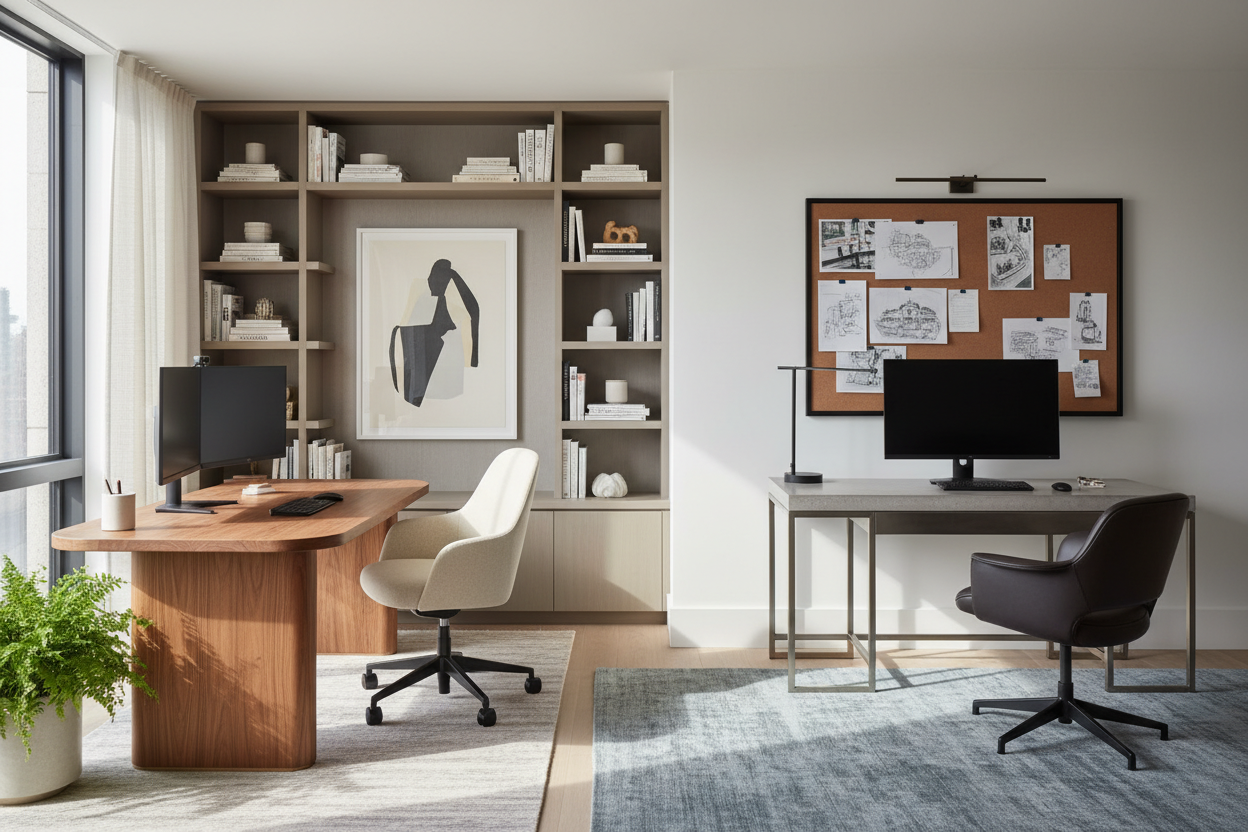
We have moved past the era of makeshift setups on kitchen islands. If your home office feels chaotic or uninspiring, the culprit is often the anchor piece itself. As an interior designer, I see clients prioritize a supportive chair but completely neglect the surface they interact with for eight hours a day. Selecting the right **working from home desks** is about more than just dimensions; it is about merging architectural integrity with ergonomic necessity.
Quick Decision Guide
If you are browsing showrooms or scrolling through catalogs right now, keep these four non-negotiables in mind to ensure your purchase lasts beyond the current trend cycle:
- Surface Depth: Aim for at least 24–30 inches deep to accommodate monitors without straining your eyes.
- Material Integrity: Prioritize solid hardwoods (Walnut, Oak) or high-grade commercial laminates over hollow-core particle board.
- Cable Management: Look for integrated grommets or hidden channels to maintain visual minimalism.
- Leg Stability: Ensure the frame has a substantial weight rating to prevent the dreaded "typing wobble."
Defining the Silhouette and Materiality
When curating wfh desks for a client, I start with the tactile experience. You are going to be touching this surface constantly. Solid wood offers a warmth and texture that glass or metal simply cannot replicate. However, if you are sourcing a work from home desk usa manufacturers produce excellent sustainable laminate options that are scratch-resistant and easier on the budget.
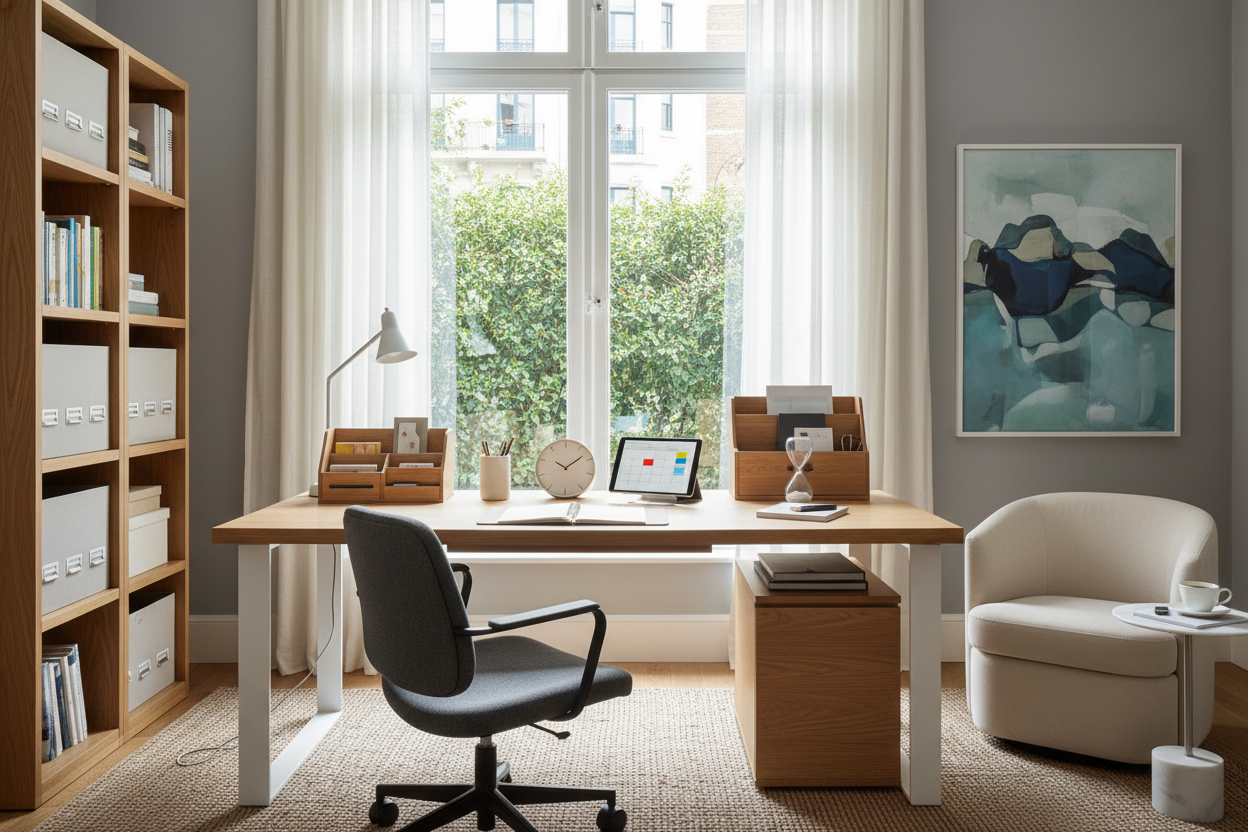
Visually, consider the silhouette. A desk with heavy pedestal drawers can make a small room feel claustrophobic. For tighter footprints, I recommend a writing desk with a "parson style" leg—clean lines and open space underneath allow light to pass through, keeping the room feeling airy.
The Ergonomic Equation
A beautiful desk is useless if it causes shoulder fatigue. The standard desk height is 29 to 30 inches, but this is often too high for the average person to type with neutral wrists. This is where remote work desk configurations need to get smart.
If you aren't opting for a sit-stand mechanism, ensure your chair has enough lift to bring your elbows to a 90-degree angle with the tabletop. If you do choose a standing desk, look for one with a crossbar or heavy feet. Many entry-level motorized desks have severe lateral sway when raised, which ruins concentration.
Space Planning and Visual Flow
Where you place the furniture is just as critical as the piece itself. The most common mistake I correct is the "wall-facing" layout. Pushing desks for working from home directly against a wall creates a visual dead-end. If square footage allows, float the desk in the room, facing the door (the "command position"). This anchors the room and allows you to enjoy the rest of your home's design while you work, rather than staring at drywall.
My Personal Take on Working From Home Desks
I want to share a specific lesson from a project I worked on last year—and a mistake I made in my own home office. I once fell in love with a sleek, tempered glass desk. It looked stunning in photos and virtually disappeared in the room.
However, after two weeks of actual use, I realized the fatal flaw: temperature and acoustics. Glass surfaces are perpetually cold on the forearms, which becomes distracting during long drafting sessions in the winter. Furthermore, every time I set down a coffee mug or a pen, it made a sharp clack sound. It drove me crazy. I eventually swapped it for a matte-finished walnut desk. The wood absorbs sound and feels warm to the touch. When you are buying, don't just look at the aesthetic; think about the sensory details of sound and temperature.
Conclusion
Your workspace should be a reflection of your professional value and your personal style. Investing in high-quality case goods isn't just an expense; it's a commitment to your daily comfort and focus. Take your time, measure twice, and choose a piece that ages beautifully.
Frequently Asked Questions
What is the ideal desk size for a dual-monitor setup?
For two monitors, you generally need a width of at least 55 to 60 inches. This prevents the screens from hanging over the edges and leaves room for a lamp and notepad.
How do I protect a solid wood desk from scratches?
Always use a high-quality leather or felt desk pad. Not only does this define the workspace visually, but it also acts as a barrier against laptop heat and pen pressure marks.
Should I buy a desk with built-in storage or separate filing?
If you want a lighter, more modern look, opt for a desk without bulky drawers and use a separate rolling mobile pedestal. This gives you flexibility to move the storage if you change your layout later.


Leave a comment
This site is protected by hCaptcha and the hCaptcha Privacy Policy and Terms of Service apply.