










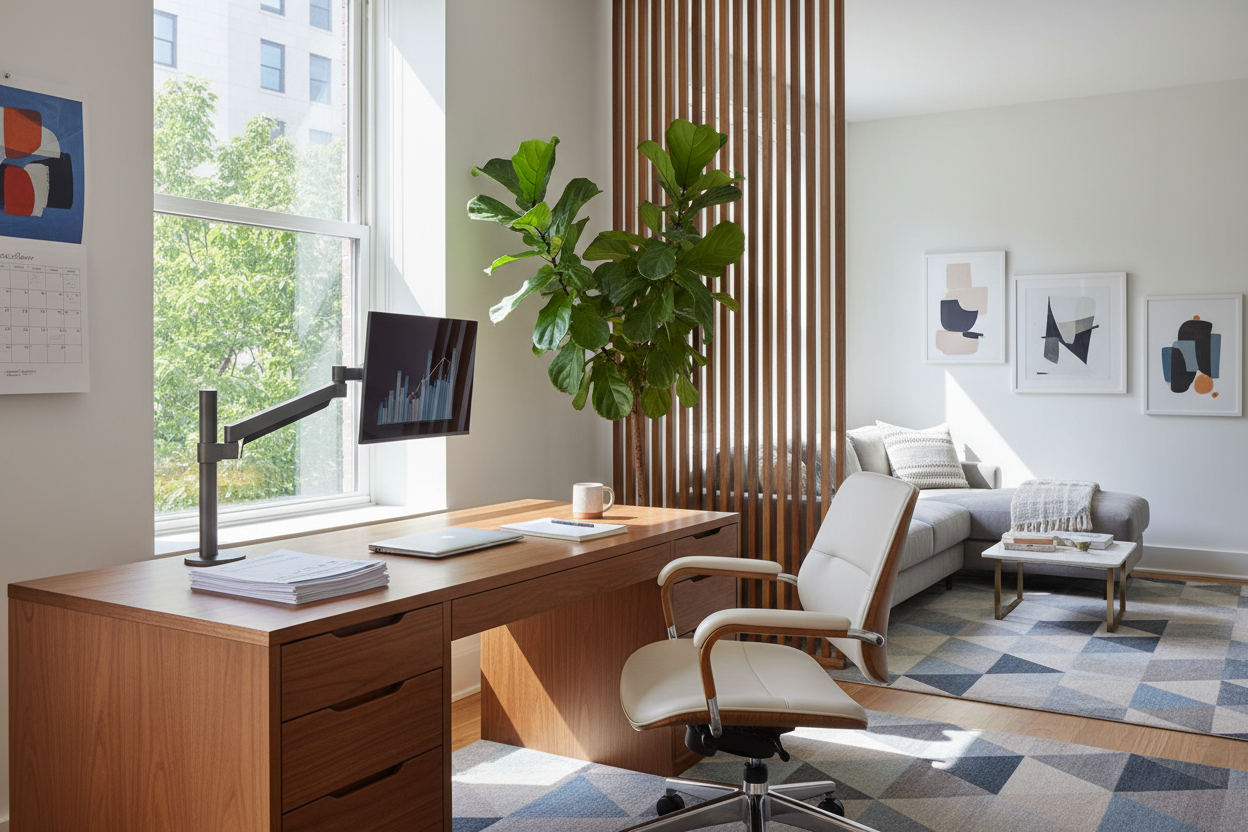
We have all been there: trying to conduct a high-stakes Zoom call while balancing a laptop on a dining chair, or attempting to organize invoices on a coffee table cluttered with coasters. While flexibility is the hallmark of modern work, a lack of structure is the enemy of productivity. As a designer, clients often ask me what qualifies as a home office—not just for the sake of tax compliance, but for the sake of their own sanity and professional image. It is about creating a space that signals to your brain (and the IRS) that it is time to work.
Key Features That Define a Dedicated Workspace
Before we start tearing down walls or buying mahogany desks, we need to establish the criteria that transition a room from "residential" to "professional." Here are the core pillars of a qualified home office:
- Exclusivity of Space: The area must be used solely for business. A guest bed in the corner often disqualifies the room both mentally and legally.
- Ergonomic Integrity: Furniture must support 8+ hours of use. Dining chairs do not qualify as task seating.
- Defined Lighting Architecture: A mix of ambient and task lighting is essential to reduce eye strain and maintain focus.
- Hard Storage Solutions: Dedicated cabinetry or shelving for files and tech, distinct from household storage.
Designing for the "Exclusive Use" Rule
When we discuss what qualifies as a home office for tax purposes, the operative phrase is "exclusive and regular use." From a design perspective, this is actually a blessing. It forces us to be intentional about zoning. You cannot simply place a desk in the middle of a playroom and expect professional results.
Physical Separation and Zoning
If you do not have a spare room, you must create a "room within a room." I often use high-backed bookcases or acoustic dividers to carve out a distinct square footage. This visual barrier is critical. When you step behind that divider, you are at work. If you are using a rug to define the area, ensure all furniture legs—desk and chair—sit firmly on the rug to ground the zone visually.
Selecting Material and Silhouette
The furniture you choose dictates the longevity and authority of the space. A qualified home office requires pieces that can withstand the wear and tear of daily friction.
Solid Wood vs. Veneer
For the primary desk, I always advise clients to look closely at the substrate. While high-quality veneers can offer beautiful grain patterns, a solid wood edge is preferable for the user side of the desk. Why? Because that is where your wrists, watch clasps, and zippers will rub against the finish thousands of times. A cheap laminate will peel within a year, instantly downgrading the aesthetic of the room.
The Importance of Visual Weight
Balance is key. If you have a small 10x10 room, a heavy, dark oak executive desk will suffocate the space. Conversely, a spindly metal writing desk in a large room feels temporary and ungrounded. Look for a silhouette that commands presence without overcrowding. A floating desk with integrated storage is often a sophisticated compromise for mid-sized rooms.
Lighting and Acoustics
A qualified office is not just about what you see, but how you feel. Overhead recessed lighting is rarely enough. You need task lighting with a CRI (Color Rendering Index) above 90 to ensure documents look crisp and colors remain true. Furthermore, consider the acoustics. Hard surfaces bounce sound, creating that hollow "empty room" echo on calls. Incorporate drapery, an area rug, or upholstered seating to dampen the noise.
My Personal Take on what qualifies as a home office
I learned the hard way that "exclusive use" isn't just a tax term—it's a psychological necessity. Years ago, I designed a home office for myself in a wide hallway landing. It looked stunning in photos; I had a custom walnut console and a beautiful Eames chair. But I made a critical error: I didn't account for the traffic flow behind me.
Every time my partner walked past to get to the linen closet, my focus shattered. But the specific detail that drove me crazy wasn't the noise—it was the floor vibration. Because the desk was on a thoroughfare, the monitor would wobble slightly with every footstep. It’s those unpolished, tactile annoyances that you don't see in a showroom that make a space fail. Now, I always tell clients: if the floor shakes when someone walks by, it doesn't qualify as a workspace, no matter how good the tax deduction looks.
Conclusion
Defining what qualifies as a home office goes beyond the IRS publication; it is about respecting your career enough to give it proper square footage. By investing in ergonomic furniture, exclusive zoning, and proper lighting, you create an environment that nurtures success rather than hindering it. Treat your workspace with the same design rigor as your living room, and the return on investment will be immediate.
Frequently Asked Questions
Can a dual-purpose room qualify as a home office?
Generally, no. If the space is also used as a guest bedroom or a TV room, it violates the "exclusive use" principle for tax deductions. From a design standpoint, it also dilutes your focus. If you must share the room, use a physical divider to permanently separate the work zone.
What is the ideal desk depth for a professional setup?
I recommend a minimum depth of 30 inches. This allows enough distance between your eyes and the monitor (roughly an arm's length) while leaving space for a keyboard and documents. Anything shallower than 24 inches is a console table, not a desk.
Does built-in cabinetry count towards the home office deduction?
If the cabinetry is installed specifically for business use (filing, inventory, reference books) within the exclusive space, it is generally considered a capital improvement or expense for the office. Visually, built-ins are the best way to elevate a home office from "temporary" to "custom."


Leave a comment
This site is protected by hCaptcha and the hCaptcha Privacy Policy and Terms of Service apply.