










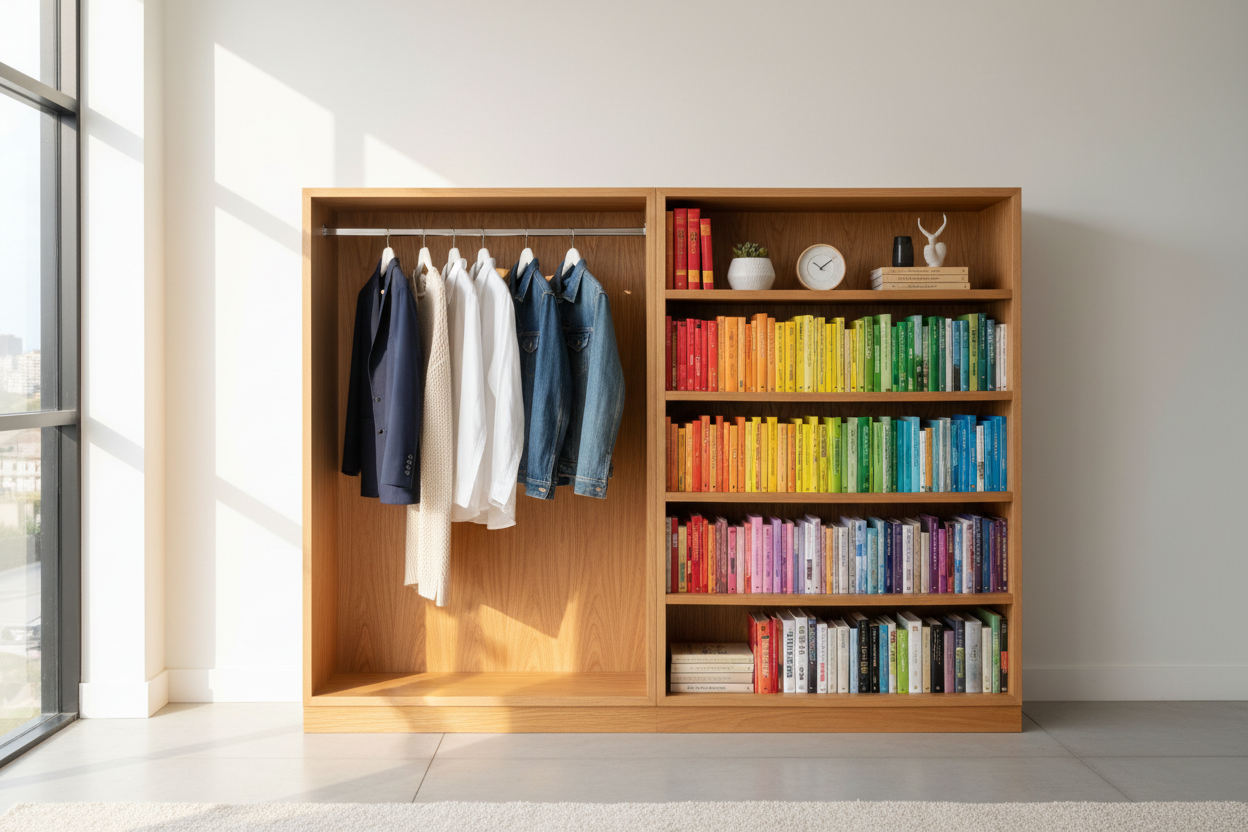
Living in a compact space often forces you into a frustrating game of Tetris with your belongings. You usually have to prioritize essential furniture like a bed and a closet, leaving your book collection stacked in precarious piles on the floor or stuffed into boxes under the bed. The most efficient way to reclaim your floor space while keeping your favorite novels accessible is integrating a wardrobe bookshelf combo. This hybrid furniture piece merges the deep, concealed storage required for hanging garments with the shallower, open display space needed for a personal library.
Why Merge Your Library and Closet?
Separate storage units eat up valuable square footage. A standalone armoire creates dead space on either side, and a dedicated bookcase requires its own wall. Combining them creates a cohesive wall unit that maximizes vertical storage. Beyond the obvious space-saving benefits, this setup offers a unique aesthetic opportunity. Wardrobes can feel heavy and imposing with their solid doors. Breaking up that visual weight with open shelving lightens the room and allows you to inject personality through books, plants, and decor.
The concept works particularly well in studio apartments, guest rooms that double as home offices, or children's bedrooms where toys and clothes fight for dominance. By centralizing storage, you clear the rest of the room for living, working, or playing.
Navigating the Depth Dilemma
One specific challenge arises when planning this layout, and it is something many DIY enthusiasts overlook until it is too late. Standard wardrobes require a depth of at least 24 inches (about 60 cm) to accommodate hangers without sleeves brushing against the door. Bookshelves, conversely, only need about 10 to 12 inches of depth. If you simply bolt a bookshelf next to a wardrobe, the bookshelf will look recessed, creating an awkward gap.
To solve this, you have two main design routes. The first is a stepped design, where the depth difference is intentional and used to create a nook—perhaps for a small desk or a reading chair. The second option is to build the shelving unit to the same depth as the wardrobe (24 inches) but install the actual shelves closer to the front. This leaves a hidden cavity behind the books, which is brilliant for secret storage of valuables or seasonal items you rarely need to access.
My Experience with the "Wall of Everything"
A few years ago, I moved into a pre-war apartment with zero closet space and a bedroom that could barely fit a queen mattress. I was drowning in coats and paperbacks. I decided to build a custom wardrobe bookshelf combo using basic modular kitchen cabinets for the base and framing out the top. I placed two tall wardrobe towers on the far ends of the wall and connected them with floating shelves across the middle, directly above where I positioned my bed.
The result was transformative. The wardrobes anchored the room, providing symmetry, while the "bridge" of books above the bed created a cozy, built-in alcove feel. It eliminated the need for nightstands since I built niche shelving into the sides of the wardrobe towers. It wasn't just about storage; it changed the architecture of the room entirely.
Configuration Ideas for Every Layout
You don't need to be a master carpenter to make this work. Depending on your budget and skill level, several configurations can achieve the look.
The Center Stage
Place the bookshelf in the center with wardrobe units flanking it on both sides. This symmetry is pleasing to the eye and works well on the main wall of a bedroom. The center shelves become the focal point, breaking up the monotony of cabinet doors. You can use the lower section of the central unit for drawers, keeping socks and underwear accessible, while the upper section displays your collection.
The Corner Wrap
Corners are notorious dead zones. A custom unit can transition from a wardrobe on one wall to a bookshelf on the adjacent wall. This L-shaped configuration is excellent for home offices where you want the utility of a closet but the look of a study. The corner piece itself can be tricky; installing a carousel or distinct corner shelving prevents items from getting lost in the back.
The Window Frame
If your room has a window, build the wardrobes on either side of it and run a bookshelf or a window seat with storage underneath the sill. This frames the view and turns the window into a design feature rather than an obstacle. It maximizes natural light while utilizing the wall space that is usually wasted around curtains.
Material Choices and Weight Loads
Books are deceptively heavy. A single foot of shelved books can weigh between 20 to 40 pounds. While wardrobe hanging rods have their own weight requirements, the shelving portion of your combo needs robust support. Particleboard often sags under the weight of a substantial library over time.
Plywood or solid wood are superior choices for the shelving components. If you are modifying pre-fabricated units (like flat-pack furniture), reinforce the shelves with a solid wood trim on the front edge or add L-brackets underneath. For the wardrobe section, ensure the hinges are high quality. Since this unit will likely dominate a wall, the doors will see heavy use. Soft-close hinges add a touch of luxury and prevent the jarring noise of slamming doors from vibrating your book collection.
Styling Your Combo Unit
Once your wardrobe bookshelf combo is installed, the challenge shifts to styling. Because open shelves are visually "noisy," they can make a room look cluttered if not curated properly. To maintain a sense of calm, avoid jamming every inch of shelf space with books. Leave some negative space.
Mix in decorative boxes or woven baskets on the lower shelves. These serve a dual purpose: they hide unsightly clutter like cables or paperwork, and they add texture that softens the look of the unit. Color-coordinating books is a controversial topic among readers, but in a bedroom setting, grouping spine colors can significantly reduce visual chaos. Alternatively, stacking some books horizontally and others vertically creates rhythm and interest.
Lighting is the final touch that elevates the project from "storage rack" to "custom furniture." LED strip lighting routed into the underside of the shelves or puck lights installed in the top of the wardrobe compartments makes the unit functional and atmospheric. It allows you to find your clothes on dark mornings and highlights your favorite titles in the evening.
Frequently Asked Questions
Can I use a standard bookshelf as a wardrobe?
Generally, no, because standard bookshelves are only 10-12 inches deep. Clothes on hangers require 24 inches of depth, meaning they would protrude significantly. However, you can use a bookshelf for folded clothes, shoes, or accessories, or install a forward-facing valet rod for a few select garments.
How do I prevent dust from accumulating on the open shelves?
Open shelving inevitably attracts dust, but you can minimize it by not overstuffing the shelves, which makes dusting difficult. Using glass doors for the bookshelf section is the most effective solution, converting it into a display cabinet that keeps your books clean while remaining visible.
Is it cheaper to build custom or buy modular units?
Buying modular units and modifying them with trim to look "built-in" is almost always cheaper than hiring a carpenter for a fully custom job. Custom builds offer perfect fitment and better materials, but using stock cabinets from a retailer and adding your own molding can save you thousands of dollars.

Leave a comment
This site is protected by hCaptcha and the hCaptcha Privacy Policy and Terms of Service apply.