










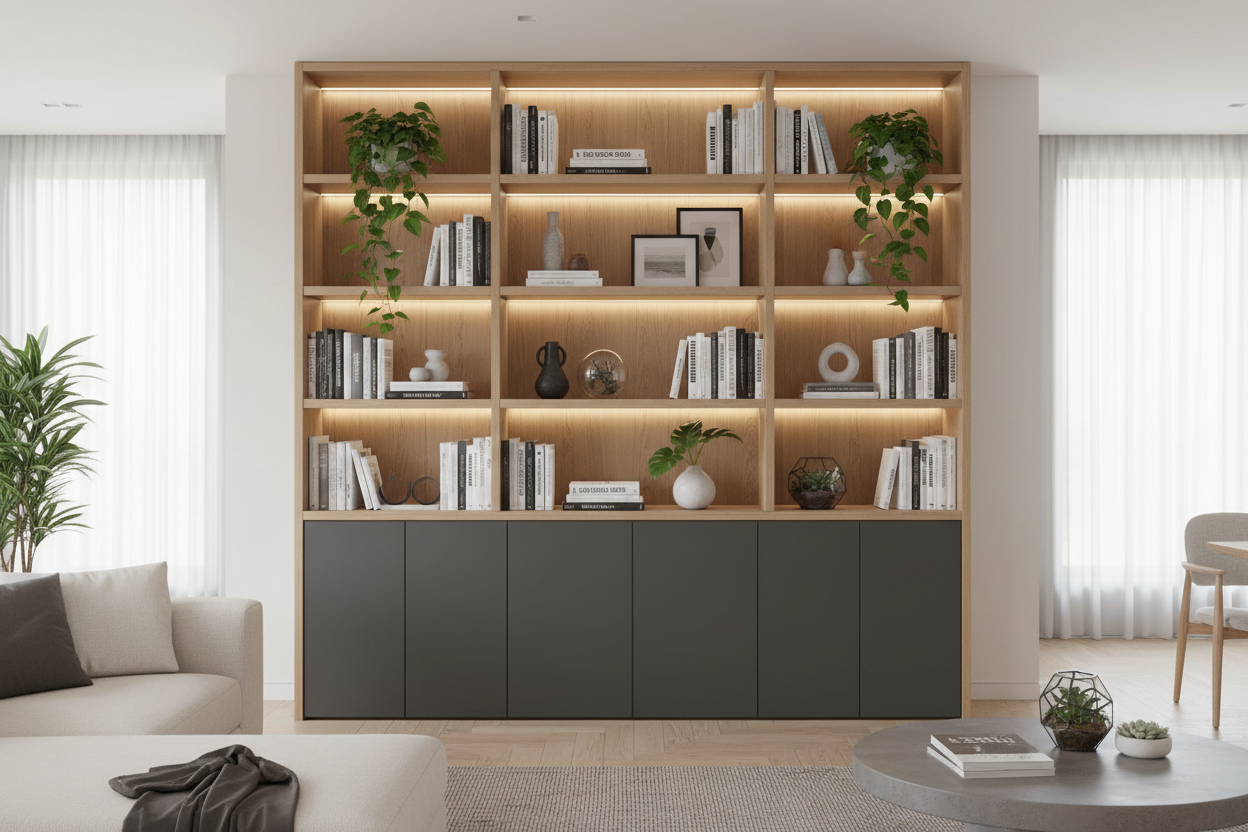
We often find ourselves torn between two distinct needs when furnishing a room: the desire to show off our favorite items and the desperate need to hide the clutter. Open shelving is beautiful, but it demands perfection. Every item must be curated, dusted, and aligned. On the other hand, solid storage units are practical but can feel heavy and blocky, offering no space for personality. This is exactly where the cabinet bookcase shines. It is the furniture equivalent of having your cake and eating it too, offering a display area for your treasures while concealing the less photogenic necessities of life behind solid doors.
A cabinet bookcase typically features open shelving on the upper half and a closed cupboard on the lower portion. This hybrid design solves the visual noise problem that plagues so many living rooms and home offices. You get the vertical height and airiness of a standard shelf, grounded by the weight and utility of a cabinet. Whether you are trying to organize a chaotic study or add a focal point to a dining room, understanding how to utilize this piece of furniture effectively can transform the flow of your home.
Why the Hybrid Design Works
The primary advantage of a bookcase cabinet lies in its ability to anchor a room. Tall, open shelves can sometimes feel top-heavy or visually cluttered if they are packed edge-to-edge with paperbacks. By having a solid base, the piece feels more substantial and permanent, almost like architectural millwork rather than a temporary fixture. The lower cabinet creates a visual break, drawing the eye up to the curated items above while providing a heavy foundation that balances the room.
From a functional standpoint, the benefits are even clearer. We all have things we need to keep handy but don't necessarily want to look at. Board games with tattered corners, stacks of printer paper, tangled charging cables, or ugly binders full of tax documents do not belong on an open shelf. A bookshelf cabinet allows you to keep these items accessible in the living area without ruining the aesthetic. You simply close the doors, and the mess disappears.
My Experience with Office Clutter
I learned the value of this furniture style the hard way. A few years ago, I decided to outfit my home office with sleek, entirely open industrial shelving. It looked incredible in the catalog. In practice, it was a disaster. I had nowhere to put my printer paper, my stapler, or the ugly plastic bins of tech accessories. I ended up shoving them into wicker baskets that didn't quite fit the shelves, and the whole room looked chaotic.
I eventually swapped those units for a set of bookcases with cabinet bases. The difference was immediate. The ugly tech bins went behind the wood doors at the bottom. The printer paper vanished. Suddenly, the upper shelves were free to hold just my hardcover books and a few plants. The room didn't just look cleaner; it felt bigger because the visual clutter was cut in half. That experience taught me that concealed storage is not just a luxury; it is a requirement for a peaceful workspace.
Choosing the Right Style for Your Room
When shopping for a cabinet and bookcase combination, the options can be overwhelming. The style you choose should depend heavily on the room's existing architecture and your storage needs. In a dining room, you might look for a piece that resembles a hutch or a sideboard with a top unit. These often feature glass doors on the upper section to protect fine china from dust, combining the utility of a buffet with the display capacity of a curio cabinet.
For a living room or library, a wall of bookcases with cabinet bottoms creates a built-in look without the renovation cost. If you place two or three units side-by-side, they create a cohesive library wall. Look for units with molding at the top and base; these details help multiple pieces look like a single, unified structure. If your style is more modern, look for flat-front doors and clean lines without hardware handles, often utilizing push-to-open mechanisms for a seamless appearance.
Material and Durability Considerations
Since these units often hold significant weight—books on top and heavy storage below—material quality is non-negotiable. Solid wood is the gold standard for longevity, preventing the shelves from bowing over time. However, high-quality engineered wood with a thick veneer can also be durable if the construction is solid. Pay close attention to the hinges on the lower doors. Because the lower section is often used for daily items, the doors will see a lot of action. Soft-close hinges are a great feature to look for, as they prevent slamming and reduce wear and tear on the frame.
Styling Your Shelves for Impact
Once you have your cabinet bookcase in place, the challenge becomes filling it. The rule of thirds is a helpful guideline here: one-third books, one-third accessories, and one-third empty space. The empty space is crucial. It gives the eye a place to rest and prevents the unit from looking like a storage locker.
Group books both vertically and horizontally to add visual interest. Use the depth of the shelves to layer items—place a small piece of art behind a low stack of books, or a small succulent in front of a tall vase. Since you have the luxury of the lower cabinet, you don't need to cram every book you own onto the exposed shelves. Keep the paperbacks and reference manuals behind the closed doors below, and reserve the eye-level shelves for your most attractive hardcovers and decorative objects.
The Versatility of the Bookshelf Cabinet
Don't limit this piece of furniture to just the living room or office. In a bedroom, a bookcase cabinet can function as a secondary wardrobe. The shelves can hold folded sweaters or shoe displays, while the lower cabinets can store linens or seasonal items. In a hallway or landing, a shallow version can serve as a catch-all for keys and mail (hidden away) while displaying family photos on top. The duality of the design makes it one of the most versatile pieces of furniture you can own, adapting to the changing needs of a household over years.
FAQ
How do I prevent tall cabinet bookcases from tipping over?
Tall furniture poses a tipping hazard, especially on carpet or in homes with children. You should always anchor the unit to the wall using heavy-duty furniture straps or L-brackets attached to a wall stud. Most reputable furniture manufacturers include an anti-tip kit with the assembly hardware.
Can I make freestanding bookcases look like built-ins?
Yes, you can achieve a custom look by placing multiple units side-by-side and adding trim. installing crown molding across the very top and a continuous baseboard across the bottom unifies the separate pieces. filling the gaps between the units and the wall with scribe molding completes the built-in illusion.
What is the standard depth for the lower cabinet section?
The lower cabinet section is usually deeper than the upper shelves to provide stability and accommodate larger items. Standard depth for the base is typically between 16 to 20 inches, while the upper shelves usually range from 10 to 12 inches deep.


Leave a comment
This site is protected by hCaptcha and the hCaptcha Privacy Policy and Terms of Service apply.