










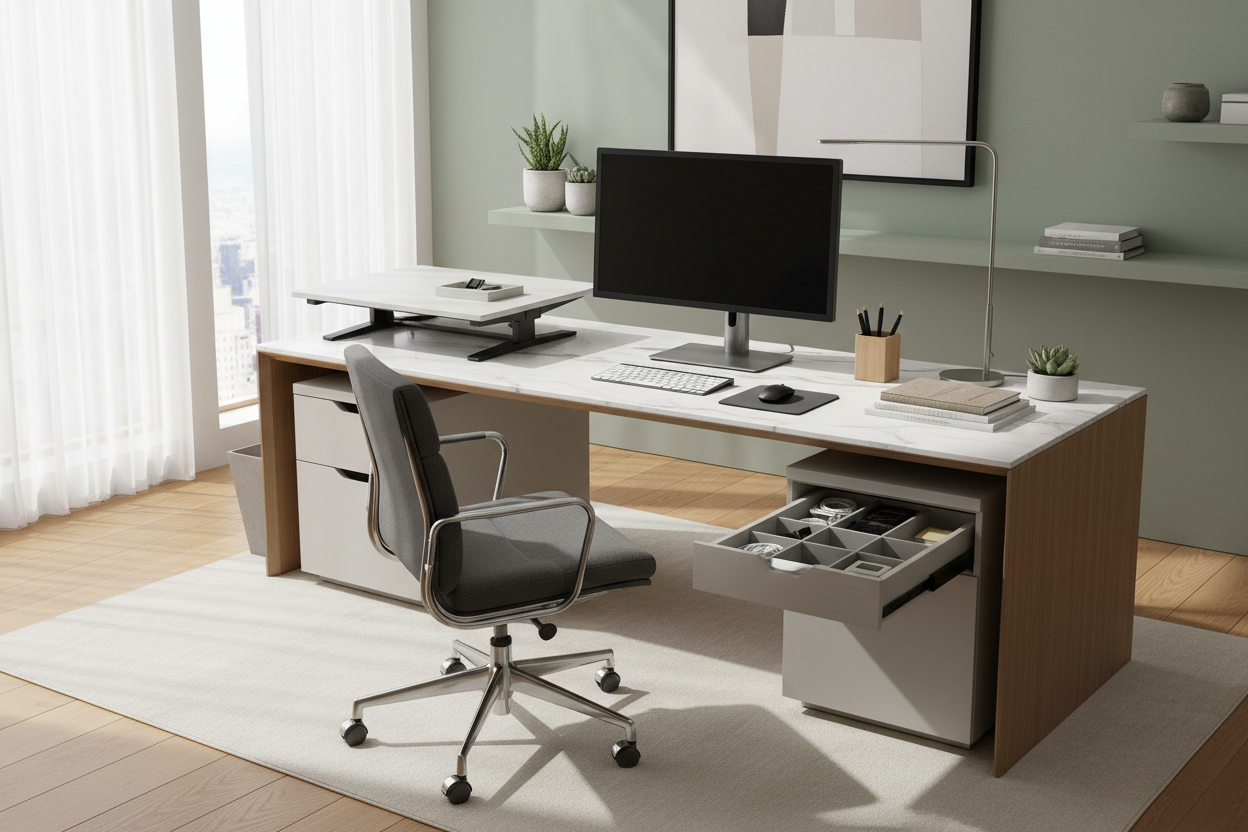
We frequently treat desk accessories as afterthoughts—plastic trays grabbed from a big-box store or generic wire cups that serve a function but detract from the room's atmosphere. As an interior designer, I see the desktop as a micro-environment that requires the same curation as your living room layout. The right office supplies for remote workers are not just about utility; they are about reducing visual noise and creating a tactile experience that encourages focus. When your workspace is part of your home, every object on your desk contributes to the overall interior narrative.
Quick Decision Guide: Curating Your Desktop
Before purchasing new accessories, evaluate them against these core design principles to ensure they elevate rather than clutter your workspace:
- Material Continuity: specific finishes (walnut, brass, leather) should complement your existing desk and shelving to create a cohesive look.
- Visual Weight: Opt for acrylic or glass organizers in small spaces to maintain an airy feel, or solid wood for a grounded, executive aesthetic.
- Tactile Quality: Prioritize materials that age well, such as full-grain leather or unlacquered brass, which develop a patina over time.
- Ergonomic Integration: Ensure risers and stands align with proper eye levels to merge health with design.
The Art of Material Selection
The biggest mistake remote workers make is mixing incongruent materials. If you have a reclaimed wood desk, introducing shiny, cheap plastic organizers creates a jarring disconnect. Instead, look for accessories that harmonize with your furniture's undertones.
Natural Elements vs. Industrial Finishes
For a warm, organic modern aesthetic, seek out desk organizers crafted from bent plywood or solid oak. These materials soften the harshness of technology. Conversely, if your remote office equipment leans towards high-tech (multiple monitors, mechanical keyboards), balance that sterility with felt desk mats or leather mouse pads. The texture absorbs sound and adds necessary warmth to the vignette.
Functionality Meets Form: The Layout
Just as we plan traffic flow in a living room, we must plan the 'hand traffic' on a desk. Your supplies should be zoned based on frequency of use.
Zoning Your Surface
Keep your primary tools (pen, notebook, mouse) within the 'primary reach zone'—a semi-circle formed by sweeping your forearms across the desk. Secondary items like staplers or tape dispensers should be relegated to trays or drawers. Using a decorative tray to corral these loose items is a classic styling trick; it turns a pile of clutter into a deliberate composition.
Lighting as an Office Supply
While often categorized differently, task lighting is the most critical desktop tool. A sculptural desk lamp serves as the focal point of the workstation. Avoid cold, blue-tinted LEDs which can feel clinical. Opt for lamps with adjustable arms and a CRI (Color Rendering Index) of 90 or above. This ensures that the colors of your documents—and your room—look true and inviting.
My Personal Take on Office Supplies for Remote Workers
In my early years designing home offices, I was obsessed with the 'clear acrylic' trend. It looked pristine in photos. However, I learned a hard lesson after outfitting my own studio with entirely clear organizers. Within three weeks, they were a disaster. They magnified every speck of dust, fingerprint, and pencil shaving. It looked perpetually dirty unless I polished it daily.
I pivoted to a matte, textured ceramic set and a dark wool-felt desk pad. Not only did the felt hide the inevitable coffee ring until I could clean it, but it also dampened the sound of my keyboard—a sensory detail I hadn't anticipated. Now, when I advise clients, I tell them to avoid high-gloss finishes on horizontal surfaces. The glare from overhead lighting is fatiguing, and the maintenance is unrealistic for a working desk. Go for matte, textured, or natural grains every time.
Conclusion
Your home office doesn't have to look like a corporate cubicle. By selecting supplies that honor the principles of interior design—texture, balance, and scale—you turn a functional necessity into a design asset. Curate your desk with the same care you give your coffee table, and watch how it changes your workflow.
Frequently Asked Questions
How do I match office supplies to my interior style?
Identify the dominant metal or wood tone in your room. If you have brass hardware on your doors, choose brass or gold desk accessories. If your room is Minimalist, stick to matte black or white. The goal is to have the supplies echo the room's existing palette.
Is expensive leather remote office equipment worth it?
Generally, yes. Cheap 'vegan' leather (PU) often peels at the edges within a year and traps heat against your wrists. Genuine leather breathes, lasts for decades, and looks better as it ages, making it a better long-term investment for your desk pad or chair.
What is the best way to hide cables on a glass desk?
Glass desks are unforgiving. Use adhesive cable clips that match the color of the desk legs (usually chrome or black) and run wires strictly along the silhouette of the frame. Alternatively, use a weighted cable block on top of the desk to keep charging cords accessible but tidy.


Leave a comment
This site is protected by hCaptcha and the hCaptcha Privacy Policy and Terms of Service apply.