










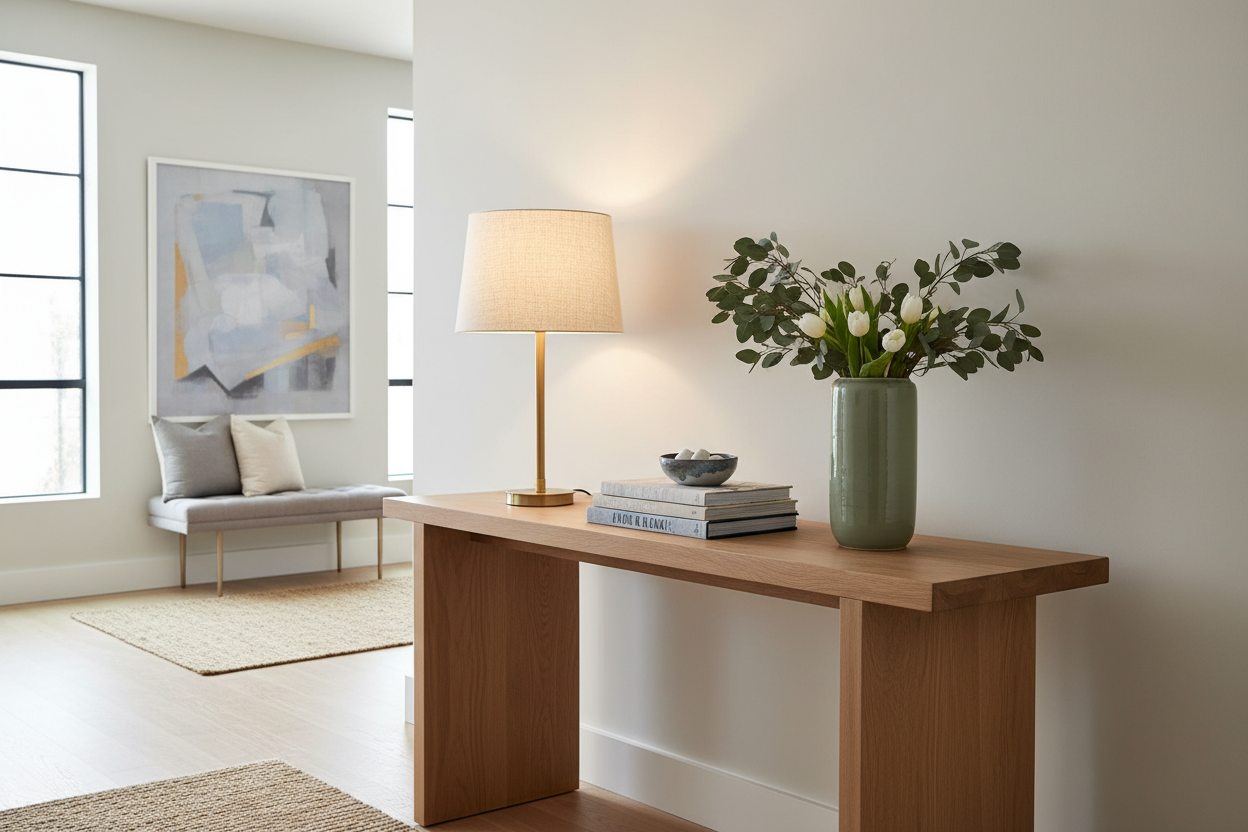
Hallways are often the orphans of interior design. We treat them purely as thoroughfares—spaces to rush through to get to the "real" rooms. Yet, this transitional space is the first thing guests see and the last thing you see before leaving. Anchoring this space with the right furniture changes the entire psychology of your home. A well-chosen table for hallway placement does more than catch your keys; it disrupts the tunnel effect and turns a sterile corridor into a designed experience.
Finding the right piece requires balancing physical dimensions with visual weight. Unlike a living room where furniture clusters together, a hall table usually stands alone. It needs to command attention without obstructing traffic. Whether you are working with a sprawling entryway or a narrow apartment corridor, the goal is to create a pause point that merges utility with style.
Understanding Scale and Flow
The biggest mistake homeowners make is misjudging depth. In a standard hallway, every inch of clearance counts. If your walkway is the standard 36 to 42 inches wide, a bulky console will force you to turn sideways just to walk past with groceries. For these tighter spaces, a hallway shelf table with a depth of 10 to 12 inches is ideal. It provides a surface for mail and a lower tier for shoe storage without encroaching on your walking path.
Visual weight is just as important as physical measurement. A solid wood cabinet might fit physically, but it can make a narrow hall feel claustrophobic. In contrast, hallway accent tables with open metal bases, glass tops, or spindly legs allow the eye to travel through the piece to the baseboard, making the space feel wider than it actually is.
The Versatility of the Side Table
We typically associate consoles with entryways, but the standard console is sometimes too long for broken-up wall segments. This is where rethinking living room furniture comes into play. A side table for hallway use is an underutilized trick. If you have a small stretch of wall between two bedroom doors, a standard console won't fit, but a round or square side table slides in perfectly.
I recall a specific project where the hallway had a jagged layout due to HVAC returns. A traditional rectangular table looked forced and uneven. We swapped it for a round hall side table—a pedestal style usually meant to sit next to an armchair. Suddenly, the curves softened the angular walls, and because it had a smaller footprint, it didn't block the flow. It became the perfect spot for a small lamp and a catch-all tray.
Using a hallway end table at the far end of a long corridor is another design hack. Instead of letting a long hallway terminate into a blank wall, placing a taller end table there with a piece of art above it creates a destination. It draws the eye down the length of the hall, making the journey feel intentional rather than endless.
Selecting the Right Style for Your Space
Your choice of furniture sets the preamble for the rest of the house. Hall accent tables come in endless varieties, so alignment with your overall aesthetic is key. For a modern farmhouse look, reclaimed wood with matte black iron hardware works well. If your home leans mid-century modern, look for walnut finishes and tapered legs.
The Narrow Hall Solution
When space is at an absolute premium, a small accent table for hallway setups is your best friend. Look for "demilune" (half-moon) shapes. Since they have no sharp corners jutting out, you are far less likely to bump your hip against them in the dark. A demilune sits flush against the wall and offers just enough surface area for a vase of flowers and a mail sorter.
Another option for tight squeezes is a floating shelf that mimics a table. While technically not a table with legs, it serves the exact same function as an accent table for hallway decor but keeps the floor completely clear, which creates an illusion of more space.
Function Meets Decor
Once you have the furniture, the challenge shifts to styling. A naked table looks unfinished, but a cluttered one looks messy. The formula for styling side table hallway vignettes or console arrangements usually involves three elements: light, height, and storage.
Start with lighting. Hallways are notoriously dark. A tall, slender buffet lamp adds height and a warm glow that overhead recessed lighting cannot replicate. If you don't have an outlet nearby, battery-operated lamps have improved significantly in recent years and look just as high-end as corded versions.
Next, add a grounding element. On a hallway shelf table, use the lower shelves for baskets. This hides dog leashes, winter gloves, or reusable grocery bags, keeping the top surface distinct and uncluttered. On the surface, use a tray. A tray creates a boundary for loose items like keys and sunglasses. If it's not on the tray, it doesn't belong on the table.
Materials That Withstand Traffic
Hallways are high-traffic zones. You will brush against this table with zippers, grocery bags, and backpacks. Delicate finishes like gold leaf or untreated pine might show wear too quickly. Hardwoods, powder-coated metals, and tempered glass are resilient choices for hall accent tables. If you choose a painted finish, ensure it has a protective lacquer coating to prevent chipping.
For households with pets or young children, stability is paramount. Lightweight tables in a hallway can easily be knocked over by a running dog. Ensure your side table for hallway placement is either heavy enough to stand its ground or anchored to the wall, especially if you plan to place a heavy mirror or lamp on top.
Creating a Focal Point
The table is the stage, but the wall behind it is the backdrop. A mirror is the classic companion to hallway accent tables for a reason. It reflects light into the darker parts of the corridor and allows for a quick appearance check before you head out the door. If a mirror feels too cliché, an oversized piece of abstract art or a gallery wall grid can add personality.
Don't be afraid to mix eras. An antique small accent table for hallway use can look stunning when paired with a modern, frameless mirror. The tension between the old and the new creates visual interest that a matching set simply cannot achieve.
Frequently Asked Questions
How tall should a hallway table be?
Standard hallway tables should generally range between 30 and 36 inches in height. This places the surface at a comfortable level for dropping off keys without bending down. If you are placing the table behind a sofa that backs up to a hallway, ensure the table is no taller than the sofa back.
What is the minimum hallway width needed for a table?
You should aim to keep at least 36 inches of walking path clear. If your hallway is 48 inches wide, you can safely use a table that is 10 to 12 inches deep. If your hall is narrower than 40 inches, consider a wall-mounted floating shelf or a very narrow console (under 8 inches deep) to avoid obstructing movement.
Can I use a bedside table in the hallway?
Yes, absolutely. A bedside table can function perfectly as a hallway end table or side table, particularly in shorter hallways or nooks. Just be mindful of the height; nightstands are often lower (24-28 inches) than standard consoles, so you may need to use a taller lamp or artwork to balance the vertical scale.


Leave a comment
This site is protected by hCaptcha and the hCaptcha Privacy Policy and Terms of Service apply.