










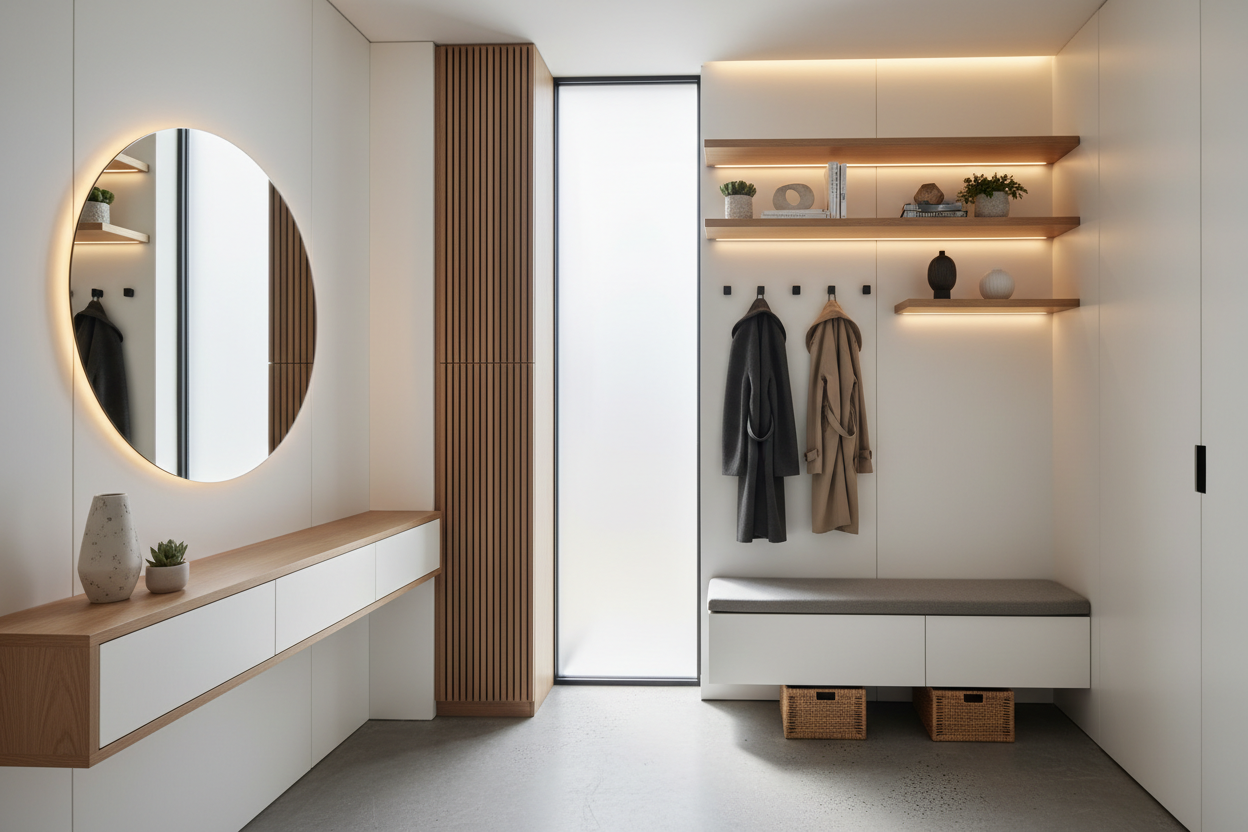
Hallways are the arteries of a home, yet they often receive the least amount of design love. We walk through them dozens of times a day, usually stepping over shoes or brushing against bulky coats, treating the space as nothing more than a passage from point A to point B. But a well-designed corridor does more than connect rooms; it sets the tone for the entire house. The secret lies in selecting pieces that maximize functionality without encroaching on the limited footprint available. You need items that hug the wall, offer hidden storage, and visually expand the area rather than cluttering it.
Finding the right balance begins with understanding the specific constraints of your space. Is it a long, dark tunnel? A short, choppy entryway? The best hallway furniture ideas focus on slim profiles and dual purposes. We aren't looking for deep dressers or wide armchairs here. We are looking for shallow consoles, vertical shoe racks, and floating elements that keep the floor visible. By prioritizing flow, you turn a dead zone into a functional design feature.
The Slim Console: The MVP of Corridor Design
If you have even eight inches of depth to spare, you have room for a console table. In narrow spaces, the console serves as the landing strip for your life. It is where keys, mail, and sunglasses live. When browsing corridor furniture ideas, look for tables with open bottoms. A solid block of wood can make a tight hall feel claustrophobic, whereas a table with spindly legs or a glass top allows the eye to travel through the piece, maintaining a sense of airiness.
I learned this lesson the hard way in my first apartment. The hallway was incredibly narrow, barely wide enough for two people to pass. I tried to force a standard bookshelf into the space to hold shoes, and it was a disaster. I was constantly banging my hip against the corner. Eventually, I swapped it for a custom-made radiator cover that I used as a console—it was only six inches deep. I hung a mirror above it and placed a small tray for keys on top. Suddenly, the space felt intentional rather than accidental. That experience taught me that in hallways, depth is the enemy, and height is your friend.
Floating Shelves and Wall-Mounted Units
Sometimes, even a slim table is too much for the floor space. In these instances, floating furniture is the answer. Wall-mounted drawers or shelves provide the surface area you need without touching the ground. This trick creates an optical illusion of more floor space, making the hallway appear wider than it actually is. When looking for furniture ideas for hallways that feel impossibly tight, always look up. A floating shelf at waist height can serve as a drop zone, while hooks underneath can manage bags and scarves.
Seating That Earns Its Keep
It might seem counterintuitive to put seating in a corridor, but a place to sit while putting on shoes is a luxury that adds immediate comfort to a home. The key is choosing hall furniture ideas that double as storage. A storage bench is a classic solution, but avoid the bulky, farmhouse-style chests if your space is modern or narrow. Look for sleek, upholstered benches with a flip-top lid or a simple wooden bench with space for baskets underneath.
For extremely tight quarters, consider folding seats or cinema-style flip-up chairs mounted to the wall. These provide functionality when needed and disappear when not in use. If you have a bit more width, a small telephone chair or a gossip bench can add vintage character. The goal is to invite a pause in the journey through the home without creating a roadblock.
Managing the Shoe Chaos
Shoes are the primary culprit of hallway clutter. Piles of footwear can ruin even the most beautifully painted corridor. Standard shoe racks often stick out too far, becoming tripping hazards. The best furniture for hallways ideas regarding footwear involves tip-out shoe cabinets. These units are exceptionally slim—often less than 10 inches deep—because the shoes are stored vertically rather than horizontally. They keep the mess completely hidden and provide a surface on top for decor.
If a cabinet doesn't fit your aesthetic, consider tall, vertical shelving units tucked into a corner. By utilizing vertical space, you can store a dozen pairs of shoes in a footprint no larger than a dinner plate. Keeping the floor clear is paramount for maintaining a sense of calm in a high-traffic zone.
Lighting and Mirrors: The Illusionists
While not strictly furniture, mirrors and lighting fixtures are integral parts of the furniture layout. A large mirror placed above a console table does more than let you check your hair; it bounces light around the dark corners of a corridor, effectively doubling the visual space. When considering hallway furniture ideas, always pair your physical furniture with a mirror. It breaks up the wall and prevents the "tunnel effect."
Lighting should be layered. A single overhead light can cast harsh shadows. Consider placing a small table lamp on your console or installing wall sconces. If you don't have outlets, rechargeable, battery-operated lamps are a fantastic modern solution that eliminates messy cords. Illuminating the furniture pieces themselves highlights the design and draws the eye away from the narrowness of the walls.
Styling Your Corridor for Personality
Once the foundational pieces are in place, the fun begins. A hallway is a low-risk area to experiment with bold choices. Since you don't spend hours sitting there, you can get away with busier wallpapers or bolder art than you might in a living room. Use the surface of your console or the wall above your bench to create a vignette.
A long runner rug is essential. It draws the eye down the length of the hall and protects the floor from heavy foot traffic. Choose a rug with a pattern that hides dirt, as this is likely the most walked-on surface in your house. Art galleries are also a natural fit for corridors. Uniform frames create a polished look, while an eclectic mix adds warmth. Just ensure the frames are secured well so they don't shift every time a door slams.
Ultimately, the best furniture ideas for hallways are the ones that acknowledge the reality of your lifestyle. If you have kids, you need heavy-duty hooks and durable baskets. If you live alone, you might prioritize a sculptural chair and a piece of fine art. Don't let the constraints of the architecture stop you. With the right slim-line pieces and a focus on vertical storage, even the narrowest corridor can become a favorite room in the house.
FAQ
How wide should a hallway be to accommodate furniture?
Ideally, you should maintain at least 36 inches of walking path for comfortable movement. If your hallway is 48 inches wide, you can safely use furniture that is 10-12 inches deep. If your hallway is narrower than that, stick to wall-mounted items or pieces less than 8 inches deep.
What is the best way to brighten a windowless hallway?
Use mirrors strategically to reflect light from adjoining rooms and choose furniture with reflective or light-colored surfaces. Additionally, swapping a solid door for one with glass panels can borrow light from other rooms, and using multiple light sources (sconces, table lamps) creates a warmer atmosphere than a single overhead bulb.
How do I stop my hallway furniture from looking cluttered?
Prioritize closed storage solutions like tip-out shoe cabinets or baskets to hide loose items. Keep flat surfaces like console tables relatively clear, limiting decor to one or two intentional pieces such as a tray for keys or a vase, rather than using them as a dumping ground for mail.

Leave a comment
This site is protected by hCaptcha and the hCaptcha Privacy Policy and Terms of Service apply.