










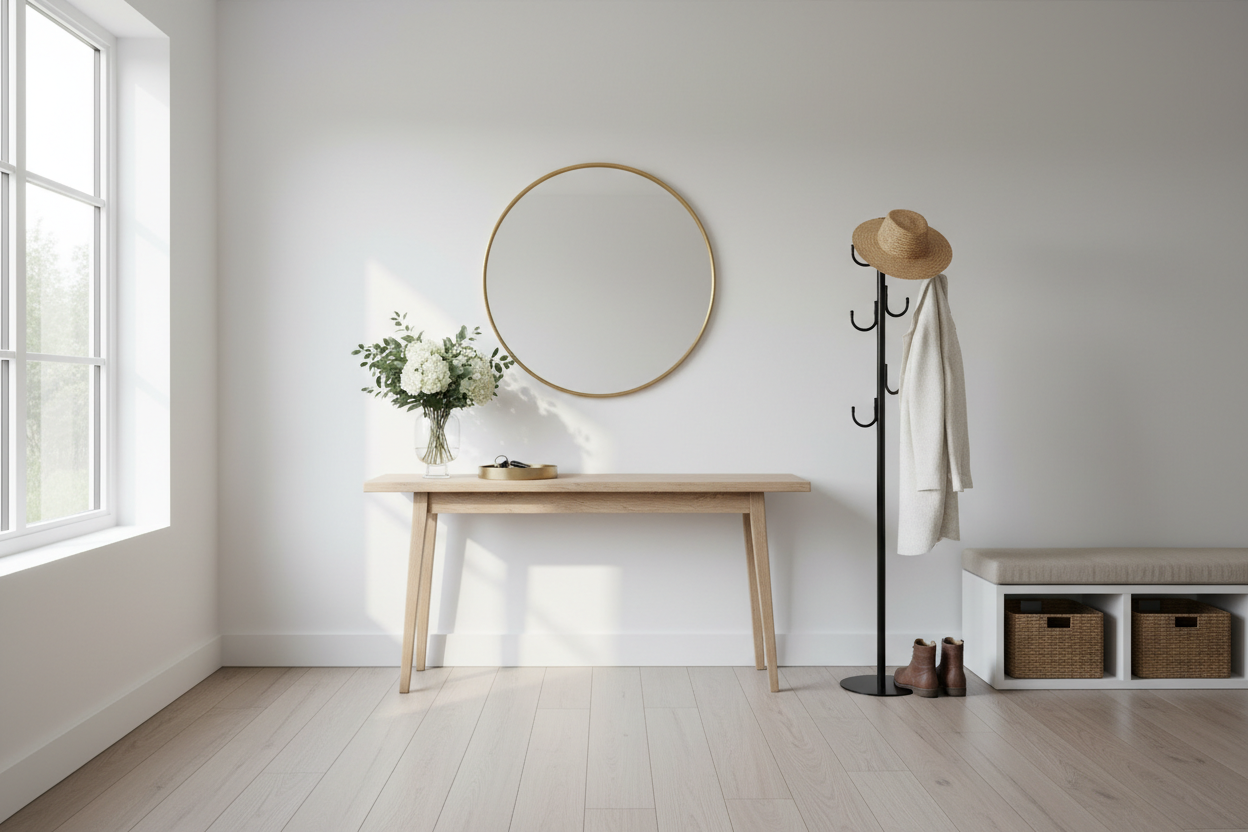
Your home’s entrance sets the emotional tone for the rest of the house. It is the transition point between the chaotic outside world and your personal sanctuary. Yet, this space is often the most neglected, becoming a dumping ground for shoes, mail, and miscellaneous gear rather than a welcoming introduction. Selecting the right entryway hallway furniture is not just about aesthetics; it is a strategic move to reclaim your sanity and square footage.
I learned this lesson the hard way in my first narrow townhome. For years, I treated the front hall as a pass-through rather than a room. The result was a constant pile of coats on the banister and a daily panic to find car keys buried under junk mail. It wasn’t until I invested in a proper console and a slim shoe cabinet that the space actually began to function. That simple change didn't just clean up the floor; it streamlined my entire morning routine. The right pieces create a system that forces organization without you having to think about it.
Assessing Your Space and Needs
Before buying a single item, you must honestly evaluate the physical limitations of your foyer. Furniture for entryway hallway spaces must respect traffic flow. A good rule of thumb is to maintain at least 36 inches of walking clearance. If your entry is tight, you cannot opt for deep dressers or wide benches. You need vertical solutions.
Consider what actually lands in this area. If you have kids, you need heavy-duty hallway and entryway furniture that can withstand backpacks and muddy boots. If you live alone in a minimalist apartment, a floating shelf and a statement mirror might suffice. The goal is to match the furniture to the lifestyle, not just a magazine picture.
The Essential Entrance Stand
For many homes, the anchor of the foyer is the entrance stand or console table. This piece serves as the designated landing pad. It provides a surface for a lamp, a tray for keys, and perhaps a drawer for hiding unsightly items like dog leashes or sunglasses. When space is at a premium, look for open-bottom stands. These allow you to tuck baskets underneath or keep the visual weight light, making the hall feel larger than it is.
Merging Function with Style
Hall entryway furniture has to work harder than pieces in your living room because it sees high traffic and harsh elements. Durability is key. However, durability does not mean you have to sacrifice beauty. This is the first thing guests see, so it should reflect your personality.
If you are dealing with a long, narrow corridor, front hallway furniture should be shallow. A depth of 10 to 12 inches is often ideal for these tight spots. Shoe cabinets with tilt-out drawers are fantastic here because they hide the clutter completely while protruding very little from the wall. Pairing a slim cabinet with a large mirror above it bounces light around, instantly brightening what might otherwise be a dark tunnel.
Mastering Organization
The primary enemy of a peaceful entry is clutter. Hallway organization furniture is designed specifically to combat this. Hall trees are excellent all-in-one solutions, offering hooks for coats, a bench for sitting, and storage underneath. If a hall tree feels too bulky, you can create a built-in look by mounting a row of high-quality hooks above a storage bench. This separates the functions but keeps the utility high.
Don't forget the small stuff. A beautiful bowl on a table catches loose change, while a dedicated mail sorter prevents paper pile-ups. These micro-organization tools are just as important as the larger furniture pieces in keeping the area tidy.
Elevating the Aesthetic
For those with a distinct architectural entry or a double-door foyer, you might be looking for vestibule furniture. A vestibule acts as an airlock or a formal prelude to the home. In these spaces, functionality often takes a backseat to drama. A round center table creates a stunning focal point, forcing traffic to flow around it and slowing the pace of entry. This is a classic design trick used to signal a transition into a grander space.
If your budget allows and you want to make a statement, high end entryway furniture can transform the vibe of the entire house. Look for materials like solid walnut, marble tops, or hand-forged metal bases. Luxury in the entryway isn't just about the price tag; it's about craftsmanship. A solid wood bench with intricate joinery or a console table with a unique stone top tells guests that you value quality and detail immediately upon arrival.
Lighting and Finishing Touches
Furniture does not exist in a vacuum. The way you light your hall entryway furniture changes how it is perceived. A table lamp on a console adds a warm, welcoming glow that overhead lighting simply cannot replicate. If you lack floor space for a lamp, wall sconces flanking a mirror can frame your furniture beautifully.
Rugs also play a pivotal role. They define the zone. Ensure your rug is durable—wool or indoor/outdoor polypropylene are smart choices—and that it extends beyond the furniture slightly to ground the arrangement. A runner rug draws the eye down the hall, elongating the space and guiding guests into the heart of the home.
Common Mistakes to Avoid
One frequent error is overcrowding. It is tempting to fill every corner, but negative space allows the eye to rest. If you have a large cabinet, balance it with an open wall or a simple piece of art on the opposite side. Another mistake is ignoring the scale. A tiny table in a grand foyer looks lost, while a massive armoire in a small hall feels oppressive.
Ultimately, the best entryway is one that serves you. Whether you need a rugged mudroom setup or a sleek, gallery-like entrance, the furniture you choose should facilitate a smooth departure in the morning and a relaxing return in the evening.
Frequently Asked Questions
How do I choose furniture for a very narrow hallway?
Focus on vertical space and shallow depth. Wall-mounted floating consoles, slim shoe cabinets (under 10 inches deep), and rows of hooks allow for storage without encroaching on the walking path. Mirrors are also essential to create the illusion of width.
What is the difference between a foyer and a vestibule?
A foyer is generally an open area inside the front door that connects directly to other rooms, while a vestibule is a small, enclosed room or passage between the outer door and the interior of the house. Vestibules often serve as a temperature buffer and require smaller, specific furniture pieces.
How tall should an entryway console table be?
Standard console tables range from 30 to 36 inches in height. For the most comfortable look and function, the table should be roughly level with the back of a sofa or slightly higher than a dining table, allowing you to easily drop keys or mail without stooping.


Leave a comment
This site is protected by hCaptcha and the hCaptcha Privacy Policy and Terms of Service apply.