










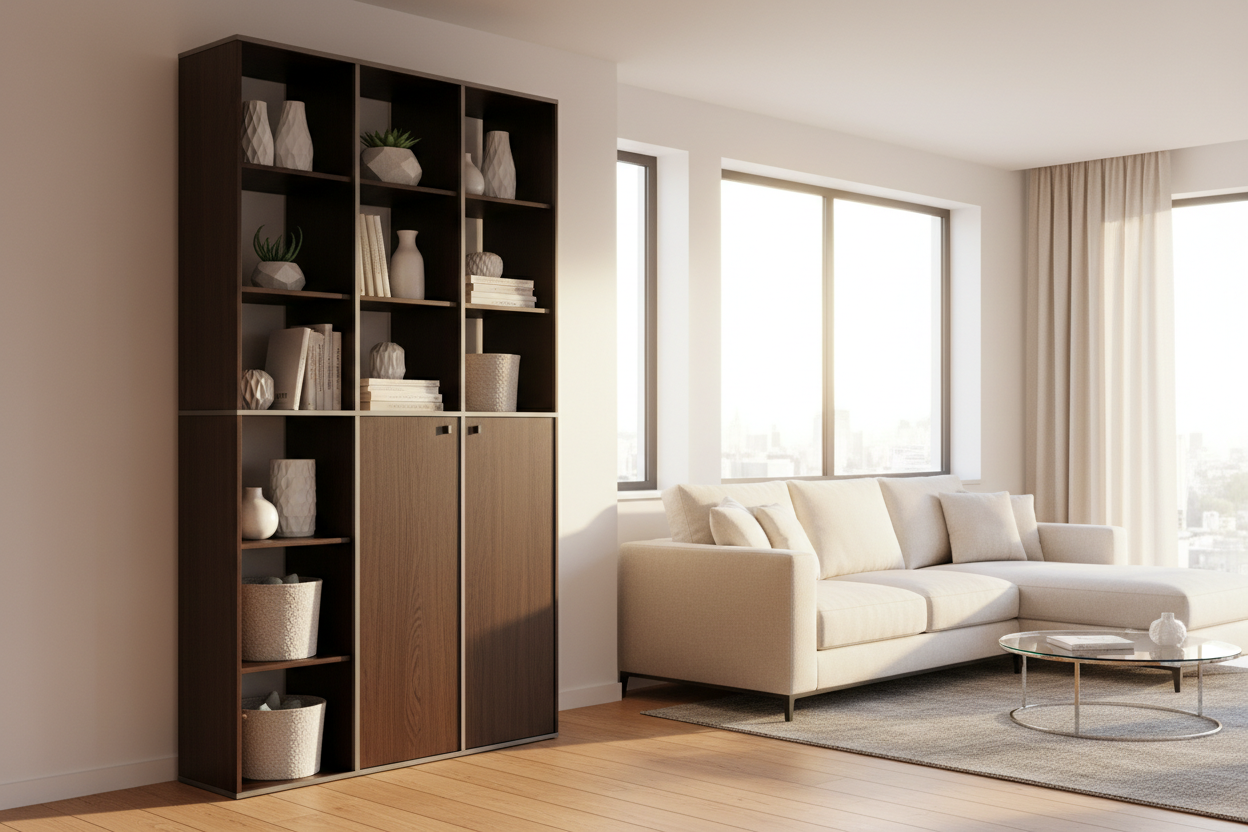
Most homeowners stare at a cluttered room and assume the problem is a lack of square footage. In reality, the issue usually isn't the size of the room, but how the space is utilized. We tend to arrange furniture horizontally, filling up the floor while leaving the top half of the room completely empty. A vertical storage cabinet with doors is the most efficient way to reclaim that wasted air space, turning a chaotic pile of belongings into a streamlined, organized system without sacrificing your walkway.
By moving storage upward rather than outward, you dramatically reduce the cabinet's footprint. This is essential for tight spaces like apartments, laundry rooms, or single-car garages. Beyond just saving space, the addition of doors provides a visual calm that open shelving simply cannot match. It allows you to hide the visual noise of mismatched supplies, linens, or tools, instantly making a room feel cleaner and larger.
The Real-World Impact of Going Vertical
I learned the value of vertical storage the hard way. A few years ago, my home office doubled as a guest room and a storage unit for photography gear. I initially bought low, wide bookshelves. While they held a lot of items, they ate up so much floor space that the room felt claustrophobic. Dust was a constant battle, settling on lenses and paperwork every week.
I eventually swapped those low units for a tall, steel vertical cabinet with doors. The difference was immediate. I gained about twelve square feet of floor space, which made the room breathable again. More importantly, the doors protected my equipment from dust and sunlight. Being able to close the doors on the clutter at the end of the workday also had a surprising psychological benefit; it signaled that work was done, and the room could go back to being a living space. If you are struggling with a multipurpose room, prioritizing height over width is the single best change you can make.
Material Matters: Metal, Wood, or Plastic?
Selecting the right material depends entirely on where you plan to place the unit and what you intend to store. A vertical storage cabinet with doors is only as good as its structural integrity, so matching the build quality to the environment is key.
Steel and Metal Cabinets
If you are organizing a garage, basement, or workshop, steel is the superior choice. These environments often experience temperature fluctuations and humidity that can warp wood. Metal cabinets offer high weight capacities per shelf, often exceeding 100 pounds, making them ideal for heavy tools, paint cans, and automotive fluids. Look for powder-coated finishes to prevent rust, especially if the cabinet will sit on a concrete floor that might get damp.
Wood and Composite
For interior spaces like kitchens, pantries, or bedrooms, wood (or engineered wood) is the standard. It offers a warmer aesthetic that blends with existing furniture. However, be wary of cheap particle board if you plan to store heavy items like canned goods or textbooks. Solid wood or high-grade MDF with a reinforced back panel will prevent the dreaded "leaning" that happens to cheaper tall cabinets over time.
Resin and Plastic
Resin is the unsung hero of outdoor storage and damp basements. While they may look less premium, high-density polyethylene cabinets are impervious to rot, rust, and termites. They are lightweight, making them easy to move, but they generally have lower weight limits per shelf compared to steel. These are perfect for gardening supplies or pool chemicals.
Key Features to Look For
Not all tall cabinets are created equal. When shopping for a vertical cabinet with doors, specific features can make the difference between a functional storage solution and a frustrating piece of furniture.
Adjustable shelving is the most critical feature. Fixed shelves force you to waste space if your items don't fit perfectly. Being able to move a shelf up or down by an inch allows you to stack items efficiently, maximizing the internal volume of the cabinet. If you are storing tall items like brooms, vacuum cleaners, or ironing boards, look for a cabinet that includes a tall, open vertical section alongside the shelving.
Hinges also play a major role in durability. European-style hidden hinges allow for adjustment if the doors start to sag or stick over time—a common issue with tall doors. For garage or utility use, magnetic catches or locking mechanisms are useful to keep doors securely shut, especially if the floor is slightly uneven.
Safety and Anchoring
Height brings a specific risk: tipping. Because a vertical storage cabinet with doors has a high center of gravity, especially when loaded with items on the top shelves, it is unstable if not secured. This is not optional.
You must anchor tall cabinets to the wall studs. Most reputable manufacturers include a wall-anchoring kit, but these are often flimsy nylon straps. Upgrading to metal L-brackets or furniture straps provides better security. If you have children or pets, or if you live in a seismic zone, anchoring is the first step of installation, not an afterthought. Furthermore, always load the heaviest items on the bottom shelves to lower the center of gravity and improve stability.
Optimizing the Interior Layout
Once you have your cabinet installed, the way you organize the interior determines its efficiency. Deep vertical cabinets can become "black holes" where items get lost in the back. To combat this, use clear bins that act as drawers. Pulling out a bin is much easier than reaching into a dark shelf to find a specific screw or spice jar.
Door-mounted storage is another way to utilize every inch. Adding shallow racks or hooks to the inside of the cabinet doors can provide a home for small items like measuring cups, wrenches, or cleaning rags. This keeps small clutter off the main shelves, leaving that space free for bulkier items.
Ultimately, investing in a high-quality vertical cabinet allows you to reclaim your home from clutter. By thinking vertically, you protect your belongings, improve your home's aesthetics, and create a more functional living environment.
Frequently Asked Questions
How much weight can a standard vertical cabinet hold?
This varies significantly by material. Standard particle board cabinets typically hold 25-35 pounds per shelf, while heavy-duty steel garage cabinets can often support 100 to 200 pounds per shelf. Always check the manufacturer's load rating before storing heavy items like canned goods or tools.
Do I really need to anchor a tall cabinet if I don't have kids?
Yes, anchoring is recommended for everyone. Uneven loading, thick carpet, or accidentally bumping into the unit while the doors are open can cause a tall cabinet to tip over. Anchoring to a stud takes only a few minutes and prevents costly damage to your belongings and the cabinet itself.
Can I use an indoor wood cabinet in a garage?
It is generally not recommended. Garages experience wide temperature swings and humidity changes that can cause wood and particle board to warp, peel, or grow mold. For uninsulated spaces like garages or sheds, stick to metal or resin cabinets designed to withstand the elements.

Leave a comment
This site is protected by hCaptcha and the hCaptcha Privacy Policy and Terms of Service apply.