










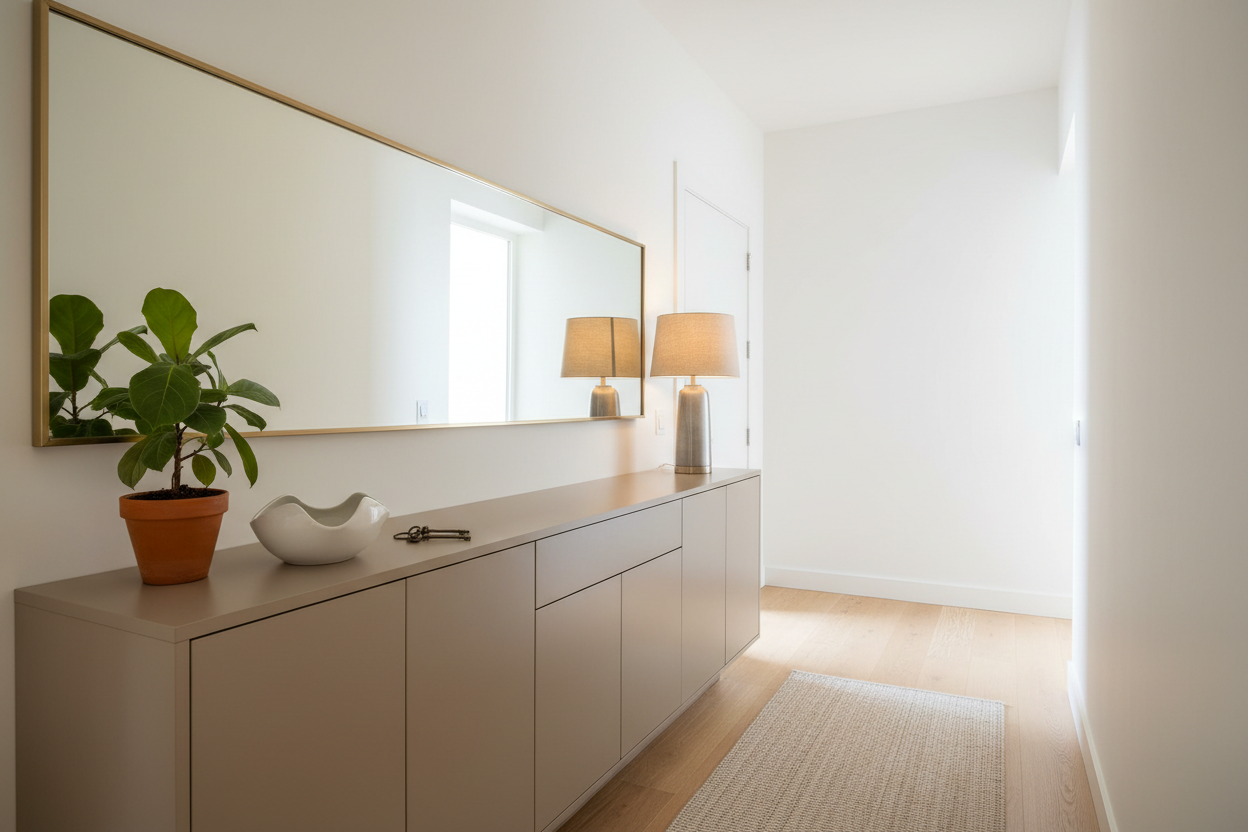
The front door is the most hardworking area of any home, yet it often gets the least amount of design attention. It’s the drop zone for mail, the graveyard for kicked-off shoes, and the final checkpoint before you face the world. A well-chosen storage unit combined with a reflective surface isn't just furniture; it is a sanity saver. By integrating storage with a mirror, you solve two massive problems simultaneously: clutter control and light management. This combination anchors the space, giving your eye a place to land while keeping your keys, sunglasses, and dog leashes from migrating to the kitchen counter.
Choosing the right piece requires balancing the dimensions of your corridor with your actual storage needs. A bulky unit in a tight space creates a bottleneck, while something too small looks lost. The goal is to find a piece that feels intentional, creating a seamless transition from the outdoors to your sanctuary.
The Reality of Narrow Spaces
I learned the value of vertical integration the hard way. In my second apartment, the "foyer" was essentially a dark, three-foot-wide tunnel. For months, I tried to make a standard console table work, but I was constantly bumping my hip against the sharp corners, and the lack of light made the space feel oppressive. I eventually swapped it for a shallow, tilt-out hall cabinet with mirror mounted directly above it. The difference was immediate. The mirror bounced the little natural light from the living room back into the hall, effectively doubling the visual width of the space, while the cabinet hid the pile of shoes that used to trip me up every evening. It transformed a source of daily frustration into a functional vignette.
Functionality Meets Form
When shopping for a hallway cabinet with mirror, depth is your most critical metric. Standard dressers are often 18 to 20 inches deep, which is far too intrusive for most corridors. You should look for "slimline" or "shallow depth" pieces, typically ranging from 10 to 14 inches. If floor space is at an absolute premium, a floating cabinet is a brilliant workaround. By keeping the floor visible beneath the unit, you trick the brain into thinking the room is larger than it is.
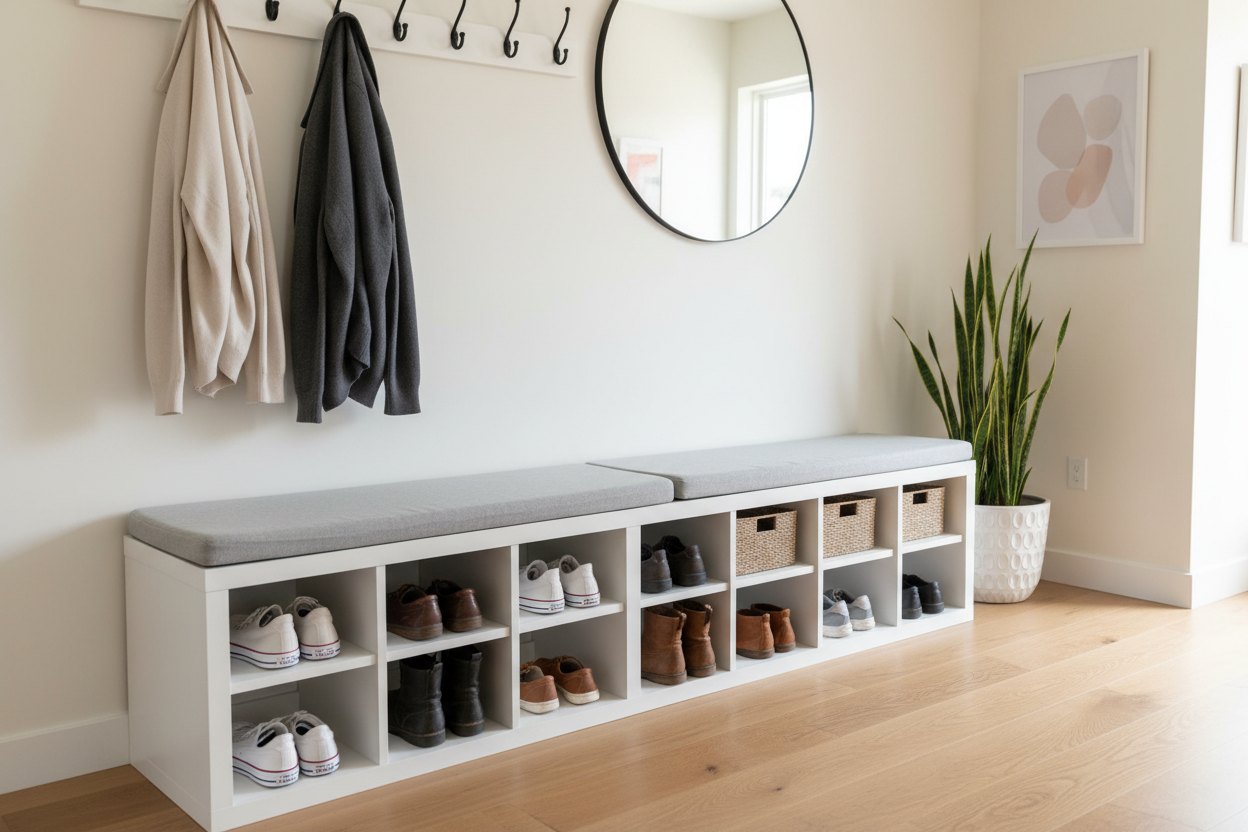
Consider what you actually drop at the door. If you are drowning in footwear, a tilt-out shoe cabinet is superior to open shelving, as it hides the visual noise of mismatched sneakers. If your primary clutter consists of paper mail and keys, a console with shallow drawers is more effective. The mirror isn't just for checking your teeth; it needs to be scaled to the cabinet. A general rule of thumb is that the mirror should not be wider than the cabinet beneath it. Ideally, it should be about two-thirds to three-quarters the width of the furniture to create a balanced, grounded look.
Lighting and Ambience
A hallway mirror cabinet does heavy lifting when it comes to illumination. Hallways rarely have windows, relying on overhead fixtures that can cast unflattering shadows. By positioning your cabinet and mirror strategically, you can manipulate the light. If possible, place the unit so it reflects a light source—either a window from an adjacent room or a beautiful pendant light. This reflection acts as a secondary light source, brightening the dark corners.
Don't rely solely on the ceiling light. Adding a small table lamp to the cabinet or installing wall sconces on either side of the mirror creates layers of light. This turns a utilitarian pass-through into a warm, inviting welcome. If you are renting and can't hardwire sconces, rechargeable battery-operated ones are a fantastic alternative that elevates the look without damaging the drywall.
Styling Your Entryway Vignette
Once you have your entryway cabinet with mirror in place, the challenge becomes styling it without re-cluttering the surface you just cleared. The surface of the cabinet is prime real estate, but it is easy to overfill. Use the "rule of three" for accessories. For example, you might group a tall vase with greenery, a decorative bowl for keys, and a small stack of books or a sculptural object.
The bowl or tray is non-negotiable. Without a designated vessel, keys and coins will spread across the entire surface like water. Containing them in a beautiful ceramic bowl or a leather tray keeps the look intentional. Additionally, consider the reflection. What does the mirror see? If it reflects the bathroom door or a messy coat rack, you might want to adjust the angle or what is on the opposite wall. Ideally, it should reflect artwork or an open space.
Material Selection and Durability
High-traffic areas take a beating. Purses get dropped, keys get tossed, and wet umbrellas lean against furniture. When selecting a hall cabinet with mirror, prioritize durable materials for the top surface. Solid wood, stone, or metal tops hold up better than painted MDF, which can chip over time. If you fall in love with a painted piece, consider having a piece of glass cut to fit the top. This invisible shield protects the finish from scratches and water rings, ensuring the piece looks pristine for years.
Installation and Safety
Safety is often overlooked in the excitement of decorating. These units, especially narrow ones, can be top-heavy. Once you load the drawers and hang a heavy mirror above, the center of gravity shifts. It is absolutely vital to anchor the cabinet to the wall, even if it feels stable. Most units come with anti-tip kits; use them. For the mirror, ensure you are hanging it on a stud or using heavy-duty drywall anchors. A mirror crashing down in a narrow hallway is a dangerous scenario you want to avoid entirely.
Creating a functional entry is about respecting the constraints of the building while maximizing utility. It doesn't require a grand foyer, just smart furniture choices that work double-time.
Frequently Asked Questions
How high should I hang the mirror above the cabinet?
A gap of 6 to 8 inches between the top of the cabinet and the bottom of the mirror is generally aesthetically pleasing. This connects the two items visually so they feel like a single unit rather than two disjointed pieces floating on the wall.
Can I mix and match a cabinet and mirror, or should I buy a set?
Mixing is often better for a custom, high-end look. Buying a set can sometimes look a bit generic or "catalog." Try pairing a vintage wooden cabinet with a modern metal-framed mirror to add character and contrast to your entryway.
What is the minimum hallway width required for a cabinet?
You need to maintain at least 36 inches of walking path for a comfortable flow. If your hallway is 48 inches wide, your cabinet should be no deeper than 12 inches to prevent the space from feeling cramped and to allow easy passage.

Leave a comment
This site is protected by hCaptcha and the hCaptcha Privacy Policy and Terms of Service apply.