










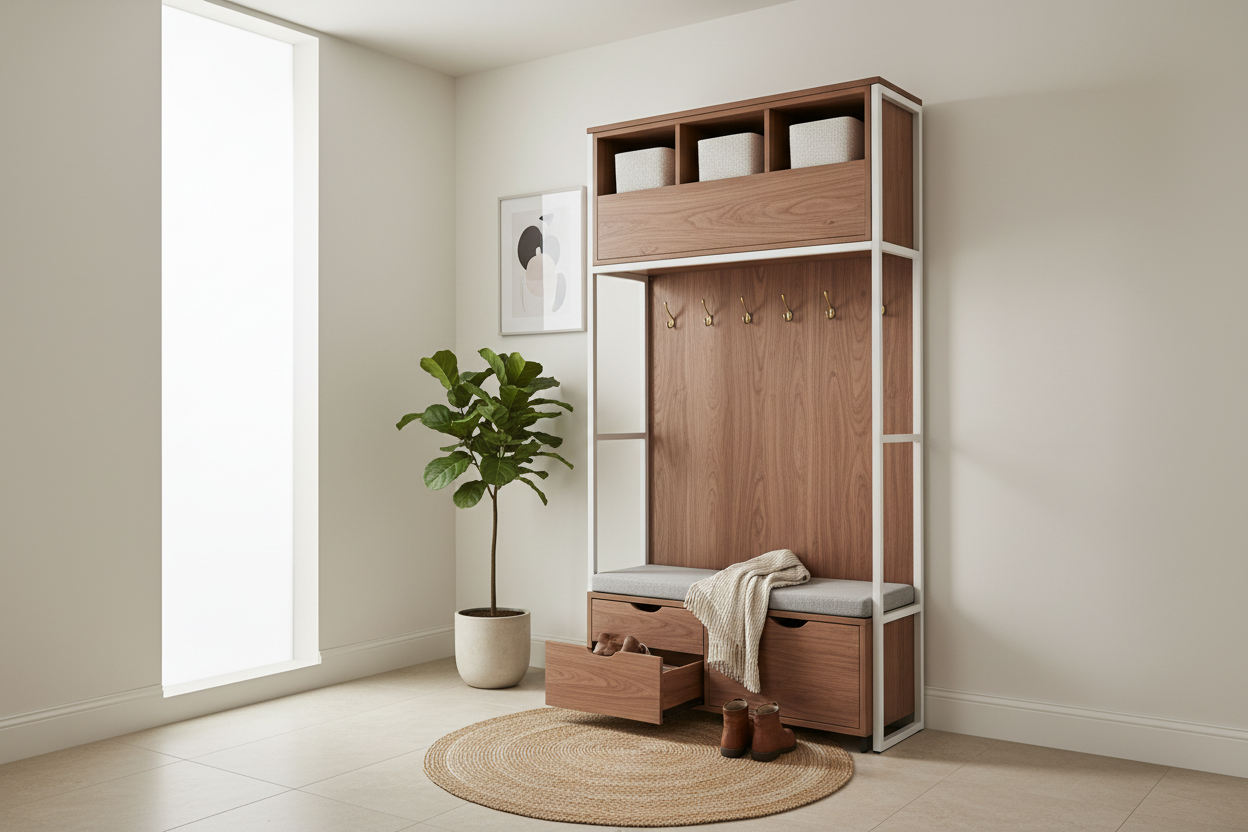
Most people treat their entryway as an afterthought, tossing down a generic rug and perhaps a flimsy shoe rack before moving on to decorate the living room. This is a mistake. Your foyer sets the tone for the entire home, and functionally, it is the highest-traffic zone you possess. If you are struggling with clutter or find standard furniture uncomfortable, the solution often lies in changing your vertical perspective. A tall entryway bench is not just a piece of furniture; it is a strategic tool for reclaiming space and improving accessibility.
When we talk about a "tall" bench, we generally refer to two distinct categories. The first is a bench with a higher-than-average seat height—typically 20 to 24 inches—designed for taller individuals or those with mobility issues who find sinking into a standard 18-inch seat difficult. The second, and more common interpretation, is a unit that extends vertically, often called a hall tree. This is a tall entryway bench with storage that utilizes the wall space above the seat for hooks, shelves, and cubbies. Regardless of which type you need, the goal is to stop thinking horizontally and start utilizing the air rights in your hallway.
The Ergonomics of Seating Height
I learned the value of seat height the hard way. A few years ago, my father, who has bad knees, came to visit. watching him struggle to get up from the trendy, low-profile mid-century bench I had in the hallway was painful. It looked sleek, but it was practically useless for anyone who wasn't nimble. That weekend, I realized that furniture needs to serve the people using it, not just a design aesthetic.
Standard dining chairs and benches usually sit at about 17 to 19 inches off the ground. For a person over six feet tall, or someone recovering from hip surgery, that distance can feel like falling into a hole. A bench with a higher clearance allows you to sit and tie your shoes without your knees rising above your hips. This ergonomic position provides better leverage when standing up. If you are shopping specifically for a high-seat bench, look for description keywords like "counter height" or check the specific dimensions in the product details. Adding a thick, firm cushion to a standard bench is another hack to gain those crucial extra two or three inches.
Maximizing Storage with Vertical Design
If your primary struggle is clutter rather than knee pain, a tall entryway bench with storage is the ultimate organizer. In narrow hallways or mudrooms, floor space is premium real estate. You cannot afford to have shoes, backpacks, and coats sprawling outward. You need them to go upward.
A unit that combines a bench with a high backboard and upper shelving—often reaching 60 to 70 inches high—consolidates functionality. Instead of mounting a separate coat rack and buying a separate shoe cabinet, you get an all-in-one station. This centralization is vital for maintaining a clean visual line. When items are hung vertically on a dedicated structure, the room feels larger than if those same items were draped over a chair or piled in a corner.
Key Features to Look For
Not all storage benches are created equal. When evaluating a tall unit, pay close attention to the distribution of weight and storage types. The best designs feature a mix of open and closed compartments. Open hooks are essential for frequently used items like jackets and dog leashes, allowing for grab-and-go ease. However, you also want upper cubbies or a top shelf for items you use seasonally, such as winter hats or decorative baskets.
Lower storage is equally critical. A tall entryway bench with storage usually includes a compartment beneath the seat. Drop-front doors or sliding drawers are superior to open shelves here, as they hide the visual chaos of muddy sneakers or tangled laces. If the unit uses a flip-top seat, ensure the hinges are soft-close to prevent slammed fingers, especially if you have children.
Material Choices and Durability
Because this piece of furniture lives in the transition zone between the outdoors and your sanctuary, it takes a beating. Wet raincoats, muddy boots, and heavy school bags are daily occurrences. Particleboard with a laminate finish might look acceptable in photos, but it often swells and warps when exposed to moisture over time. Solid wood or metal-reinforced frames are far superior investments for this specific location.
For the seat itself, consider the cleaning requirements. An upholstered fabric seat on a tall bench adds a touch of luxury and comfort, but it is a magnet for stains. If you opt for upholstery, ensure it is a performance fabric or high-quality leather that can be wiped down. Alternatively, a solid wood seat that can be dressed up with washable throw pillows offers the best balance of durability and hygiene.
Measuring Your Space Correctly
Bringing a tall piece of furniture into a hallway requires precise measurements. The height is rarely the limiting factor unless you have unusually low ceilings or angled stairwells. The depth and width are where most homeowners miscalculate. A tall entryway bench with storage can feel imposing if it is too deep. In a narrow corridor, you need at least 36 inches of clearance in front of the bench to walk past comfortably without feeling squeezed.
Don't forget to account for baseboards and light switches. A tall hall tree needs to sit flush against the wall for stability. If your baseboards are thick, you might need a unit with legs that clear them, or you may need to anchor the top of the unit to the wall to prevent tipping. Covering up a light switch or a thermostat with the high back of the bench is a common installation headache, so map out the wall space with painter's tape before clicking "buy."
Styling Your Vertical Foyer Piece
A large, tall piece of furniture can dominate a room if you aren't careful. To keep it from looking like a locker room, integrate it into your decor. Use the top shelves for greenery—trailing plants like pothos look excellent cascading down from the top of a hall tree, softening the rigid lines of the wood or metal.
Lighting also plays a huge role. Because these benches are tall, they can cast shadows. Positioning a sconce nearby or ensuring your overhead lighting is adequate will keep the nook inviting. If the bench has a dark finish, use light-colored baskets in the cubbies and bright throw pillows to break up the visual mass. This turns a purely functional storage unit into a design feature that welcomes you home.
FAQ
What is the ideal depth for an entryway bench?
For most hallways, a depth of 15 to 18 inches is ideal. This provides enough surface area to sit comfortably without protruding too far into the walking path. If you have a very narrow foyer, look for "slim" models that are 12 to 14 inches deep.
Do tall entryway benches need to be anchored to the wall?
Yes, specifically if the unit is a tall hall tree style with storage. Because these units are tall and narrow, they can become top-heavy when coats are hung on the upper hooks. Anchoring them ensures safety, particularly in homes with children or pets.
Can I adjust the height of an existing bench?
You can increase the height of a standard bench by replacing the legs with taller aftermarket options, provided the legs are screw-in types. Alternatively, adding a high-density foam cushion (3-4 inches thick) is a simpler way to add height for better sitting ergonomics.


Leave a comment
This site is protected by hCaptcha and the hCaptcha Privacy Policy and Terms of Service apply.