










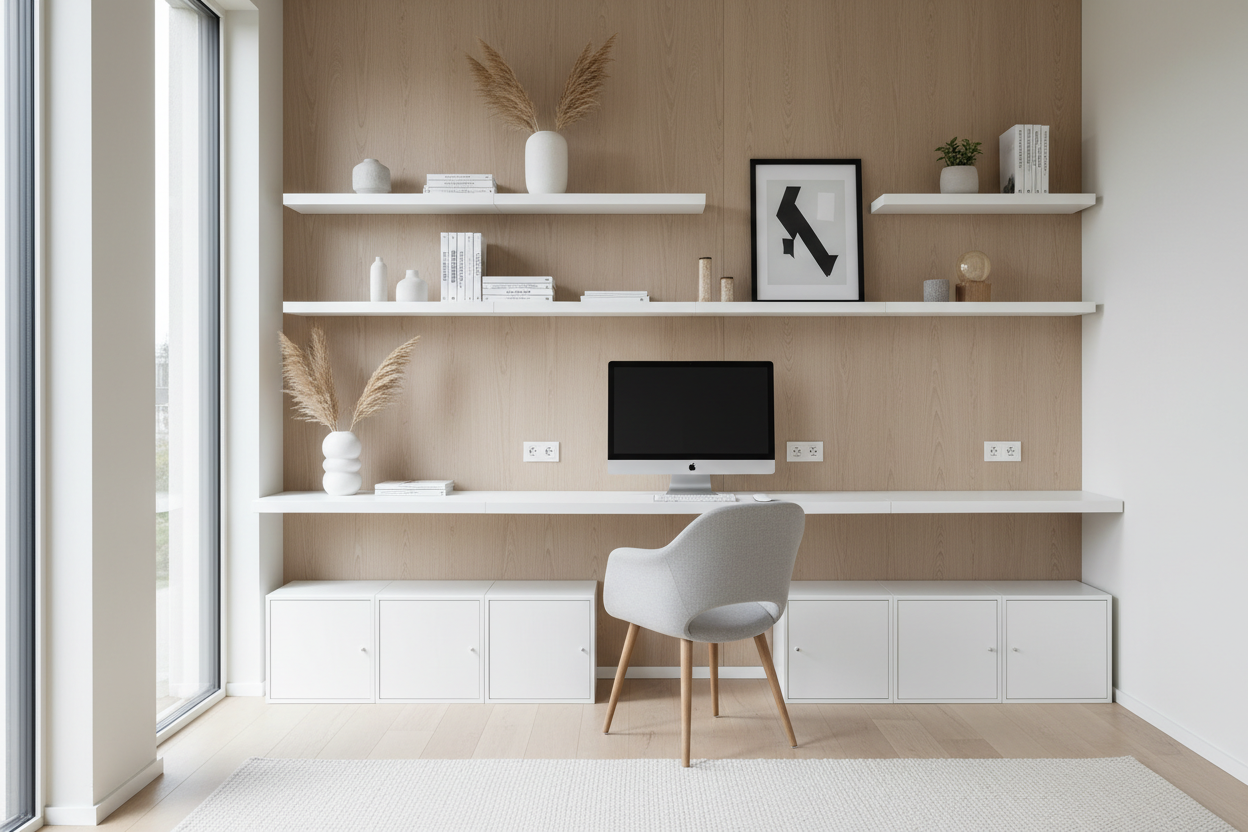
Floor space is the ultimate luxury in modern interior design. When square footage is tight, or you simply want a lighter visual footprint, the standard four-legged table often feels cumbersome. This is where the verticality of an ikea wall shelf desk changes the architectural dialogue of a room. It is not just about saving space; it is about creating a cantilevered, floating aesthetic that feels curated rather than cluttered. However, selecting the right components requires looking past the showroom vignette and understanding structural integrity and material limitations.
Key Features to Look For
- System Modularity: Determine if you need a standalone shelf (like LACK) or a track system (like BOAXEL or IVAR) that allows for height adjustments.
- Work Surface Depth: A functional desk requires a minimum depth of 23-24 inches for laptop use; standard 11-inch shelves are insufficient for ergonomics.
- Material Core: Distinguish between hollow-core (honeycomb paper fill) and solid wood or metal, as this dictates monitor arm compatibility.
- Wall Anchoring: The wall type (drywall, masonry, stud placement) dictates the weight capacity more than the shelf itself.
Selecting the Right System for Your Aesthetic
IKEA offers several ecosystems, and mixing them up is a common novice mistake. Your choice should depend on the texture you want to introduce to the room.
The Industrial Utility of BOAXEL
For a utilitarian, clean look, the metal construction of the BOAXEL system is superior. It offers excellent durability against scratches and heat. When designing an ikea wall-mounted desk and shelves configuration with this system, the key is to soften the clinical white metal. I often pair this with warm ambient lighting or cork elements to prevent the setup from looking like a hospital station.
The Organic Warmth of IVAR
If your goal is a 'Japandi' or Scandinavian look, the solid pine IVAR system is the gold standard. Unlike veneer options, this allows you to sand, stain, or seal the wood to match existing millwork. It brings a tactile, high-end feel that laminate simply cannot replicate.
Ergonomics and Visual Balance
The beauty of a wall-mounted unit is the ability to customize height, but this often leads to installation errors. Standard desk height is 29 to 30 inches. Installing your ikea wall shelves desk even two inches too high can wreak havoc on your shoulder alignment.
Visually, you must respect negative space. A common error I see is filling every inch of the vertical rails with shelving. To achieve a designer look, leave at least 18 inches of clearance above the desk surface before the next shelf. This allows for 'breathing room' and accommodates larger monitors without the setup feeling claustrophobic.
My Personal Take on ikea wall shelf desk
I have installed dozens of these systems for clients ranging from studio apartments to expansive home libraries, and there is one specific detail the instructions won't tell you: cable management is your biggest enemy.
I remember a project in a pre-war Brooklyn apartment where we used a floating EKBY ALEX shelf as a vanity/desk. It looked stunning until we plugged in a lamp and a laptop. Because there are no legs to hide cords behind, the wires dangled against the wall, ruining the floating illusion immediately.
My hard-learned lesson? Do not rely on adhesive clips alone; they peel off IKEA's particleboard finishes eventually. Now, I mount a slim power strip directly to the underside of the desk shelf using heavy-duty velcro or screws. I also use paintable cord covers running vertically down the wall, painted the exact same color as the drywall. It turns a messy eyesore into an architectural shadow line.
Conclusion
Integrating a wall-mounted workspace is a commitment to minimalism and discipline. It forces you to curate what stays on your desk. By choosing the right material core and respecting the ergonomics of installation, you can elevate a budget-friendly IKEA find into a bespoke architectural feature.
Frequently Asked Questions
Can I use a monitor arm on an IKEA wall shelf desk?
It depends on the material. Solid wood shelves (like HEMNES or IVAR) can support a clamp-style monitor arm. However, hollow-core shelves (like LACK or BERGSHULT) will crush under the pressure of the clamp. For hollow shelves, wall-mounting the monitor separately is the safer choice.
How much weight can these desks actually hold?
The shelf rating usually sits between 30 to 50 lbs, but the real variable is your wall anchors. If you drill directly into studs, the capacity increases significantly. Never rely on drywall toggles alone for a surface you plan to lean on.
What is the best depth for a wall-mounted desk?
Aim for a depth of at least 23 inches (approx. 60 cm). Anything shallower than 20 inches will force you to sit too close to your screen and leave no room for a keyboard and mouse pad.

Leave a comment
This site is protected by hCaptcha and the hCaptcha Privacy Policy and Terms of Service apply.