










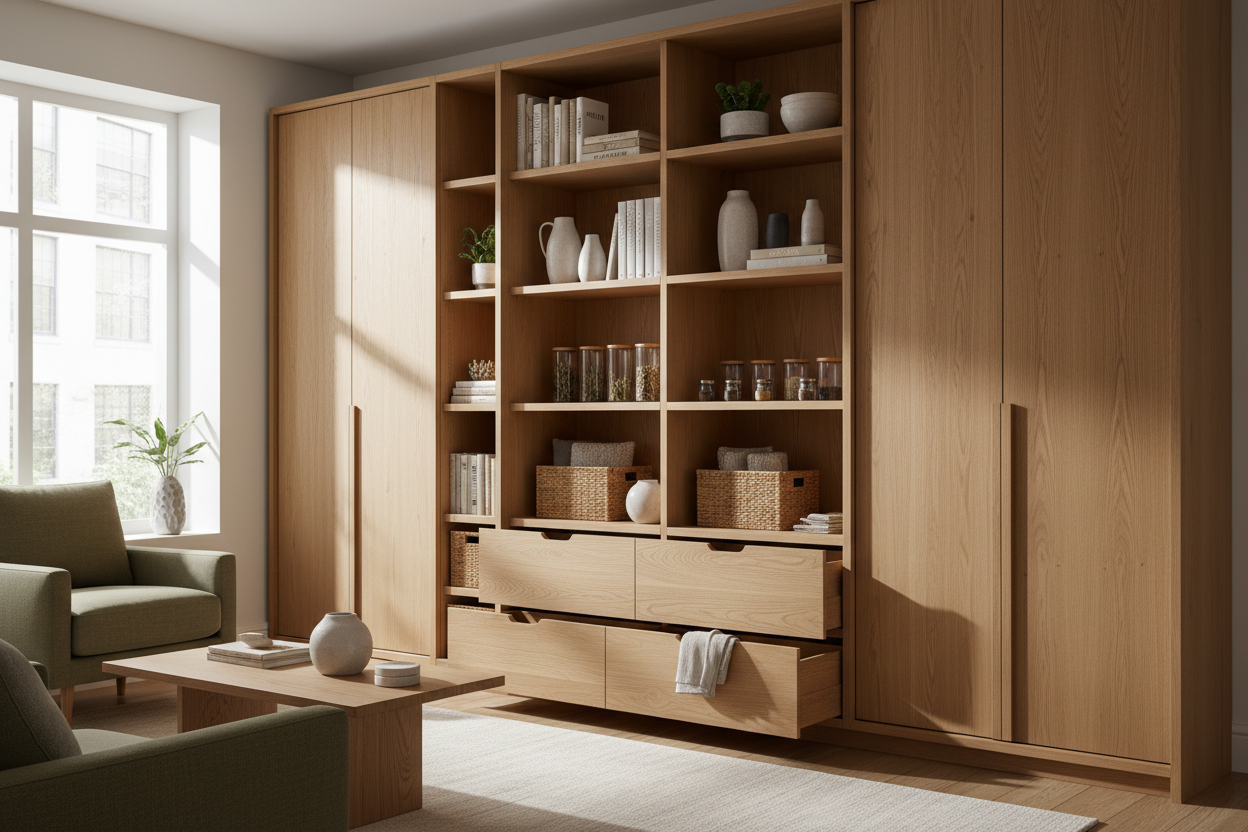
Clutter has a way of creeping into our lives, turning peaceful homes into obstacle courses. Whether it is a pile of board games in the den or power tools scattering across the garage floor, the solution usually involves finding a place to put it all away. While plastic bins and metal racks have their place, they often lack the warmth and structural integrity of wood. Choosing the right cabinetry isn't just about hiding a mess; it is about investing in furniture that protects your belongings while actually looking good in your space.
Wood offers a versatility that synthetic materials struggle to match. It breathes, it endures, and it can carry significant weight without buckling. If you are tired of replacing brittle plastic containers or wobbly metal shelves, upgrading to solid or engineered wood storage is the logical next step. Let’s look at how to select the right units for different parts of your home and what to watch out for regarding materials and construction.
Elevating Your Main Living Areas
The living room is the trickiest place to organize because function cannot completely override form. You can't just throw an industrial locker next to a plush sofa and hope for the best. When shopping for wood storage cabinets for living room spaces, the finish and hardware matter as much as the internal capacity. You want pieces that complement your coffee table or media console, perhaps in oak, walnut, or a painted finish that matches your trim.
We often accumulate items here that we want accessible but invisible—blankets, electronics, or a surplus of books. Wooden storage units with doors are essential here. They provide a visual barrier that instantly calms a room. Open shelving is great for display, but doors are the secret to a tidy appearance. A sideboard or a tall armoire can swallow a surprising amount of clutter while serving as a beautiful focal point. Look for units with adjustable shelving inside so you can customize the space for tall vases or stacks of vinyl records.
The Heavy Lifters: Utility and Garage Storage
Step into the garage, mudroom, or pantry, and the priorities shift. Here, durability is king. Wood utility storage cabinets need to withstand temperature fluctuations, humidity, and the occasional bang from a wayward broom handle. While solid hardwood might be overkill for a laundry room, you should be wary of low-grade particle board that swells the moment it touches water.
For these rugged environments, plywood storage cupboards are often the superior choice. Plywood offers immense structural stability and resists warping better than solid wood in variable temperatures. It holds screws tightly and can support heavy cans of paint or automotive fluids without sagging. If you have specific cleaning needs, looking for a dedicated wood janitorial cabinet can be a game changer. These tall, narrow units are specifically designed with a vertical void on one side to house mops, brooms, and vacuums, while the other side features shelves for cleaning solutions and rags.
Maximizing Capacity with Large Units
Sometimes, a standard two-door cupboard just isn't enough. If you are consolidating a massive amount of gear—camping equipment, seasonal decor, or a large library—you need to look at large wood storage cabinets. The footprint of these units is significant, so measuring your floor space and ceiling height is non-negotiable before ordering.
A large wood storage cabinet with doors offers a wall-to-wall solution that can replace an entire closet. The benefit of going large is consolidation. Instead of three small chests cluttering a hallway, one massive unit creates a streamlined look. However, the interior configuration is critical. A large wooden cabinet with shelves needs center supports. Without a vertical divider or reinforced shelving, wide wooden shelves will eventually bow under their own weight, especially if you load them with books or heavy tools.
My Battle with the "Bargain" Rack
I learned the value of proper wood storage the hard way. A few years ago, I tried to organize my workshop using a set of cheap plastic shelving units I found on sale. They snapped together easily enough, but within a month, the summer heat in the garage softened the plastic. I came home one afternoon to find a shelf had collapsed, sending a jar of nails and a circular saw crashing onto the concrete. It was a disaster.
I decided to tear them out and replace them with wood storage units with doors that I reinforced myself. The difference was night and day. Not only could I trust the shelves to hold my heavy drills, but the doors also kept the sawdust off my tools. There is a specific satisfaction in closing a solid wood door and hearing a latch click shut that you just don't get with flimsy alternatives. It taught me that paying a little more upfront for materials like plywood or solid pine saves money—and sanity—in the long run.
Finding Value on a Budget
Furniture prices have skyrocketed, and not everyone has the budget for custom joinery. Fortunately, you can still find cheap wooden storage cabinets that are sturdy enough for everyday use if you know what to look for. The trick is to check the joinery and the back panel. Many budget cabinets rely on a thin piece of cardboard for the back, which provides zero structural support.
If you buy an affordable flat-pack unit, you can significantly improve its lifespan by adding a little wood glue to the dowels during assembly and perhaps nailing a thin sheet of plywood to the back instead of the provided cardboard. Pine is a great entry-level wood; it is softer than oak or maple but offers the look and feel of real timber at a fraction of the cost. Unfinished cabinets are another great avenue for savings. You can buy a raw unit and stain or paint it yourself, ensuring you get a high-quality piece without paying the premium for a factory finish.
Final Thoughts on Choosing Your Cabinet
Whether you are hunting for a sleek credenza for the hallway or a rugged locker for the workshop, the material dictates the lifespan. Wood brings a warmth and resilience that transforms storage from a necessity into a feature. By selecting the right type of wood for the environment—plywood for utility, hardwood for living spaces—you ensure your investment lasts.
Don't be afraid to go big with a large wood storage cabinet with doors if you have the space; the ability to hide everything away in one go is incredibly freeing. Measure twice, check the shelf weight ratings, and enjoy the peace of mind that comes with an organized home.
Frequently Asked Questions
How do I protect wood cabinets in a damp garage?
To protect wood in damp environments, ensure the cabinet is raised off the concrete floor using legs or a platform to prevent moisture absorption. Additionally, apply a water-resistant sealant or exterior-grade paint to seal the wood pores against humidity.
Is plywood or MDF better for heavy storage?
Plywood is generally superior for heavy storage because it is made of cross-laminated layers of wood veneer, providing high tensile strength and resistance to sagging. MDF is denser and heavier but tends to sag under heavy loads over time and is more susceptible to water damage.
Can I paint a laminate wood storage cabinet?
Yes, but preparation is key. You cannot paint directly over the slick laminate surface; you must sand it lightly to create a rough texture and use a high-quality bonding primer before applying your topcoat.

Leave a comment
This site is protected by hCaptcha and the hCaptcha Privacy Policy and Terms of Service apply.