










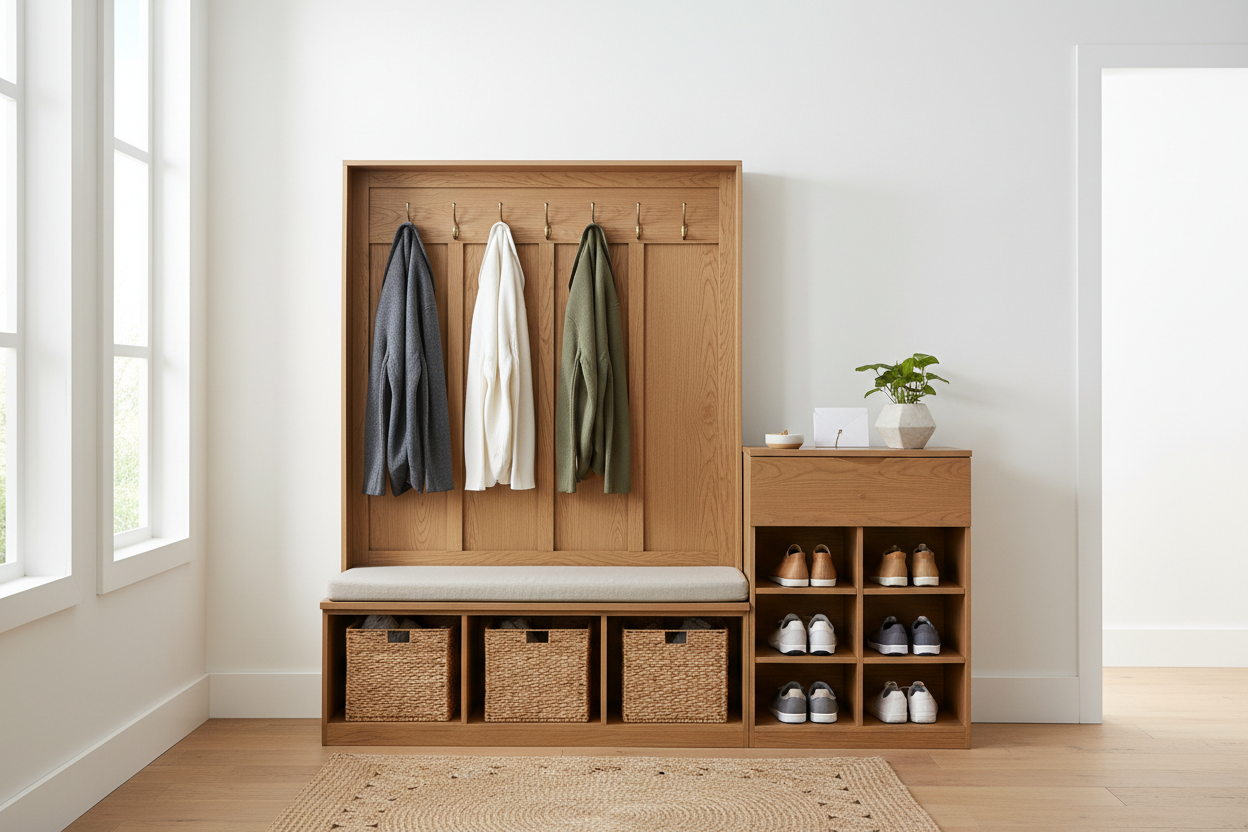
Walking through your front door should feel like a relief, not the beginning of an obstacle course. Yet, for many households, the entryway becomes a magnet for clutter. Shoes pile up, coats get draped over the nearest chair, and keys vanish into the abyss. The most effective solution isn't usually a total renovation of your mudroom; it is often a single, hardworking piece of furniture. An entryway cabinet with hooks serves as the command center for your home’s traffic, combining hidden storage with immediate accessibility.
This furniture piece effectively consolidates the mess. Instead of scattering items across the floor or a console table, a dedicated unit provides a specific zone for everything that enters or leaves the house. It anchors the space, providing visual weight and a clear designated "drop zone" that even the messiest family members can understand.
The Real Value of Vertical Storage
Floor space is premium real estate in most foyers and hallways. Relying solely on shoe racks or low benches ignores the most abundant resource you have: the walls. This is where the entryway hutch with hooks distinguishes itself from standard cabinets. By extending upward, often to six feet or higher, a hutch maximizes storage volume without encroaching further into the walkway.
I recall my first apartment which had a hallway so narrow that two people couldn't walk side-by-side. For the first year, I used a low shoe rack and a separate wall-mounted coat rack. It looked disjointed and felt cluttered. Switching to a tall, integrated hutch unit changed the dynamic entirely. It drew the eye up, making the ceiling feel higher, and having the bench integrated with the hooks meant I wasn't bumping into coats while trying to tie my shoes. That vertical integration is crucial for tight spaces.
Understanding the Variations: Cabinets vs. Hutches
While the terms are often used interchangeably, there are distinct differences in how these units function. Understanding the nuance helps in selecting the right piece for your lifestyle.
An entryway cabinet with hooks generally focuses on closed storage. These units often feature doors on the bottom or side compartments. The primary goal here is concealment. If you have visual clutter anxiety and prefer not to see stacks of sneakers or piles of scarves, the cabinet style is superior. You can hang the daily-use coat on the hook, but everything else gets tucked away behind a door.
Conversely, an entryway hutch with hooks typically features more open shelving or cubbies. It often resembles a traditional "hall tree." The hutch aspect usually implies a shelving unit that sits on top of a lower bench or cabinet base. This is ideal for display—placing baskets in the upper cubbies or showcasing decorative items—and for quick access. If you are the type of person who needs to grab-and-go without opening drawers, the open hutch structure works best.
Selecting the Right Materials for High Traffic
Entryways take a beating. They are exposed to wet umbrellas, muddy boots, and heavy school bags being dropped repeatedly. The material of your furniture matters more here than perhaps anywhere else in the house.
Solid wood is the gold standard for longevity, but it comes with a higher price tag and weight. If you opt for engineered wood or MDF, which is common for affordable furniture, pay close attention to the finish. A laminate finish needs to be water-resistant. If you place a wet raincoat on a hook attached to unsealed particle board, the material will eventually swell and the hook will rip out. Look for units with reinforced backing or metal frames, which offer superior rigidity for holding heavy winter coats.
Metal hooks are another point of failure on cheaper units. Double-pronged hooks (often called "butterfly hooks") generally offer better weight distribution than single hooks. If you are buying a pre-fabricated unit, check the weight rating per hook. A heavy wool peacoat can weigh significantly more than a light windbreaker, and overloading a weak hook can damage the backing of the hutch.
Measuring for Fit and Flow
Buying furniture that is too large for a hallway is a common mistake. You need to account for more than just the width of the wall. Depth is the silent killer of entryway flow. Standard depth for an entryway cabinet with hooks is usually between 15 and 18 inches. If your hallway is narrow, an 18-inch deep unit might make the passage feel claustrophobic.
You also need to consider obstructions. Check for:
- Baseboards: These can push the unit away from the wall, creating a gap where things fall.
- Light switches: A tall hutch might cover a switch plate if not measured correctly.
- Vents: Blocking a return air vent with a solid base cabinet can alter the heating and cooling efficiency of your home.
If you have baseboards, look for a unit with a recessed back at the bottom, or be prepared to shim the top so it anchors safely to the wall. Anchoring is non-negotiable for tall pieces to prevent tipping, especially when loaded with heavy coats on the front hooks.
Maximizing Functionality with Add-Ons
Once you have your entryway hutch with hooks installed, the way you organize it determines its success. The furniture provides the structure, but accessories provide the system.
Baskets and Bins
Most hutch units come with open cubbies at the top or bottom. Without baskets, these become messy catch-alls. Use woven baskets or fabric bins to categorize items. Assign one bin for winter gear (gloves, hats) and another for pet supplies (leashes, waste bags). This keeps the visual noise down while keeping essentials accessible.
The Cushion Factor
If your unit includes a bench, add a cushion. It does more than just add comfort; it introduces texture and color to what is otherwise a large block of wood or metal. Furthermore, a cushion encourages people to actually sit down to remove shoes, rather than kicking them off and leaving them in the middle of the floor.
Secondary Hooks
The standard hooks provided are often at adult height. If you have children, consider adding adhesive hooks to the lower sections or the sides of the cabinet. This empowers kids to hang up their own backpacks and jackets, fostering independence and keeping the main hooks free for longer coats.
Integrating into Your Decor Style
Functionality does not require sacrificing aesthetics. This piece of furniture is likely the first thing guests see when they enter your home, so it sets the tone for the rest of the interior.
For a modern farmhouse look, white painted wood with beadboard backing and oil-rubbed bronze hooks is a classic choice. It brightens up dim hallways and feels welcoming. If your home leans towards industrial design, look for an entryway cabinet that mixes rustic wood tones with a black metal frame. These open-frame designs often feel lighter and less imposing in small spaces.
For contemporary or minimalist homes, a sleek, solid-color unit with hidden hardware and flat-front doors helps maintain clean lines. In these spaces, a "locker style" cabinet can also work well, keeping everything completely hidden behind tall doors, leaving only a clean facade visible.
Ultimately, the best furniture for your entryway is the one that solves your specific clutter problems while fitting physically and visually into your space. Whether you choose a robust hutch or a sleek cabinet, the result is a home that functions smoother from the moment you step inside.
Frequently Asked Questions
How much weight can a typical entryway hook hold?
Standard hooks on quality furniture can usually hold between 5 to 10 pounds each. However, this depends heavily on the material of the back panel. Hooks mounted into solid wood or metal frames can support heavy winter coats, while hooks on thin particle board backing may sag or tear out with more than a light jacket.
Can I put an entryway hutch in a narrow hallway?
Yes, but you must prioritize depth. Look for "slim" or "shallow" models that are 12 to 14 inches deep rather than the standard 16 to 18 inches. Ensure there is at least 36 inches of walking clearance remaining in the hallway to prevent the space from feeling cramped.
How do I prevent the cabinet from tipping over?
Tall furniture with front-heavy loads (like coats) poses a tipping risk. You must secure the unit to the wall using anti-tip hardware, such as metal L-brackets or furniture straps, anchored directly into a wall stud. This is essential for safety, regardless of how stable the unit seems.

Leave a comment
This site is protected by hCaptcha and the hCaptcha Privacy Policy and Terms of Service apply.