










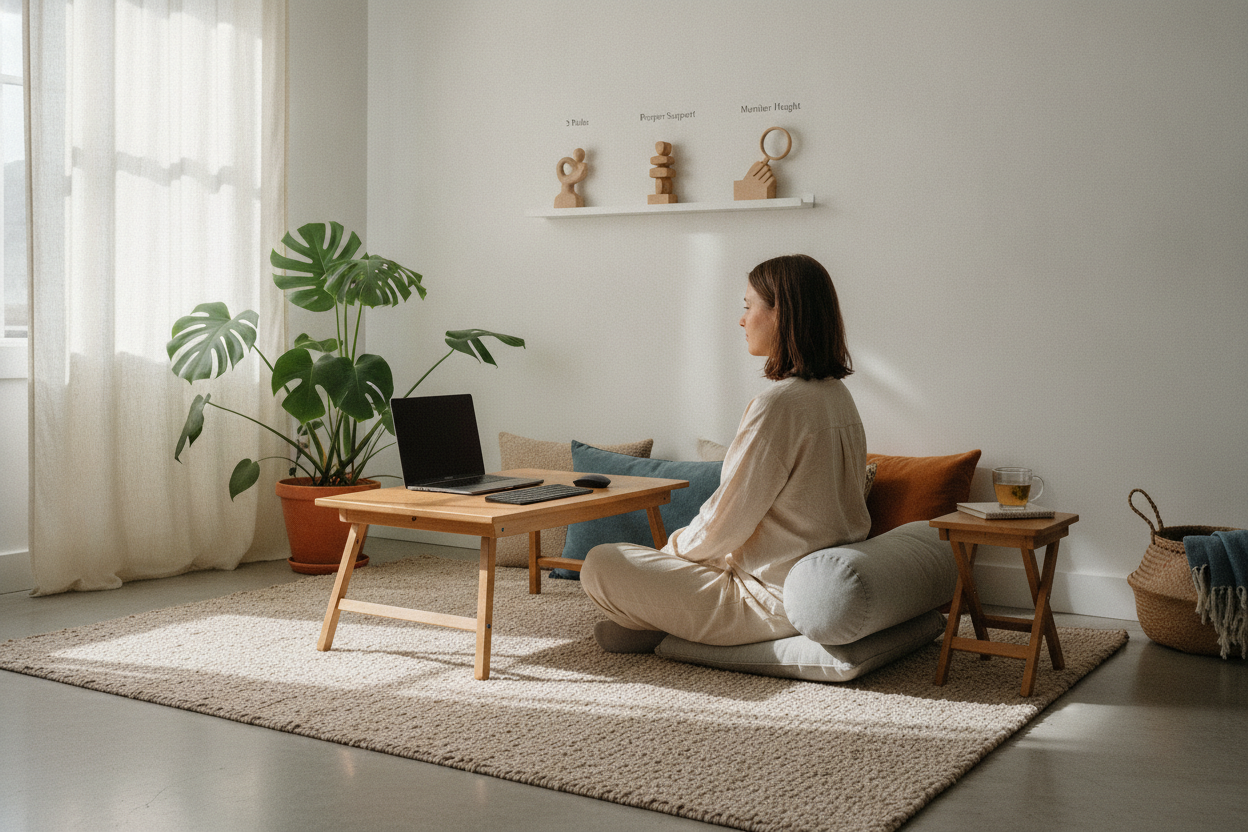
I spent three months working from a coffee table that was exactly four inches too high, effectively turning my spine into a question mark. It starts as a cozy 'floor core' dream—just you, a rug, and a laptop—but ends with a chiropractor bill. If you are going to commit to the rug life, you need a foldable floor desk that actually works with your anatomy, not against it.
Quick Takeaways
- Prioritize adjustable leg height; 10-12 inches of clearance is the sweet spot.
- Never place your laptop flat; use a tilting surface to save your neck.
- If you are working more than 4 hours, the floor is your enemy.
- Weight matters—if it is over 7 pounds, you will never actually fold it away.
The Reality of the WFH 'Floor Core' Aesthetic
There is a specific kind of freedom in ditching the traditional office chair. In a 500-square-foot studio, a massive mahogany desk is basically a roommate that doesn't pay rent. The floor core trend isn't just about looking like a minimalist on Instagram; it is about reclaiming your floor space. A portable floor desk acts as the bridge between sitting like a gargoyle on your sofa and having a functional workspace.
I have found that sitting on the floor keeps me more grounded and focused, but it is a double-edged sword. Without the right gear, you are just one bad slouch away from a permanent neck crick. You need a setup that mimics ergonomic standards while you are sitting on a $40 jute rug.
Rule 1: Your Knees Need Actual Clearance
The biggest mistake I see is people buying a folding floor desk that is basically a glorified breakfast tray. If you cannot cross your legs or stretch them out under the surface, your legs will go numb in twenty minutes. I look for models with legs that extend at least 11 inches. This allows you to shift between a cross-legged position and 'staff pose' without hitting the underside of the desk.
When you are comparing options, think about the floor desk Ikea setup many people try to hack. While a DIY low-profile table is cheap, it usually lacks the leg-room flexibility of a dedicated foldable model. Fixed-height furniture is the enemy of the floor-dweller.
Rule 2: Don't Let Your Screen Live in Your Lap
Tech neck is real, and it is aggressive. If your laptop is sitting flat on a low desk, you are staring down at a 45-degree angle. Your head weighs about 10 to 12 pounds; when you tilt it forward, the pressure on your spine jumps to 60 pounds. I always choose a desk with a tilting top. Angling the keyboard and screen up by just 20 degrees changes the entire geometry of your sitting position.
For those of you running a dual-screen setup from the rug, a small desk won't cut it. I have seen people successfully use a floor stand for tv monitor screens behind their low desk to keep their primary display at eye level. It sounds extra, but your cervical spine will thank you.
Rule 3: It Has to Actually Disappear at 5 PM
The entire point of a foldable floor desk is that it is not a permanent fixture. If the desk is made of heavy, clunky MDF that weighs 15 pounds, you are going to leave it out. And once you leave it out, your living room stops feeling like a home and starts feeling like a cubicle. I look for aluminum frames or high-grade bamboo—materials that are light enough to slide under a sofa with one hand.
I personally use a model that folds down to about 2 inches thick. It slides right behind my bookshelf. If I can't hide it in under ten seconds, I don't want it in my house.
When to Give Up and Buy Standard Furniture
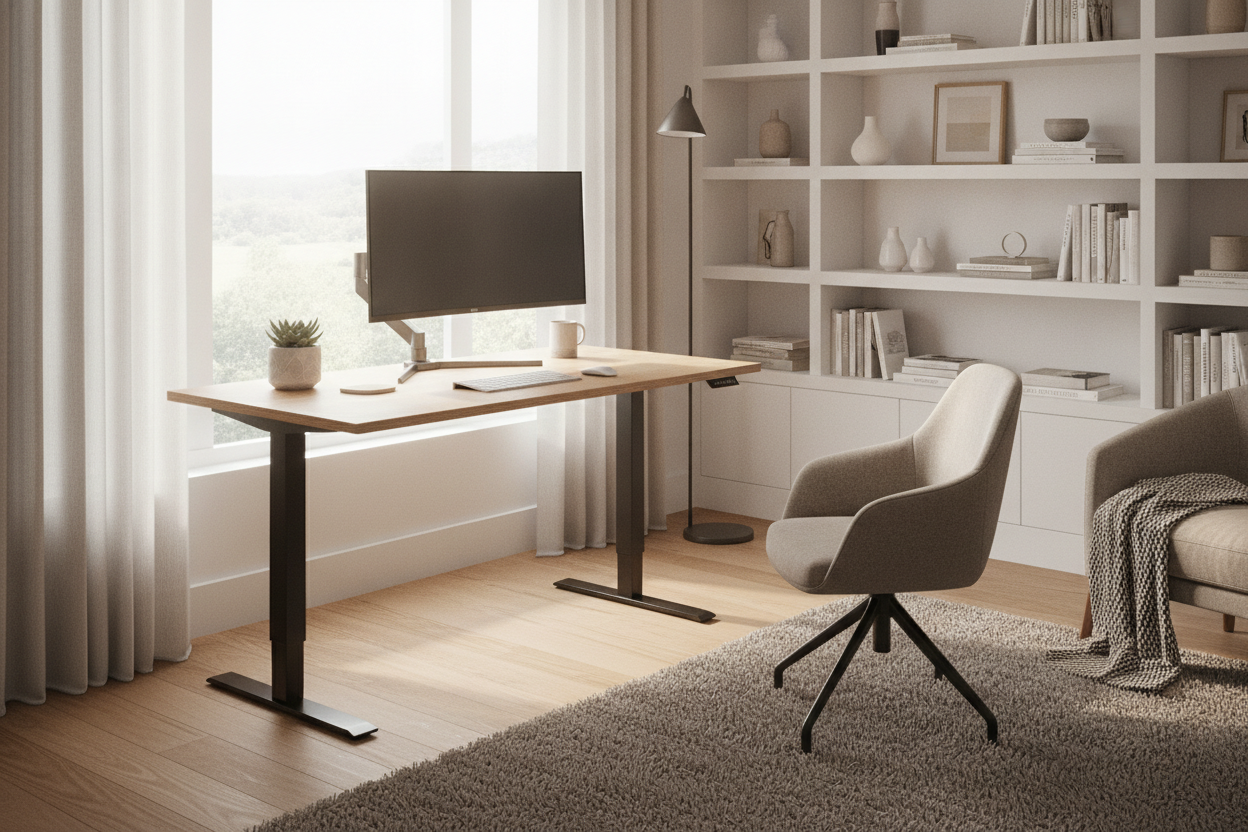
Let's be honest: the human body wasn't designed to sit on a hardwood floor for an 8-hour data entry shift. If you find yourself popping ibuprofen by noon, the floor life isn't for you. There is no shame in admitting you need a traditional writing computer desk and a chair with actual lumbar support. A floor setup is a great secondary station for deep work or creative bursts, but it shouldn't be a torture device.
Personal Experience: The Bamboo Blunder
I once bought a beautiful-looking bamboo floor desk because it matched my aesthetic. It had zero leg adjustments. Within two days, I realized that because I have long legs, I had to sit in a weird, wide-V shape just to fit under it. I ended up giving it to a friend who is 5'2" and she loves it. The lesson? Check the 'width between legs' measurement before you buy. If it is less than 20 inches, you are going to feel trapped.
FAQ
Is a floor desk better for your back?
Only if you have the hip mobility for it. It encourages active sitting, but if you slouch, it is actually worse than a standard chair.
Can I use a floor desk on a bed?
You can, but it is the least ergonomic option. The soft surface makes the desk wobble, and your spine will inevitably curve into the mattress.
What is the best material for a portable floor desk?
Anodized aluminum is the most durable and lightest, though bamboo feels better against your skin if you are working in shorts.

Leave a comment
This site is protected by hCaptcha and the hCaptcha Privacy Policy and Terms of Service apply.